01
List of the Documents
The section organizes the available documentation and provenance signals so the artwork can be reviewed as a traceable object, not only as an image.

Real client case
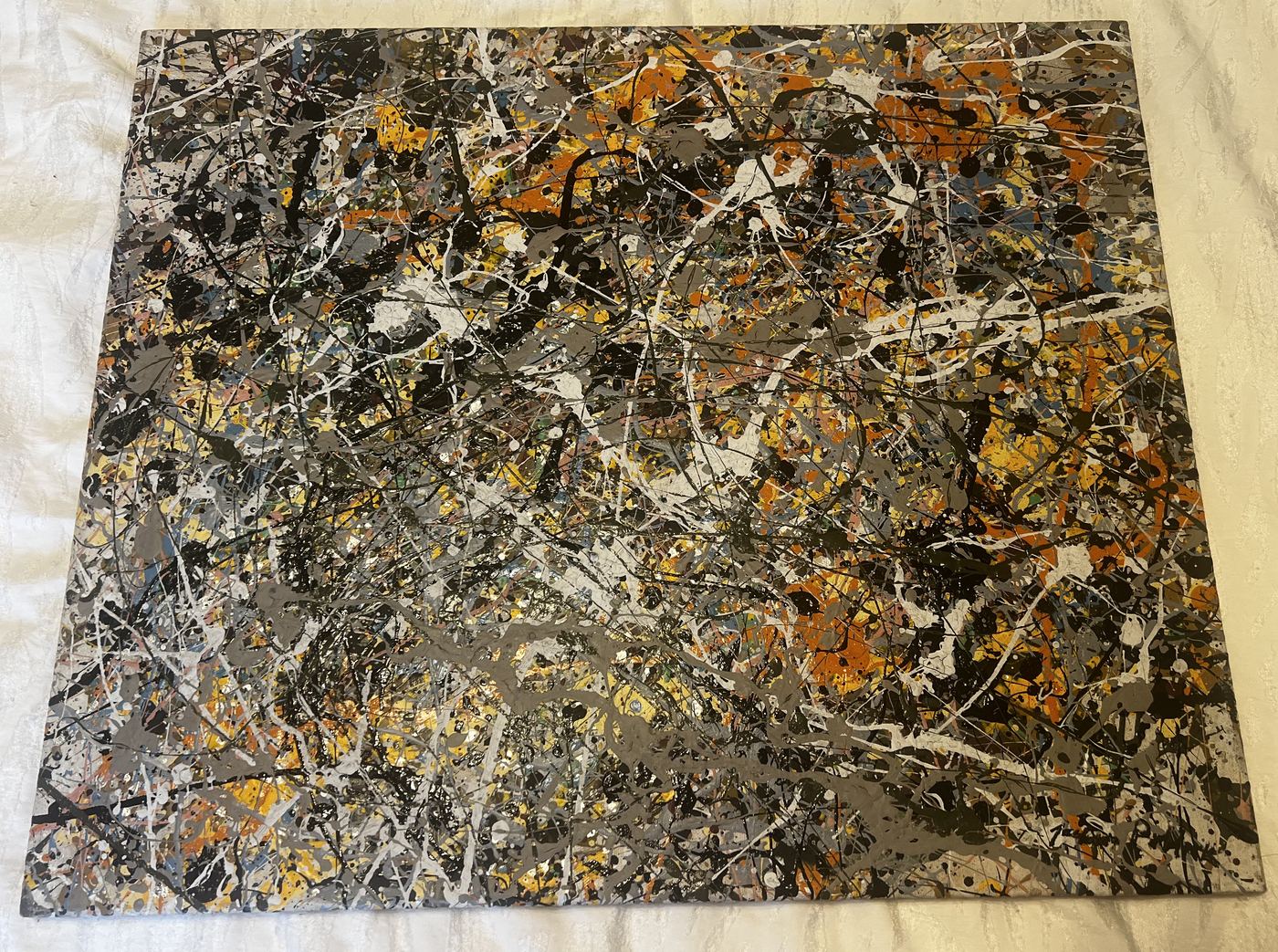
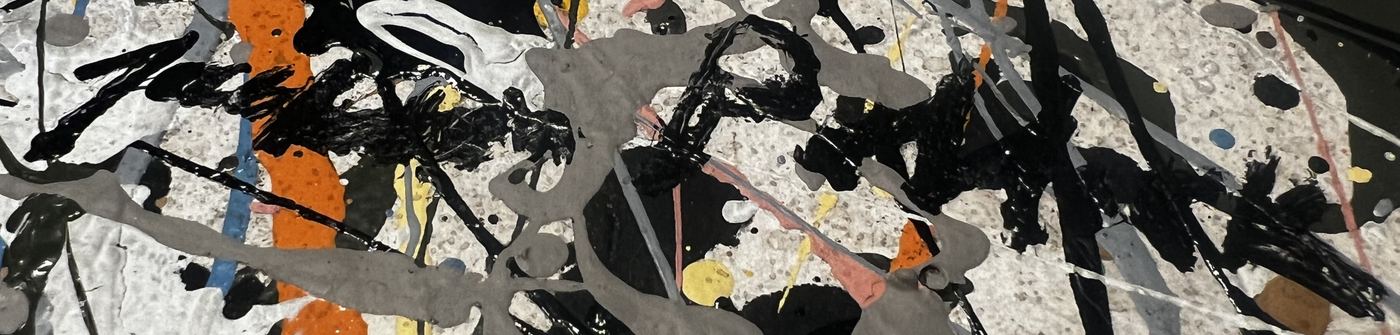
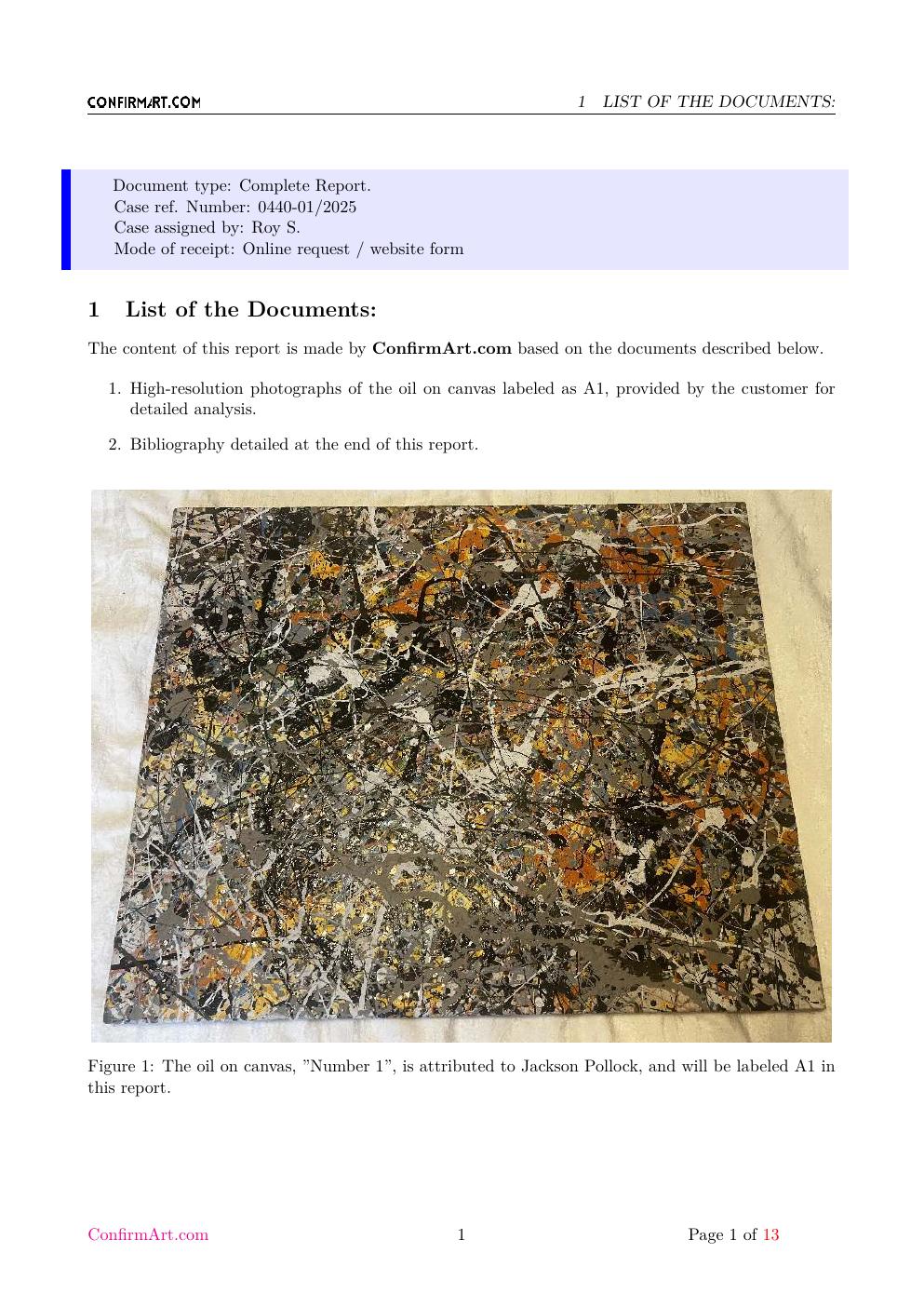
The oil on canvas, "Number 1", is attributed to Jackson Pollock, and will be labeled A1 in this report
Selected evidence
Report structure
The section organizes the available documentation and provenance signals so the artwork can be reviewed as a traceable object, not only as an image.
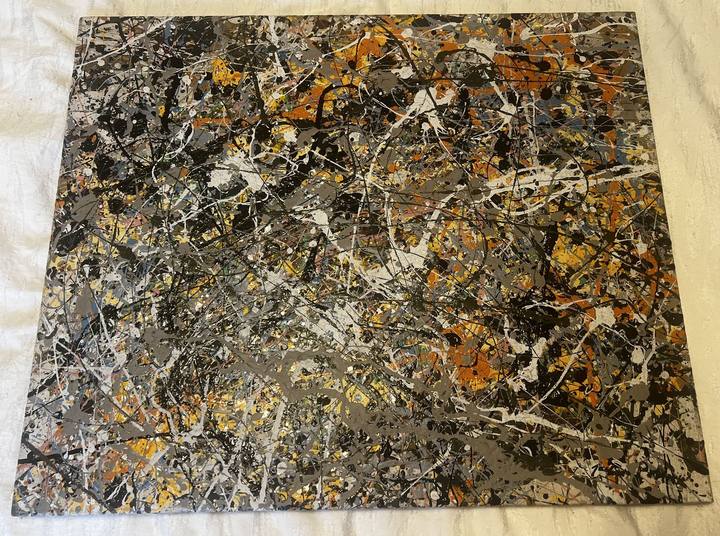
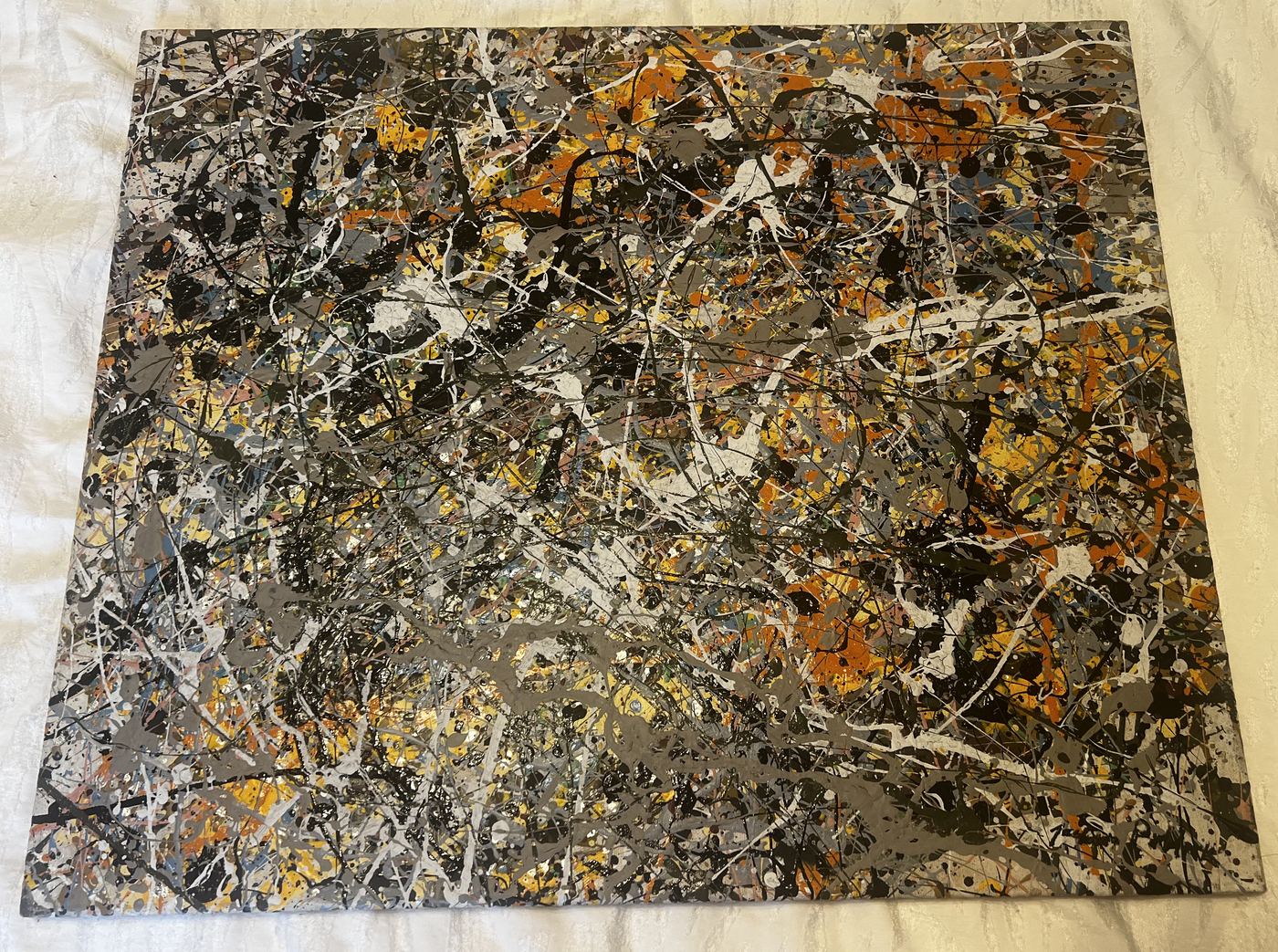
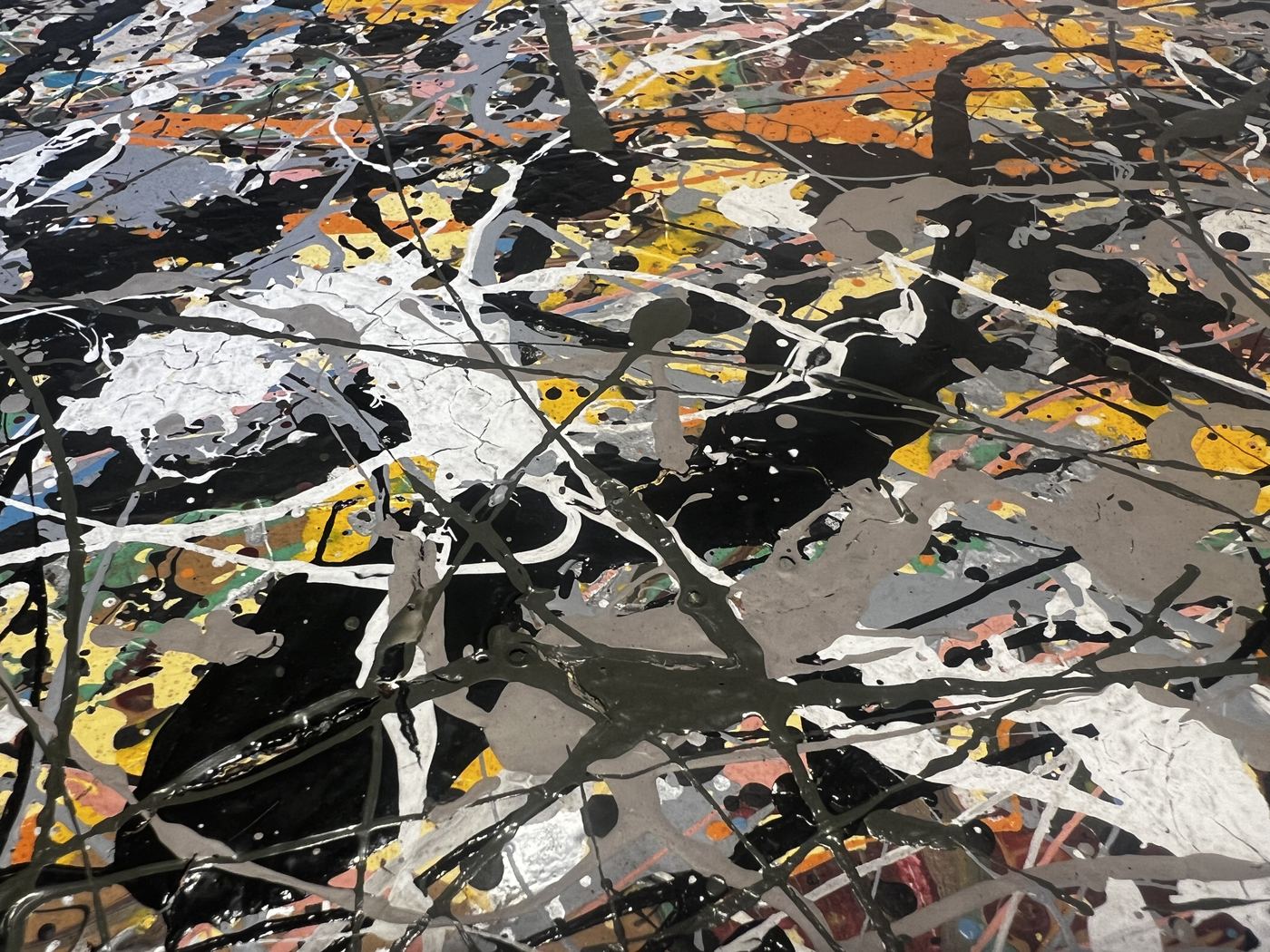
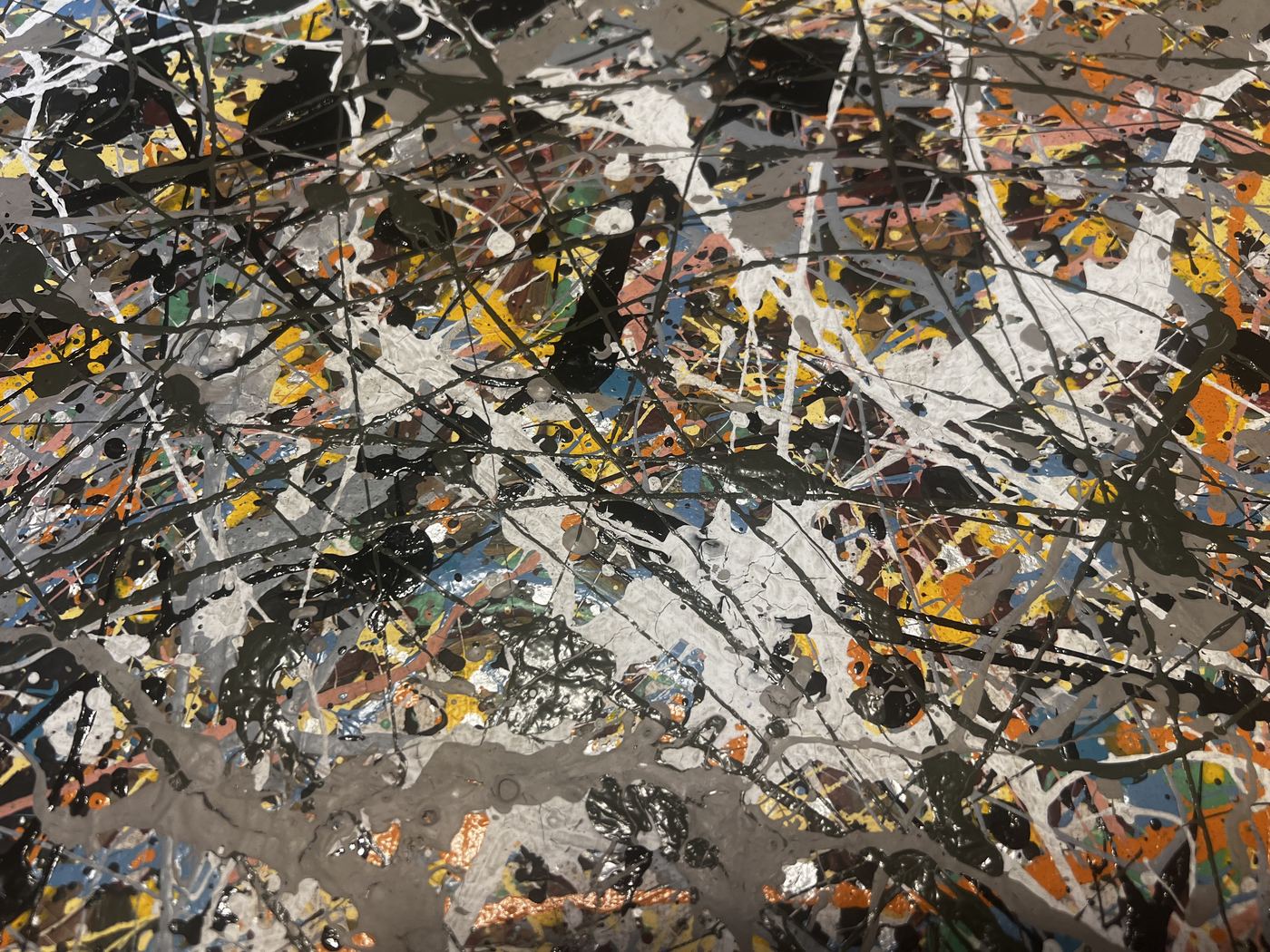
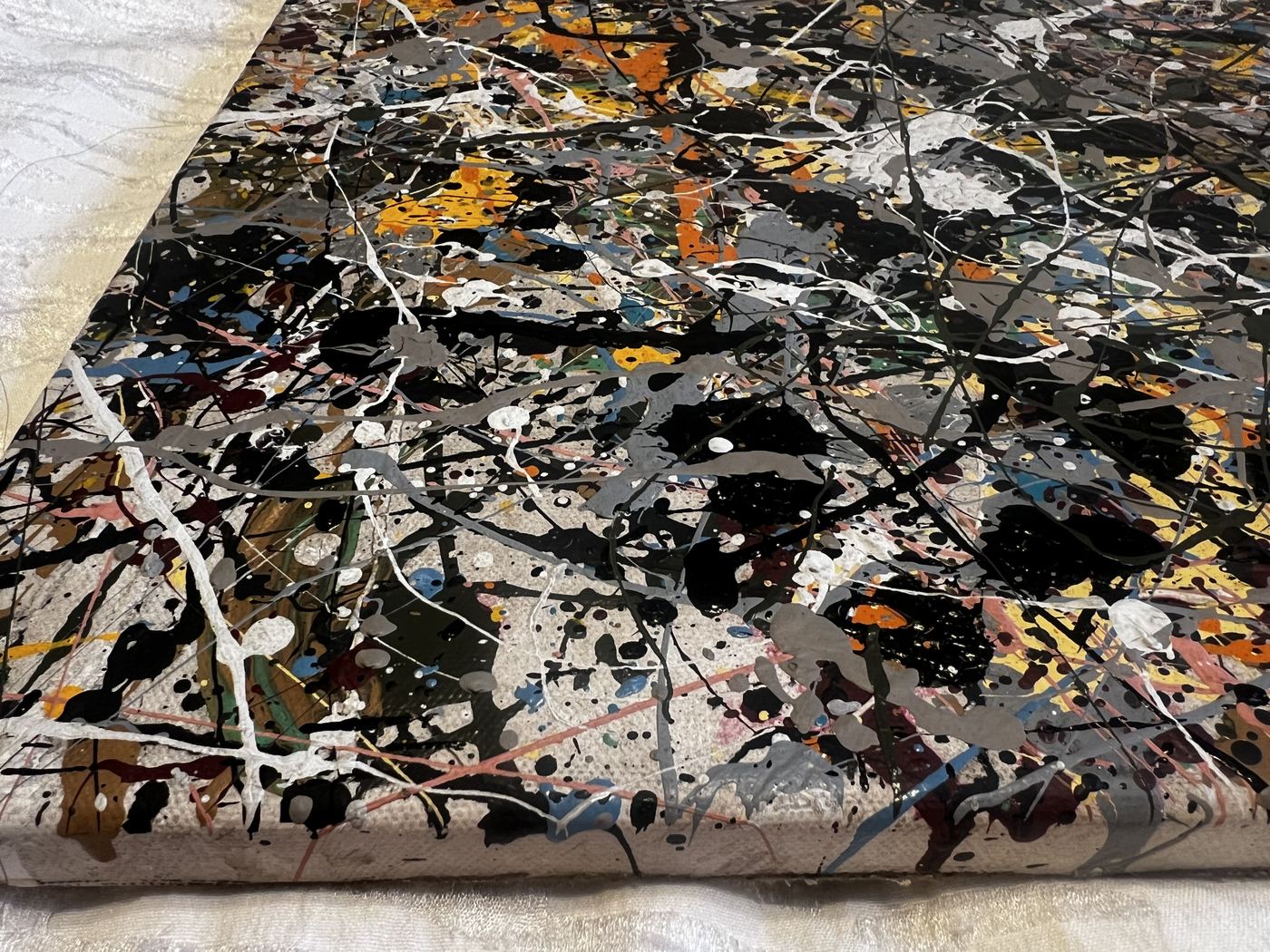
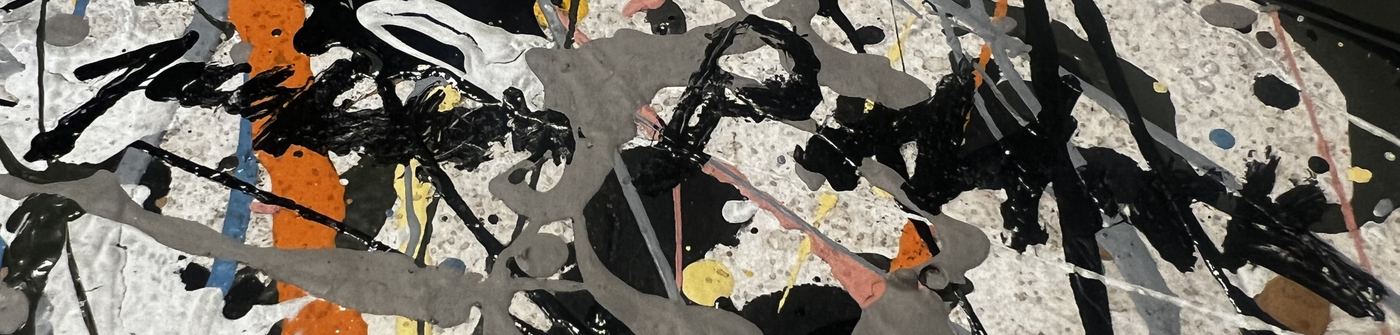
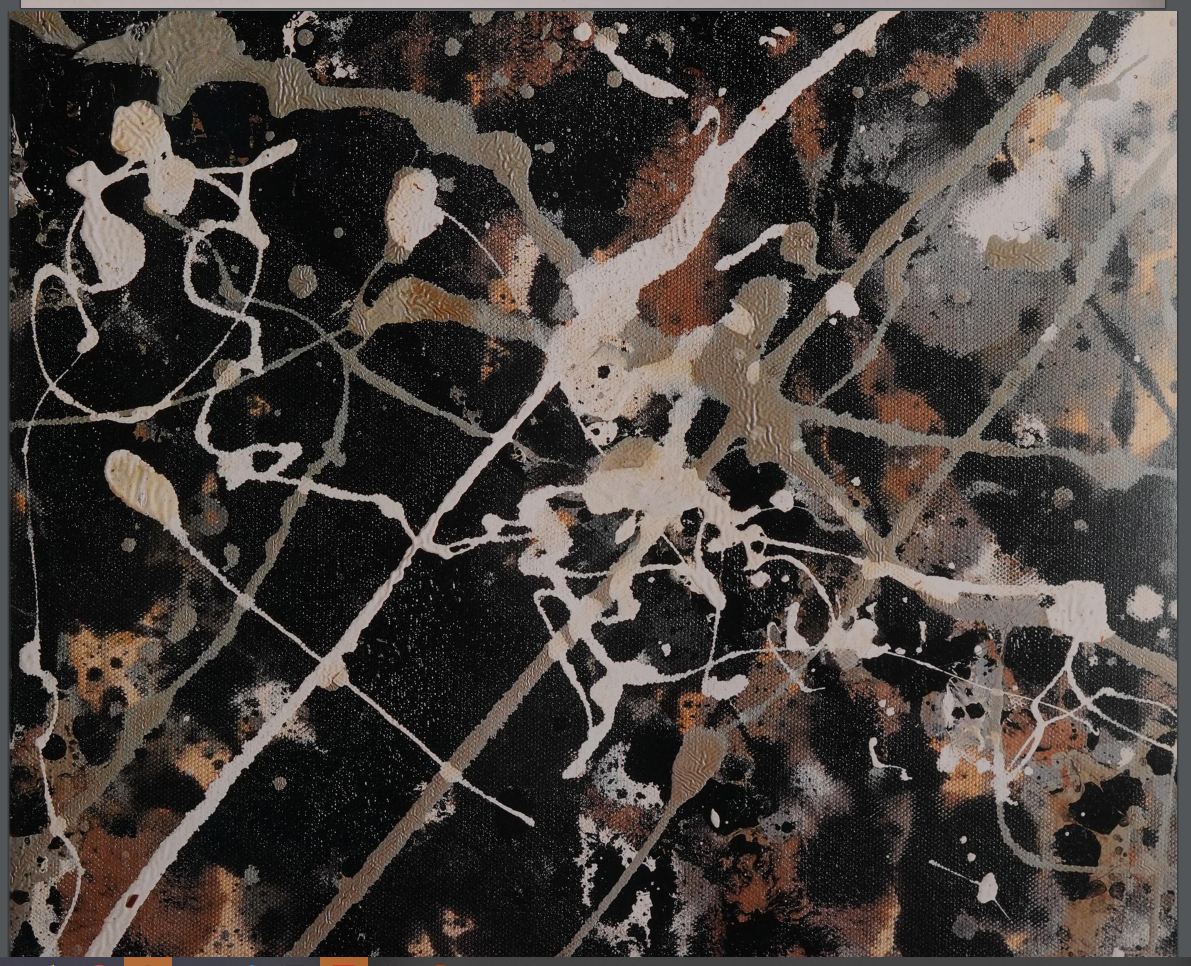
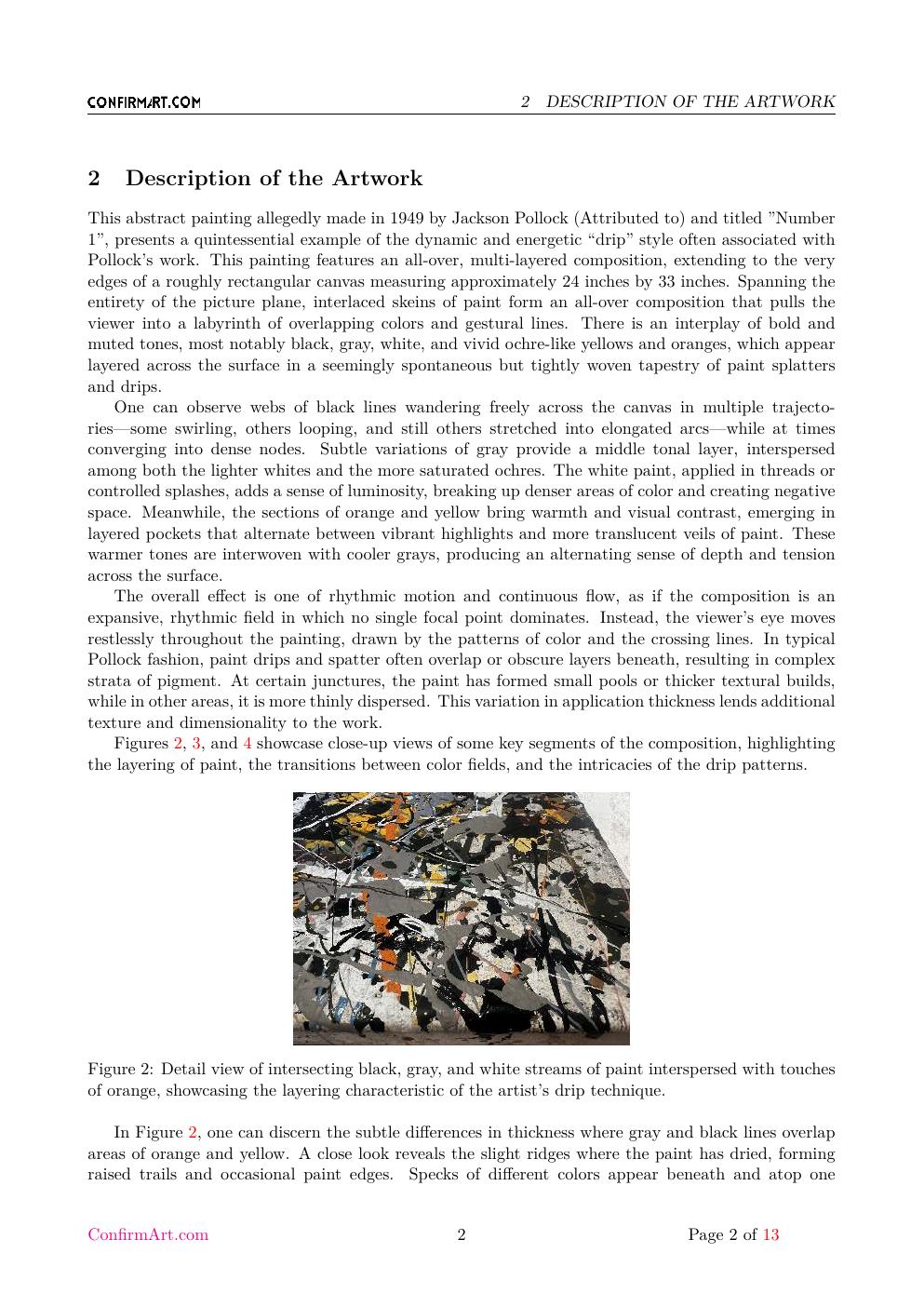
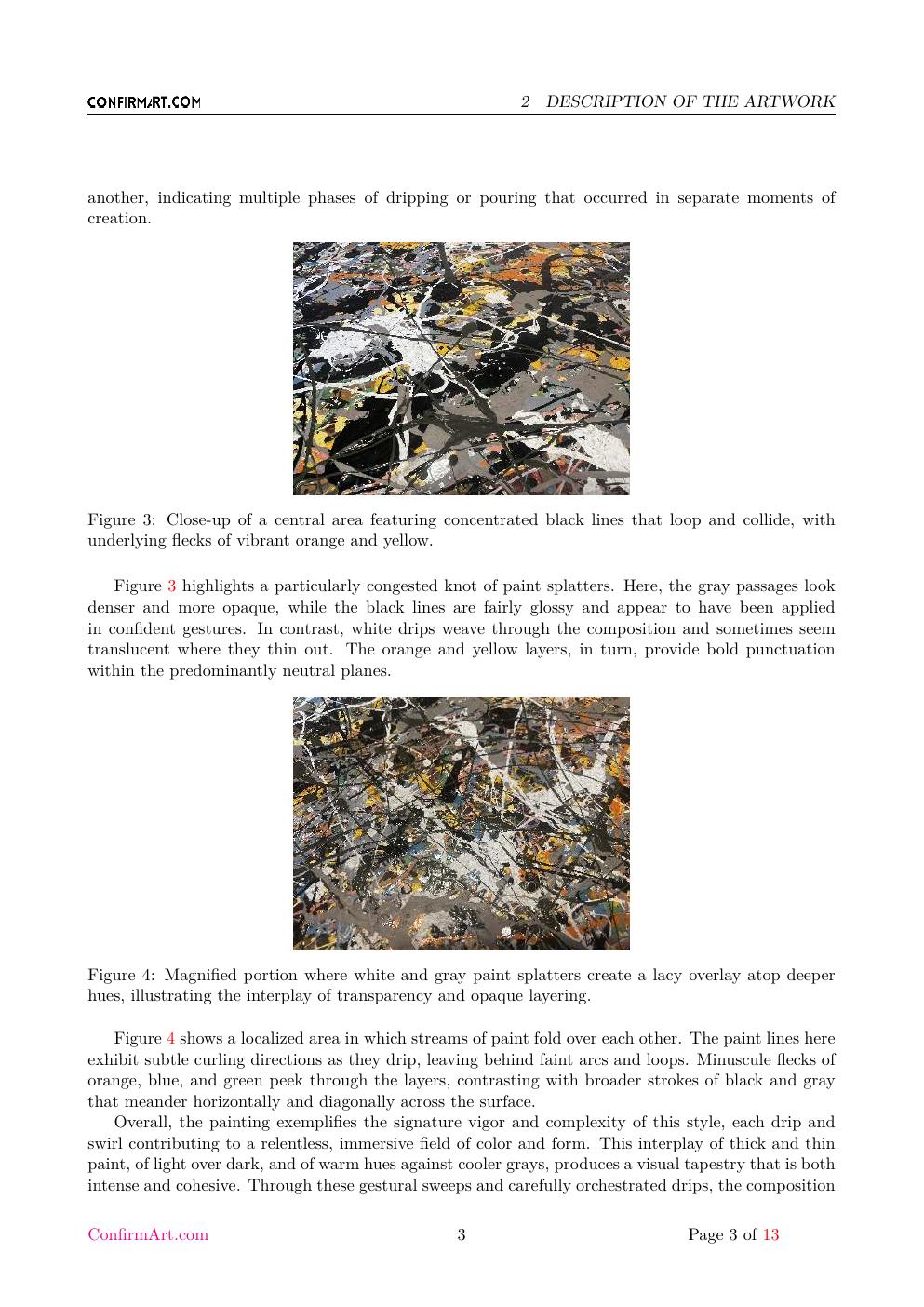
This abstract painting allegedly made in 1949 by Jackson Pollock (Attributed to) and titled "Number 1", presents a quintessential example of the dynamic and energetic "drip" style often associated with Pollock's work. This painting features an all-over, multi-layered composition, extending to the very edges of a roughly rectangular canvas measuring approximately 24 inches by 33 inches. Spanning the entirety of the picture plane, interlaced skeins of paint form an all-over composition that pulls the viewer into a la
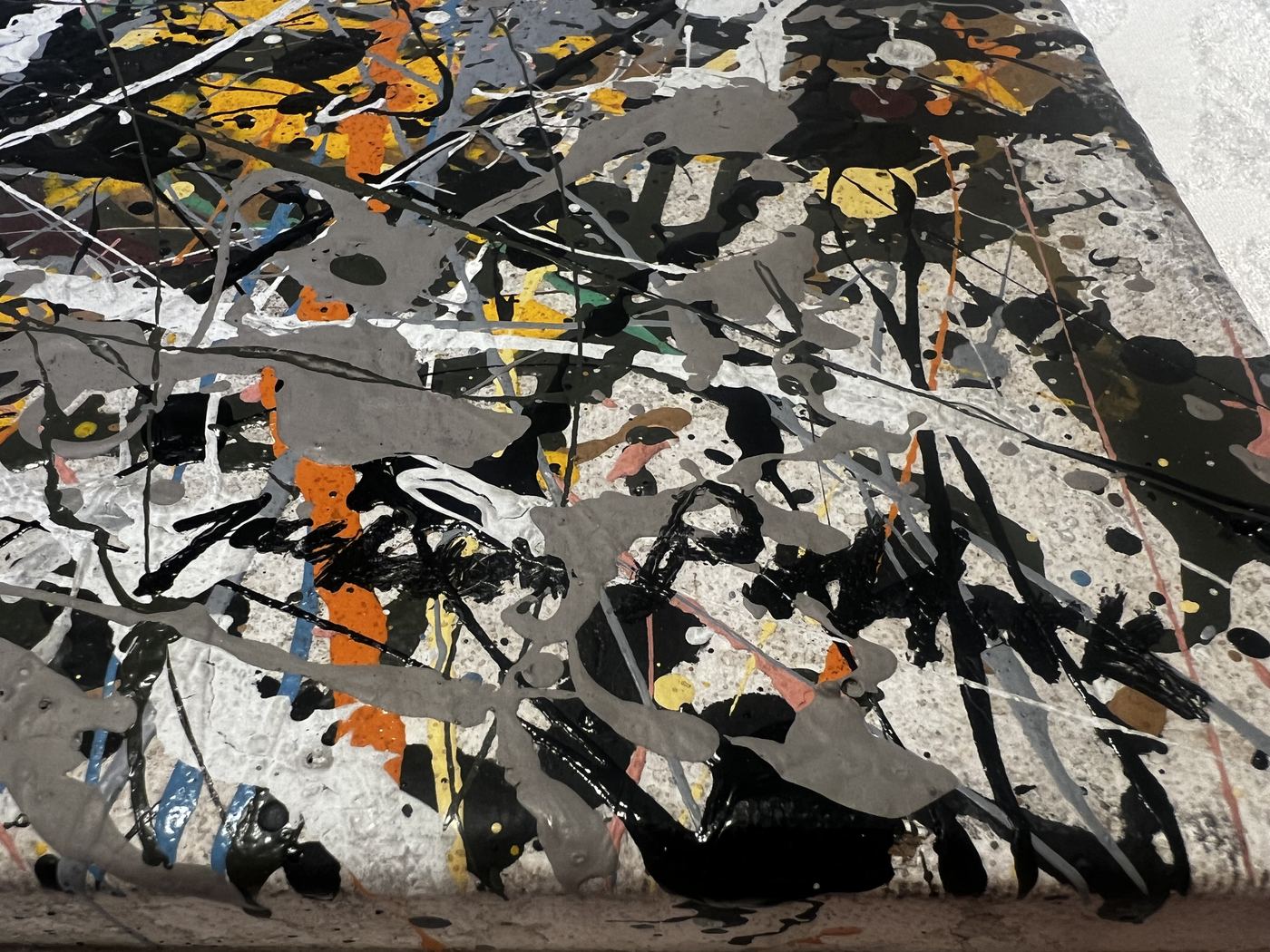
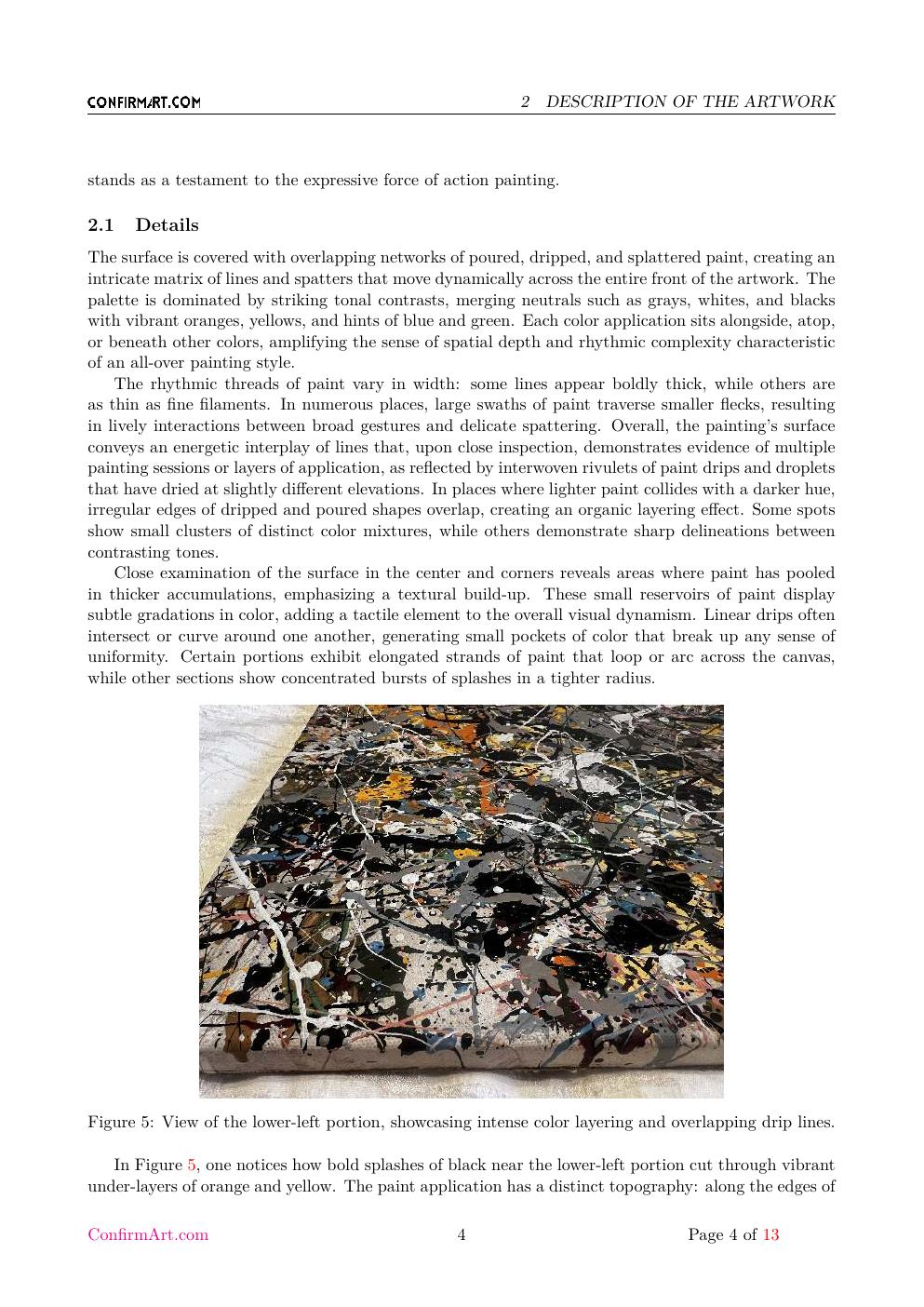
The surface is covered with overlapping networks of poured, dripped, and splattered paint, creating an intricate matrix of lines and spatters that move dynamically across the entire front of the artwork. The palette is dominated by striking tonal contrasts, merging neutrals such as grays, whites, and blacks with vibrant oranges, yellows, and hints of blue and green. Each color application sits alongside, atop, or beneath other colors, amplifying the sense of spatial depth and rhythmic complexity characteristic of a
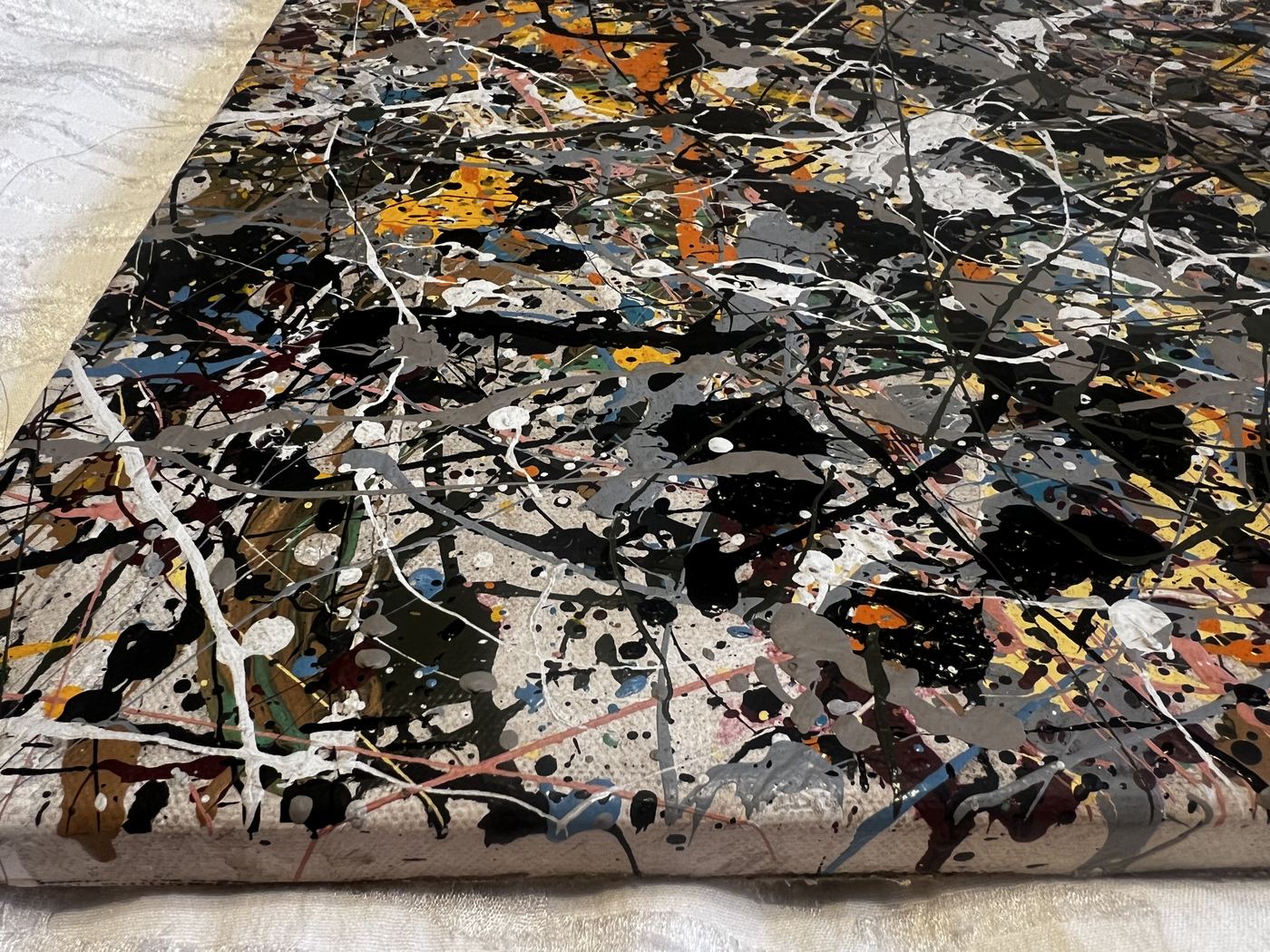
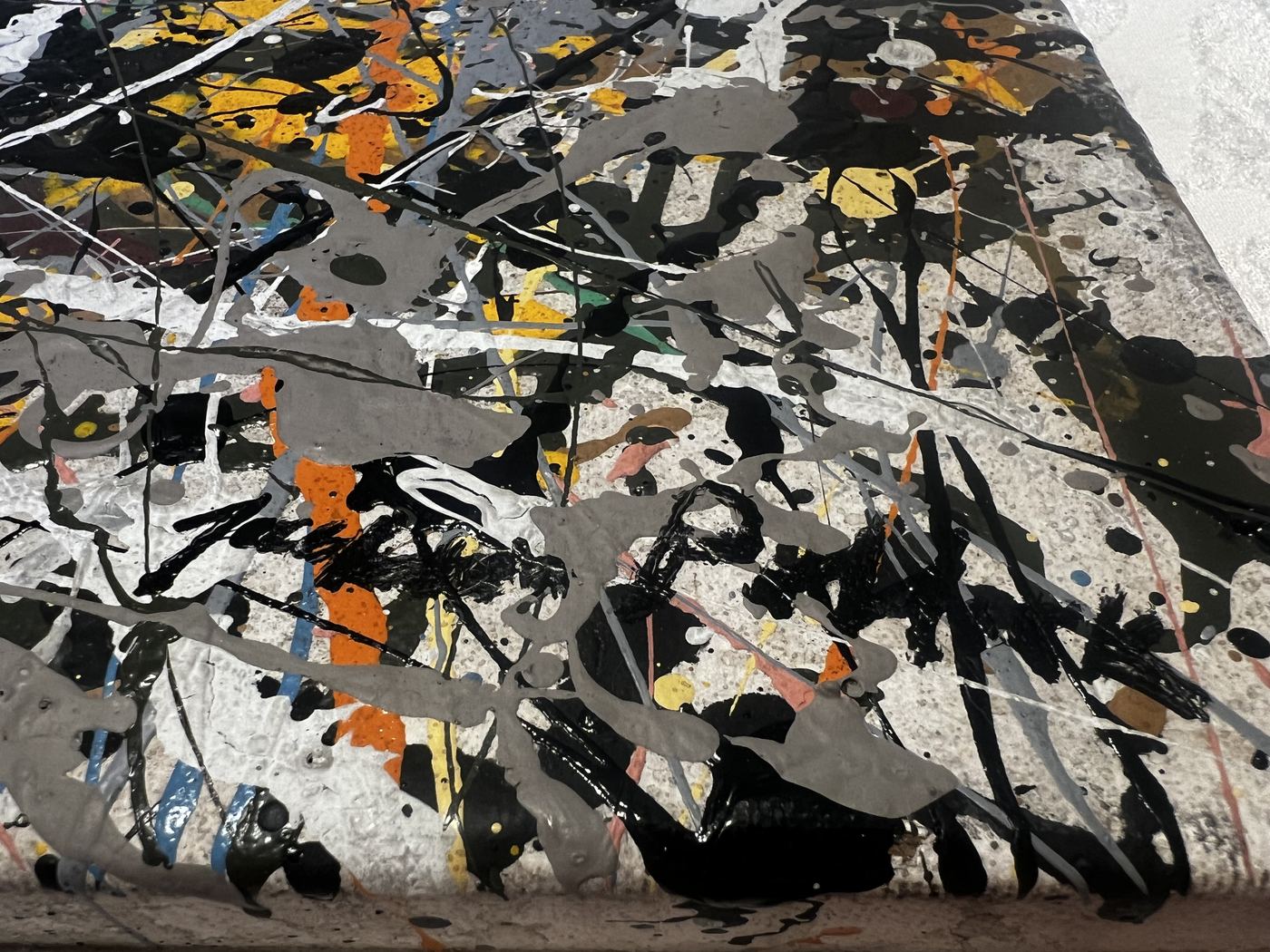
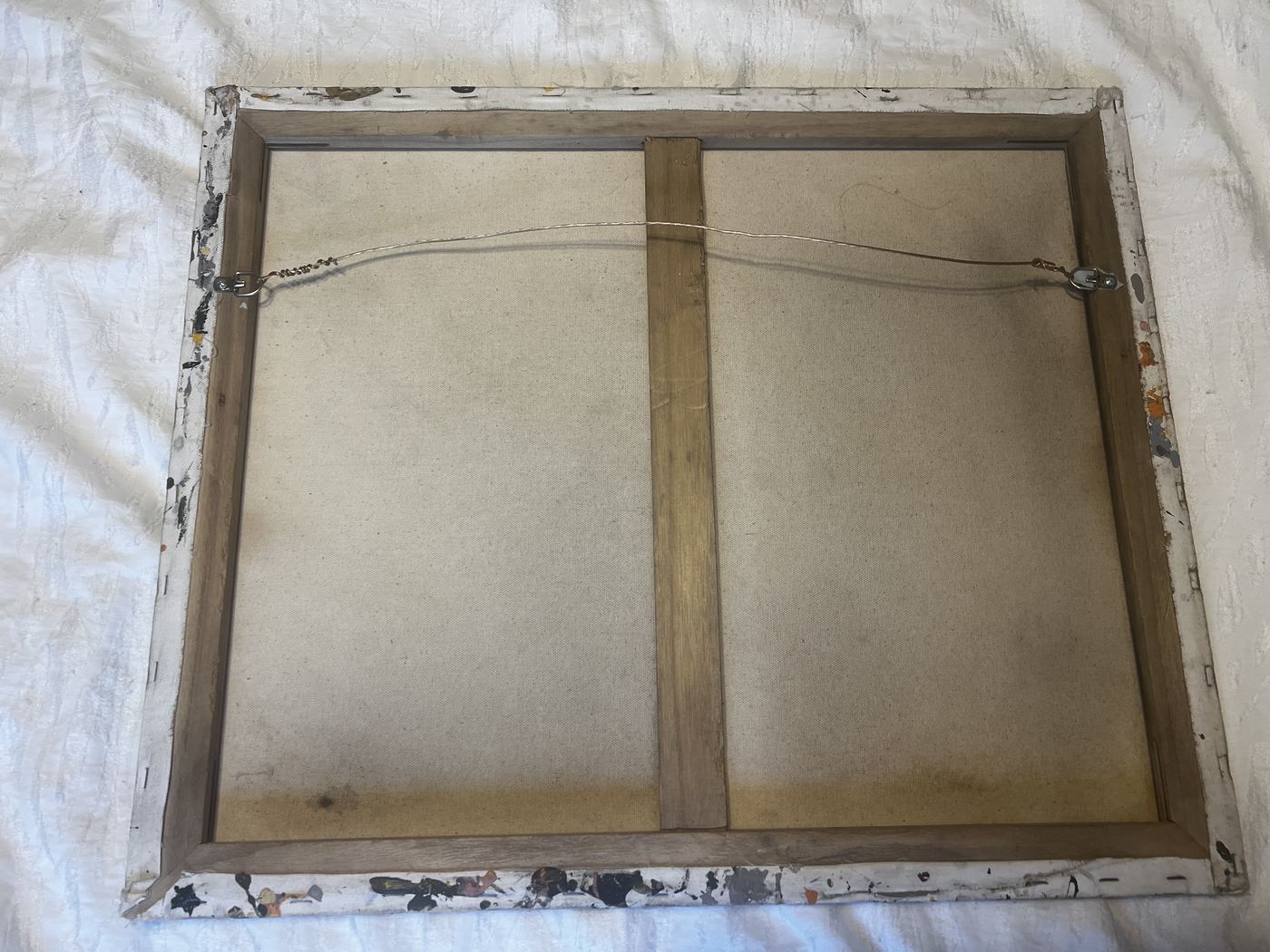
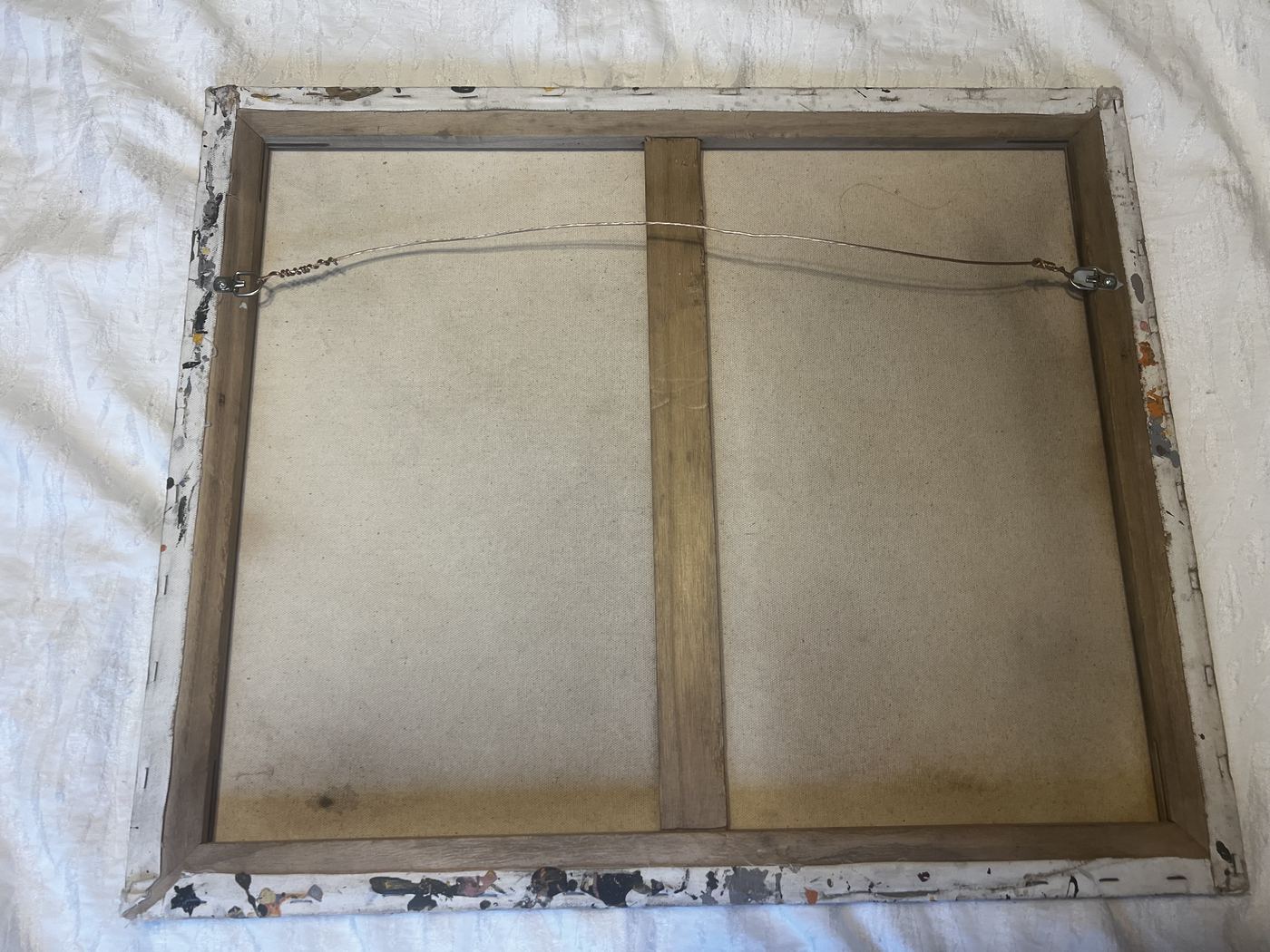
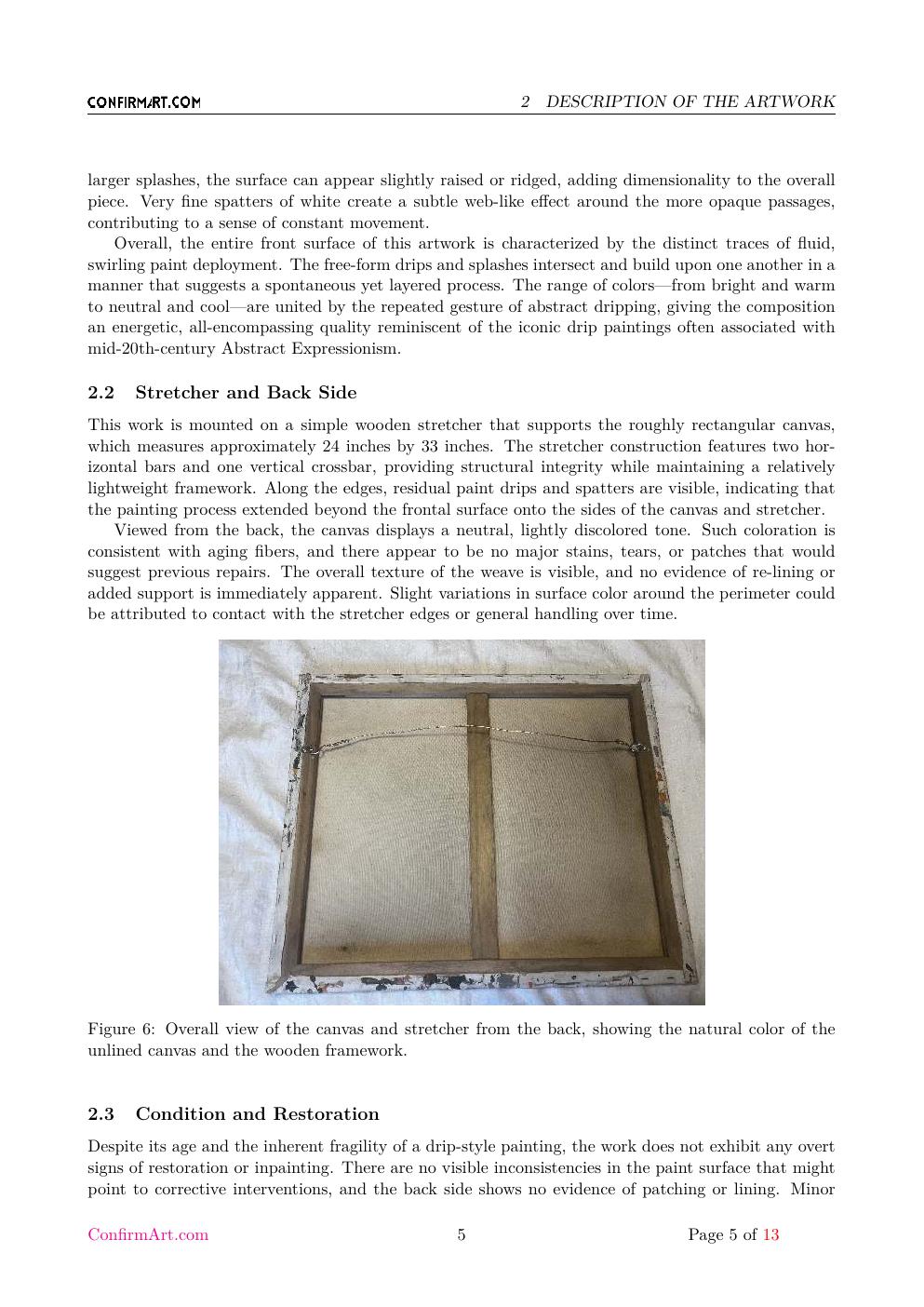
This work is mounted on a simple wooden stretcher that supports the roughly rectangular canvas, which measures approximately 24 inches by 33 inches. The stretcher construction features two horizontal bars and one vertical crossbar, providing structural integrity while maintaining a relatively lightweight framework. Along the edges, residual paint drips and spatters are visible, indicating that the painting process extended beyond the frontal surface onto the sides of the canvas and stretcher.
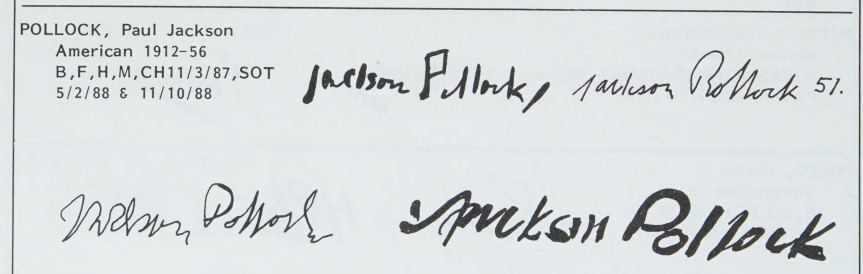
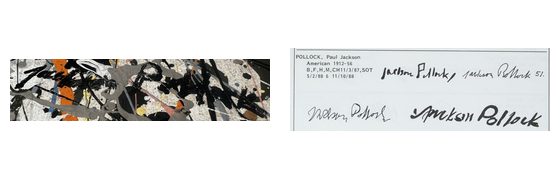
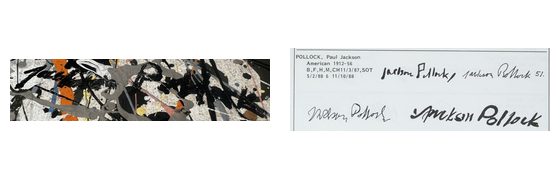
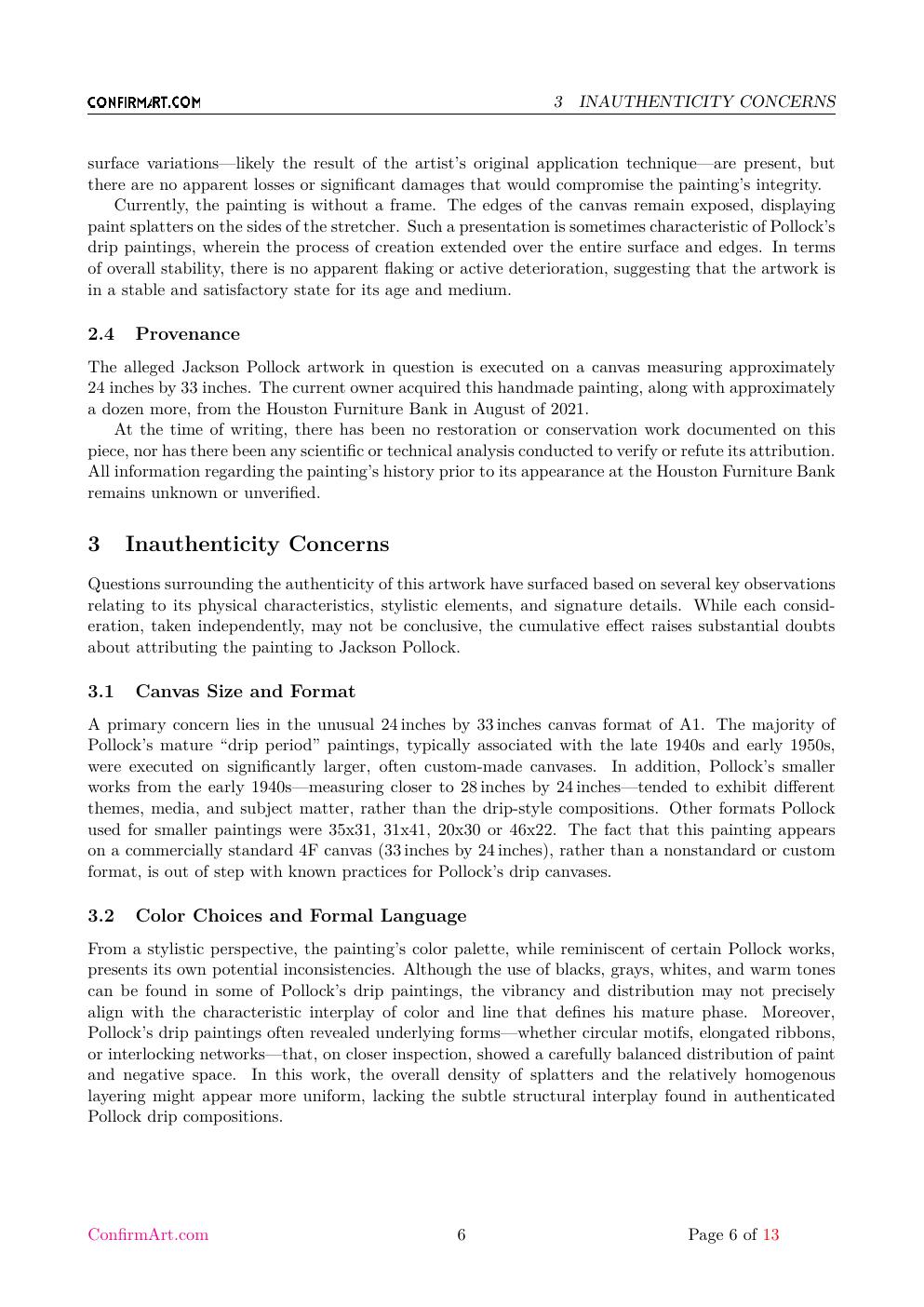
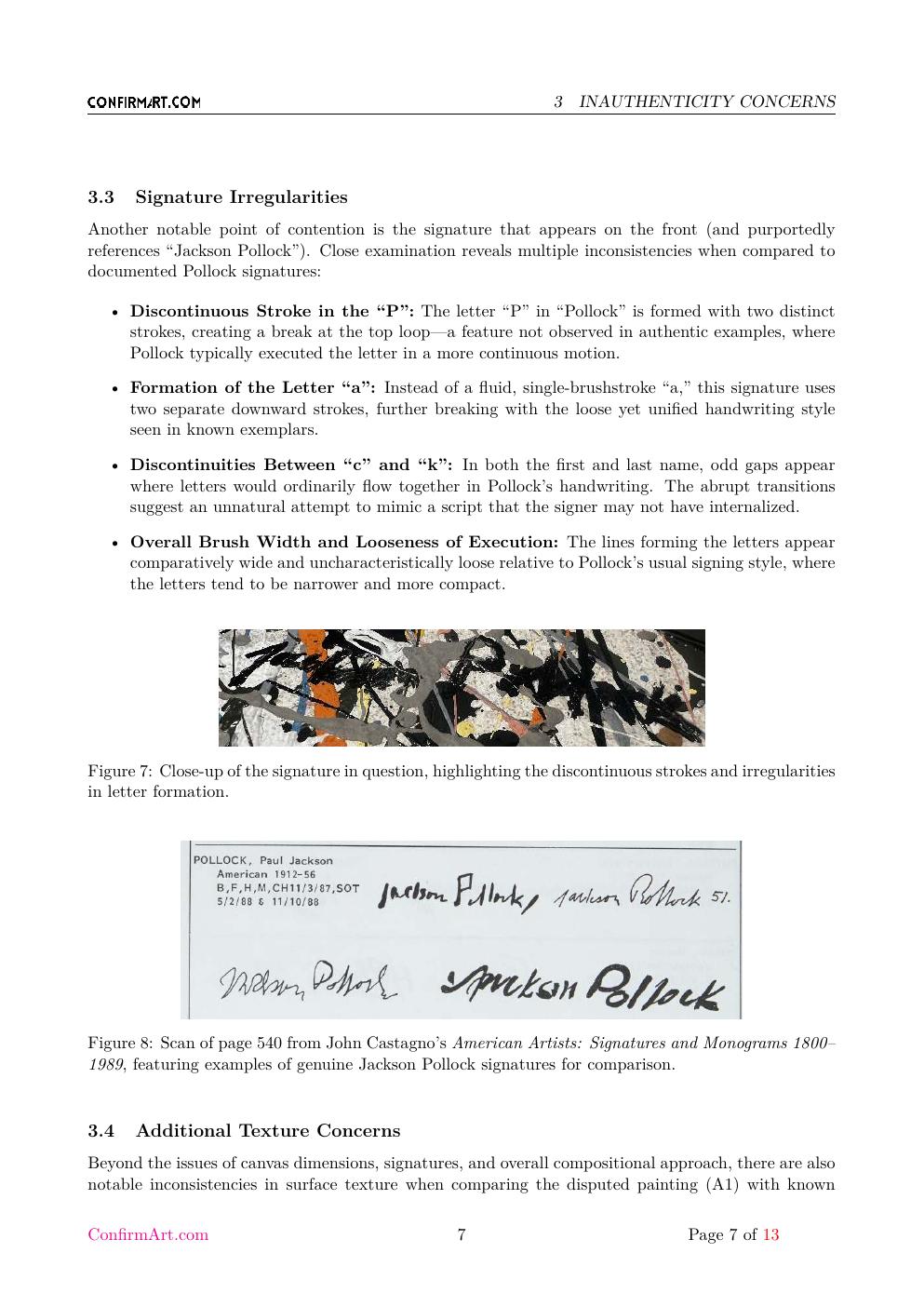
Another notable point of contention is the signature that appears on the front (and purportedly references "Jackson Pollock"). Close examination reveals multiple inconsistencies when compared to documented Pollock signatures: Discontinuous Stroke in the "P": The letter "P" in "Pollock" is formed with two distinct strokes, creating a break at the top loop—a feature not observed in authentic examples, where Pollock typically executed the letter in a more continuous motion. Formation of the Letter "a": Instead of a fl
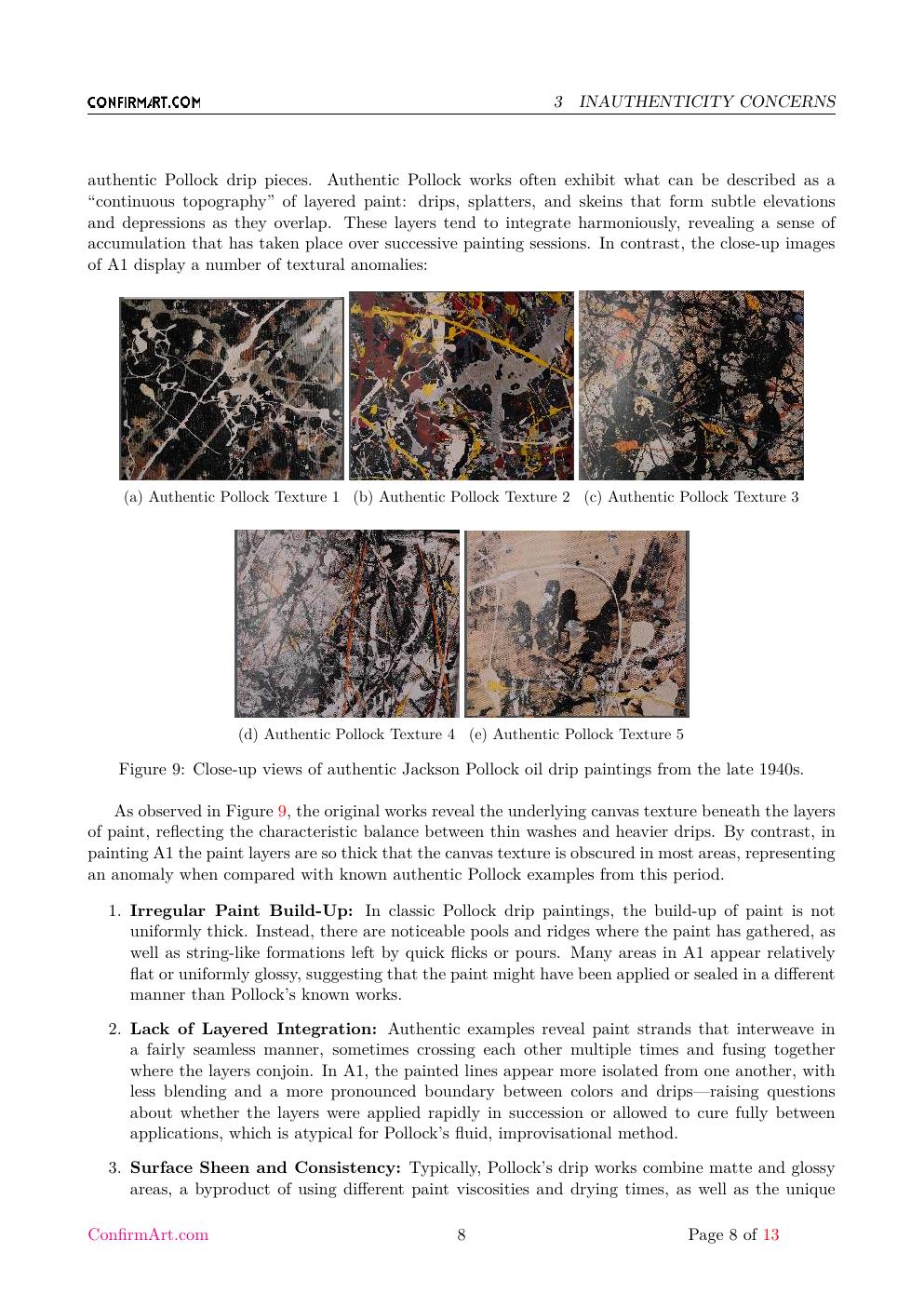
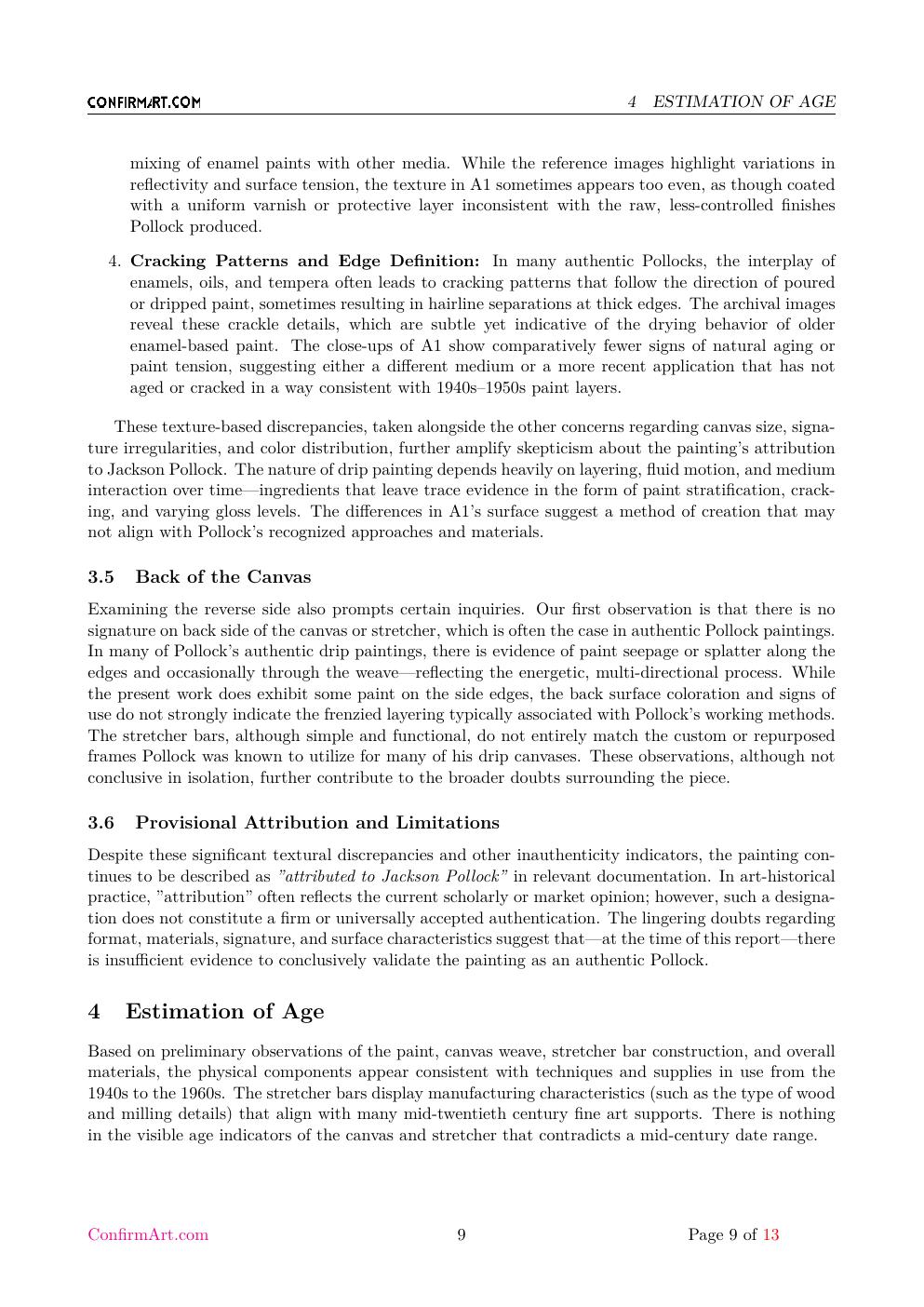
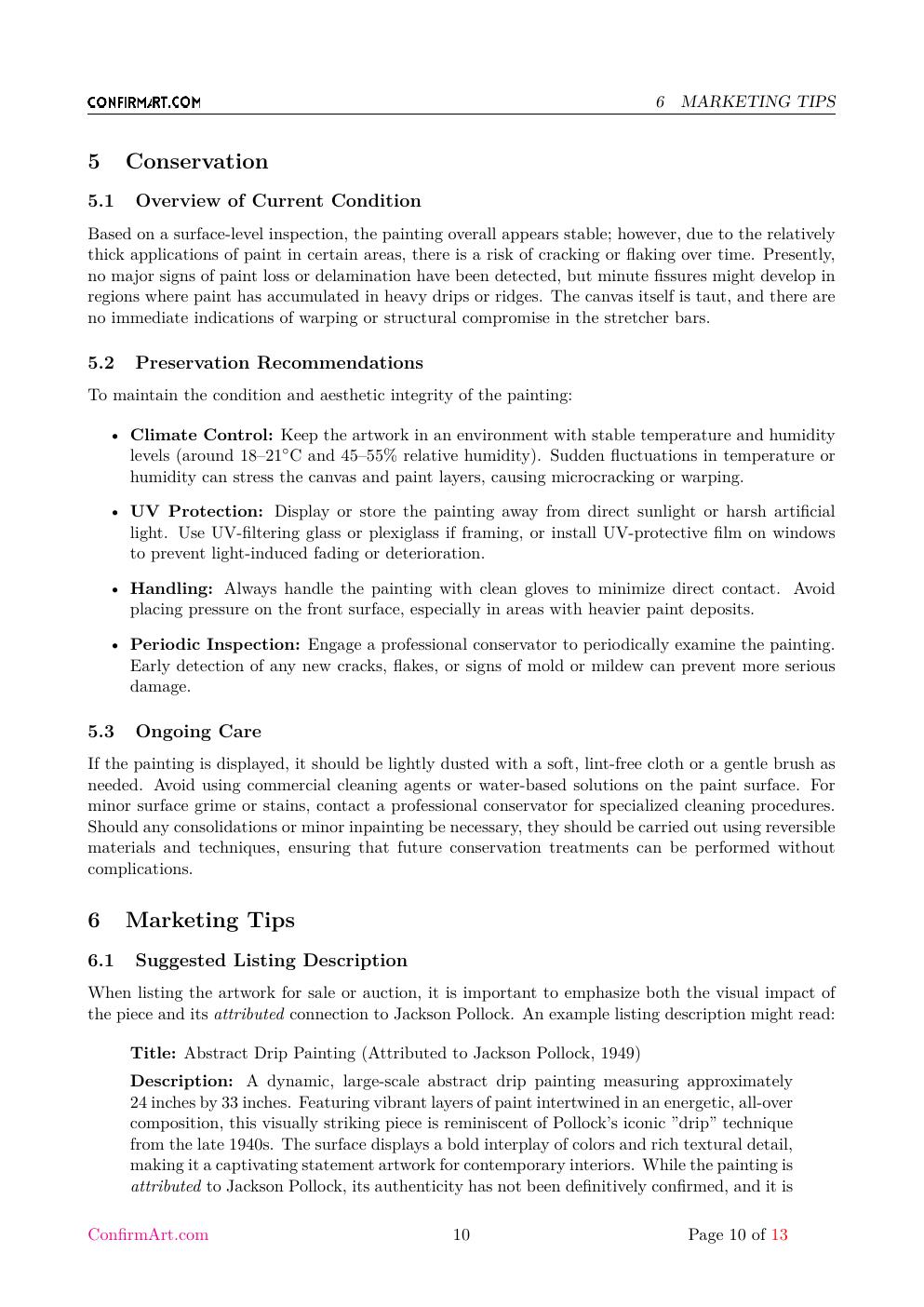
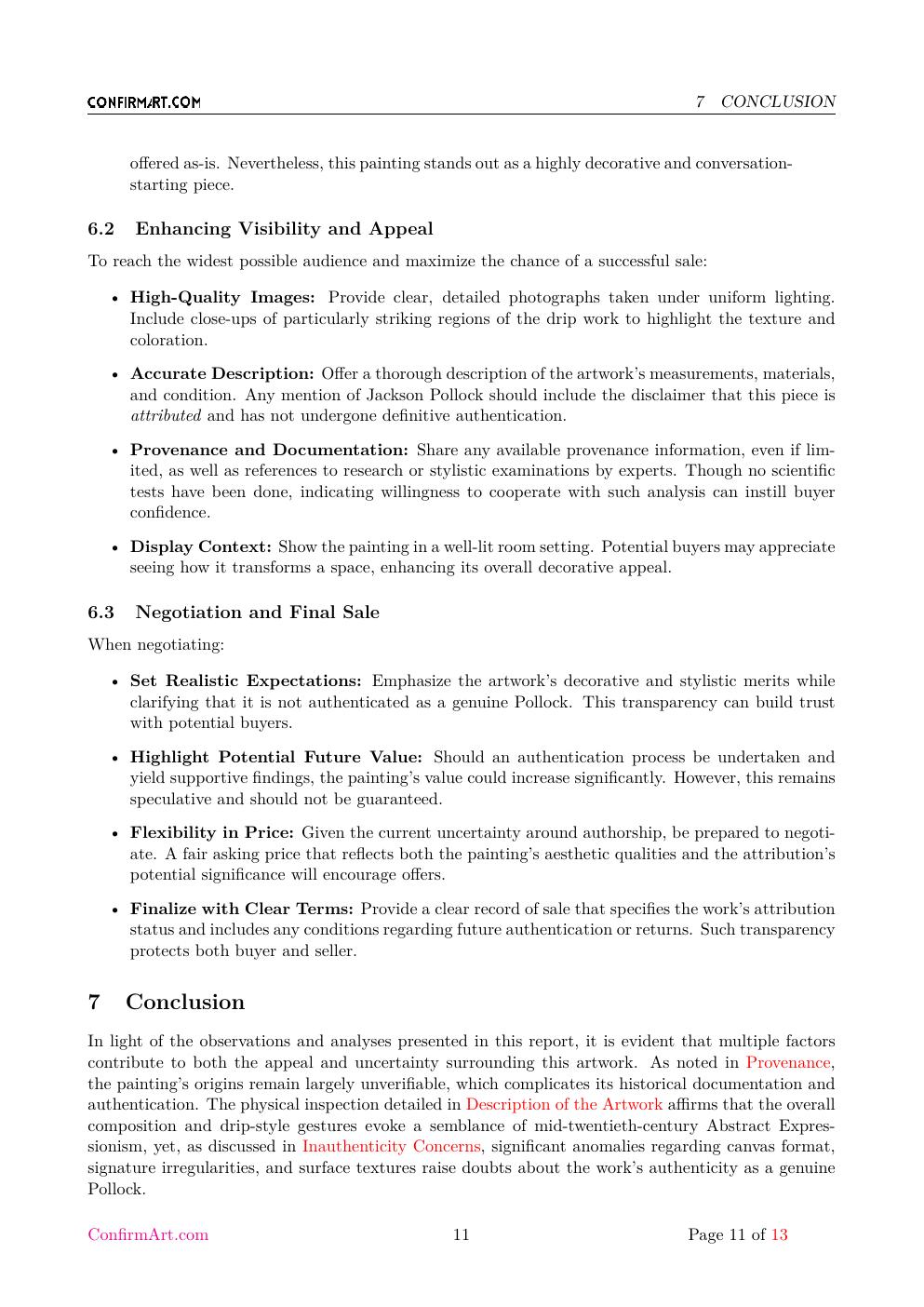
Beyond the issues of canvas dimensions, signatures, and overall compositional approach, there are also notable inconsistencies in surface texture when comparing the disputed painting (A1) with known authentic Pollock drip pieces. Authentic Pollock works often exhibit what can be described as a "continuous topography" of layered paint: drips, splatters, and skeins that form subtle elevations and depressions as they overlap. These layers tend to integrate harmoniously, revealing a sense of accumulation that has taken
Signature evidence
Authentication evidence

Private authentication
Use this real case as a reference for the kind of evidence that can be organized in a private authentication report.
Public report viewer

The public browser receives rendered pages, not a native PDF viewer or direct PDF URL. Public pixels can still be screen-captured; private commissioned reports remain controlled client deliverables.
QR verification
This real case has a stable verification URL and source fingerprints. The QR code resolves to the public verification record for this case.
Verify report
Start a private case
Only your email and service selection are needed to submit the request. Optional images, dimensions and notes can be added now or later.
Payment is requested only for the Authentication report. Catalogue search, advisory, restoration and local inspection requests are reviewed first so the scope can be confirmed.
Authentication is a human expert review. ConfirmArt may use AI for bounded research support such as database, image, book or provenance searches, but not as a classifier verdict.