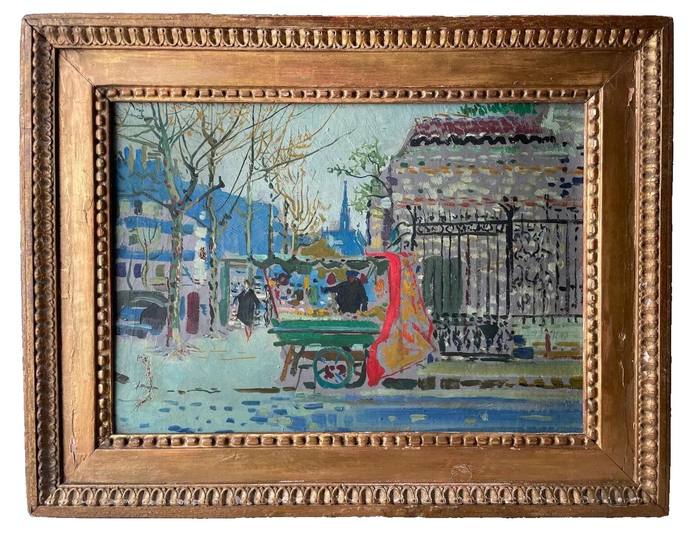
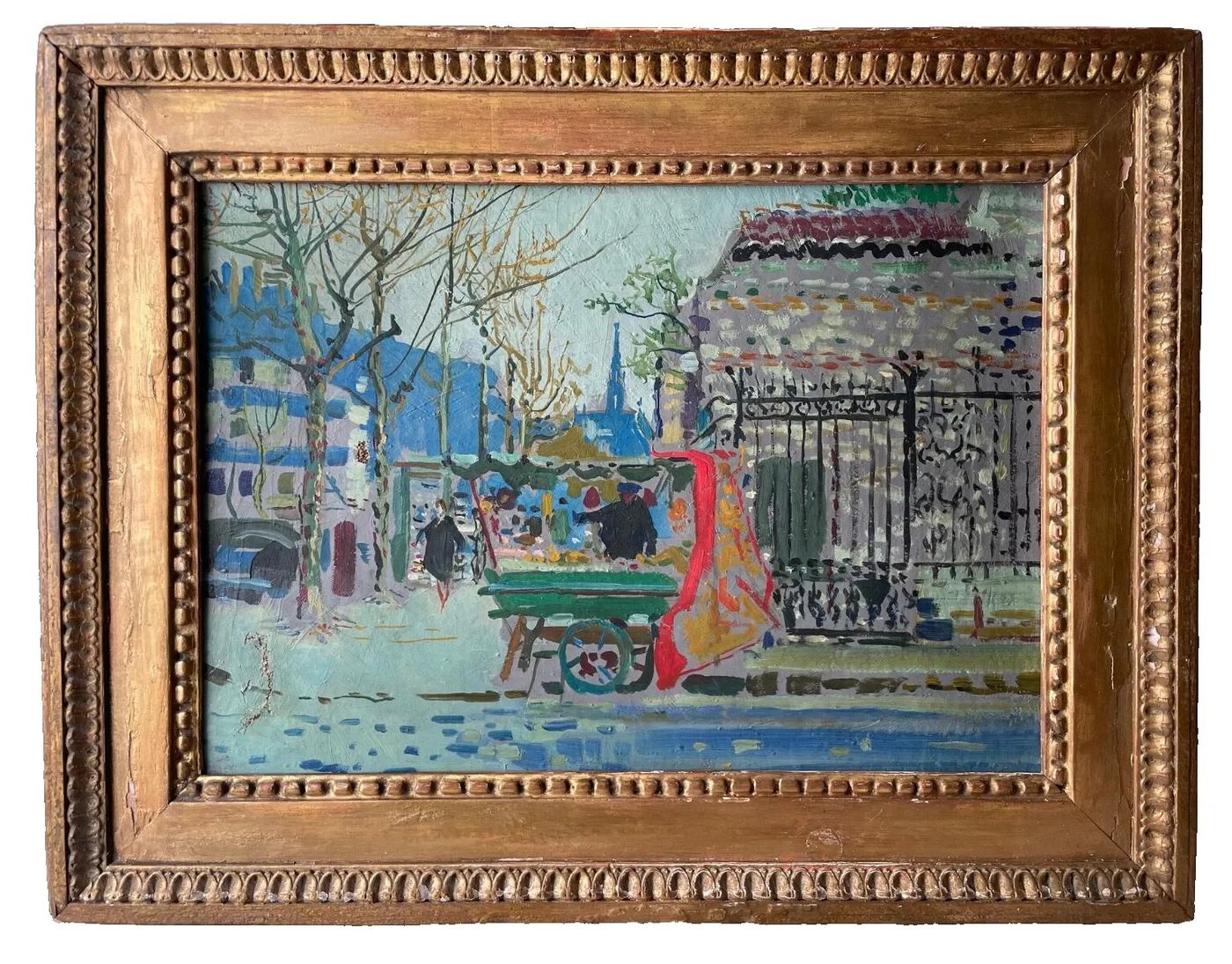
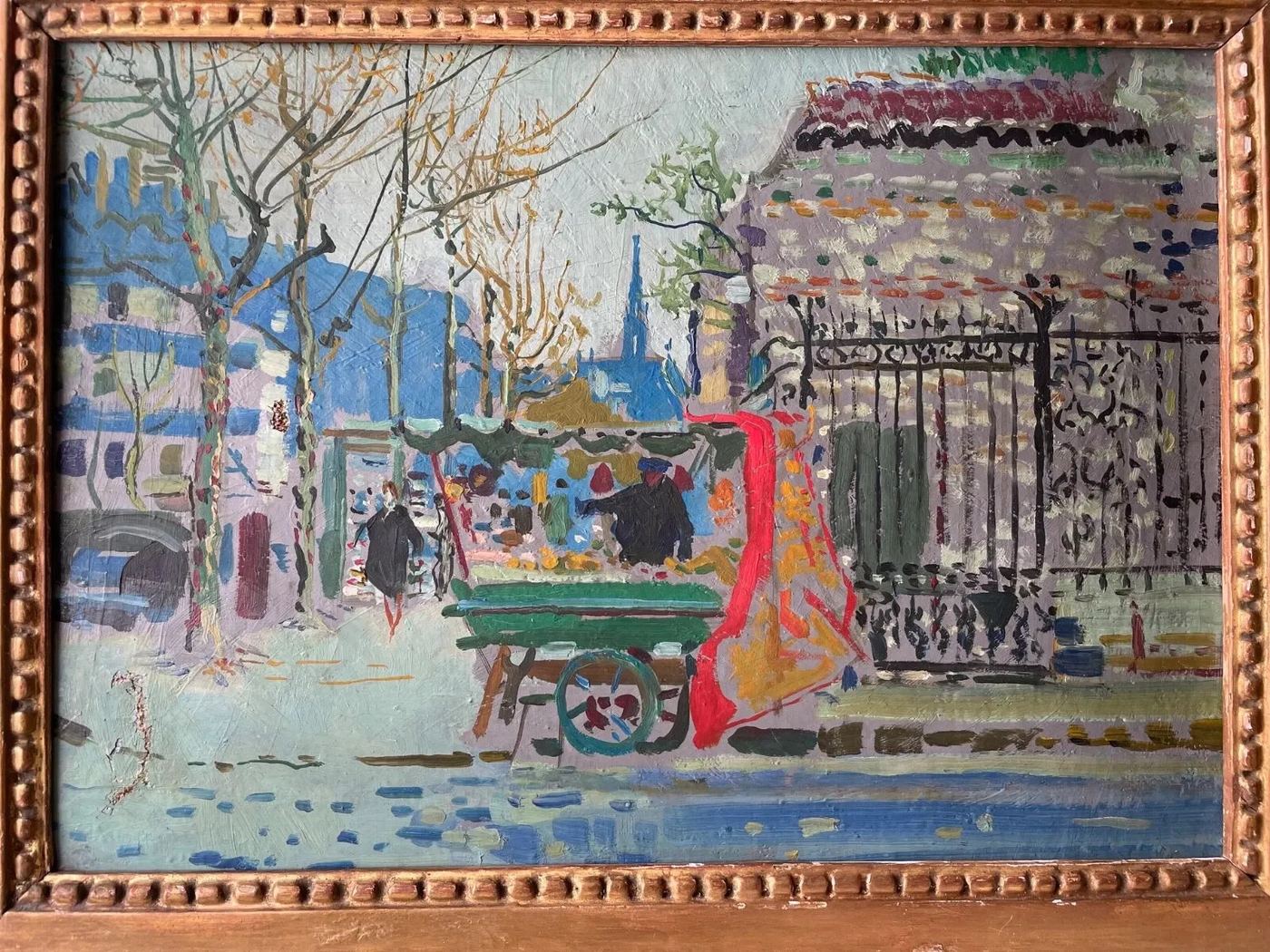
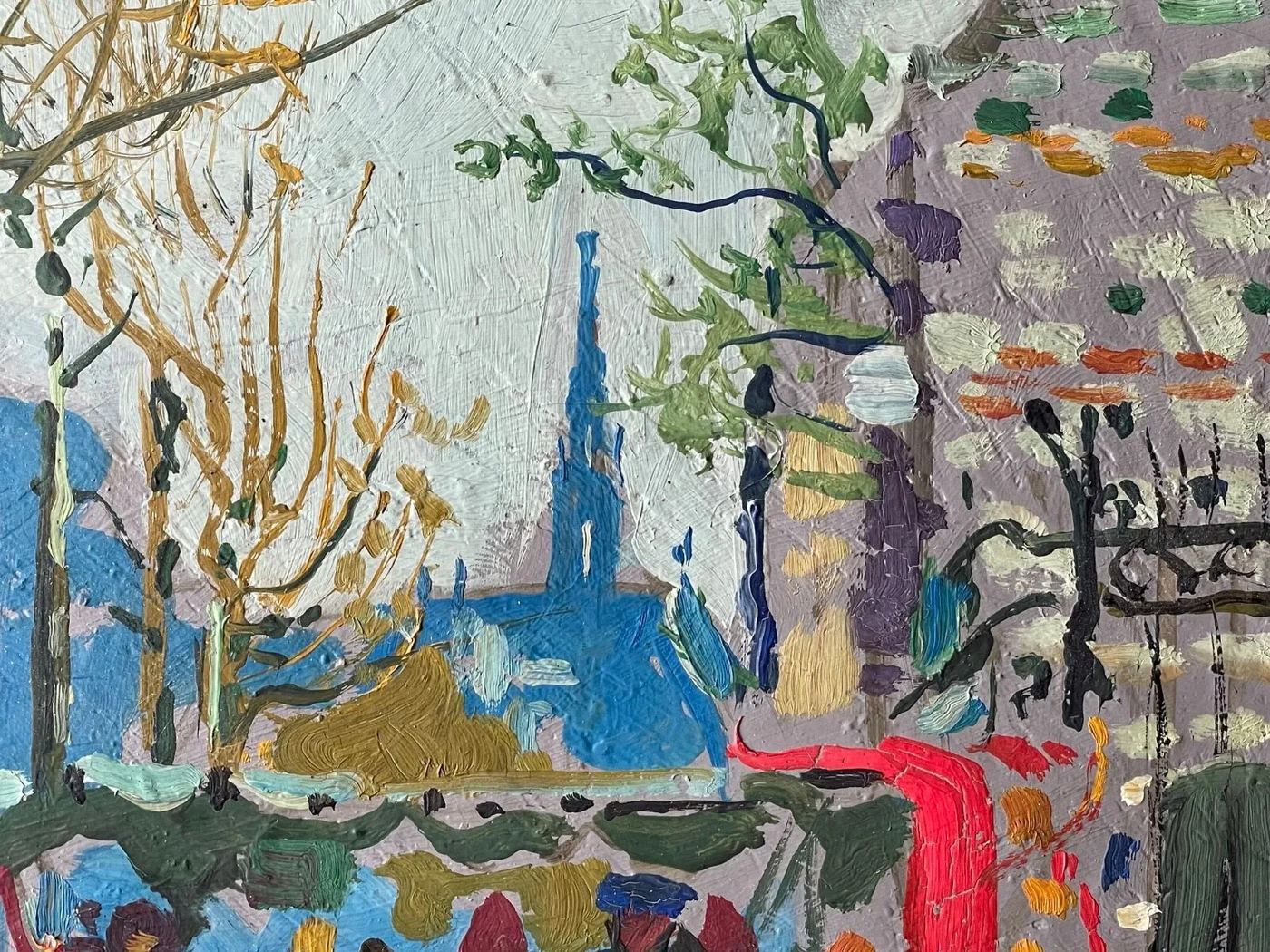
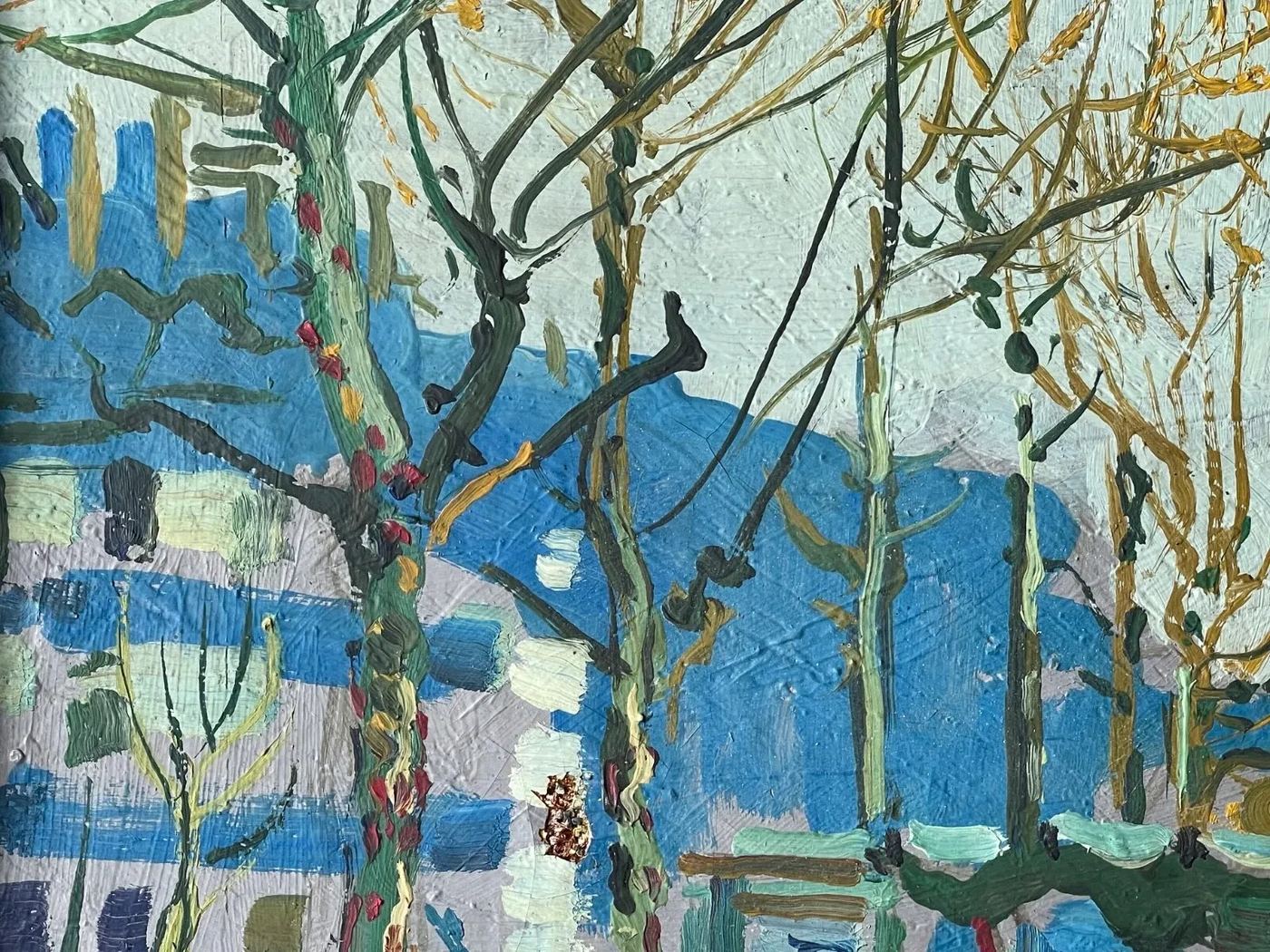
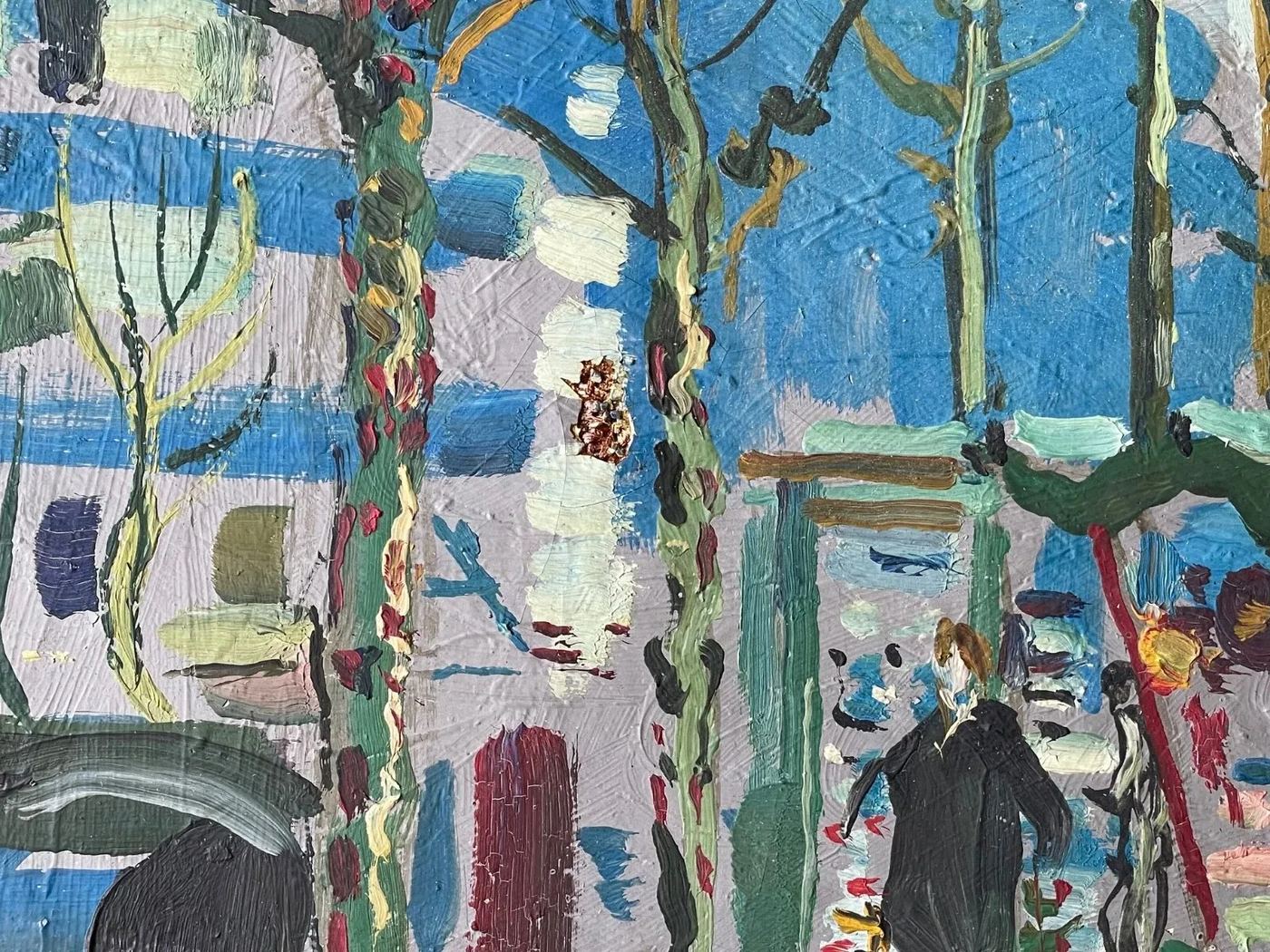
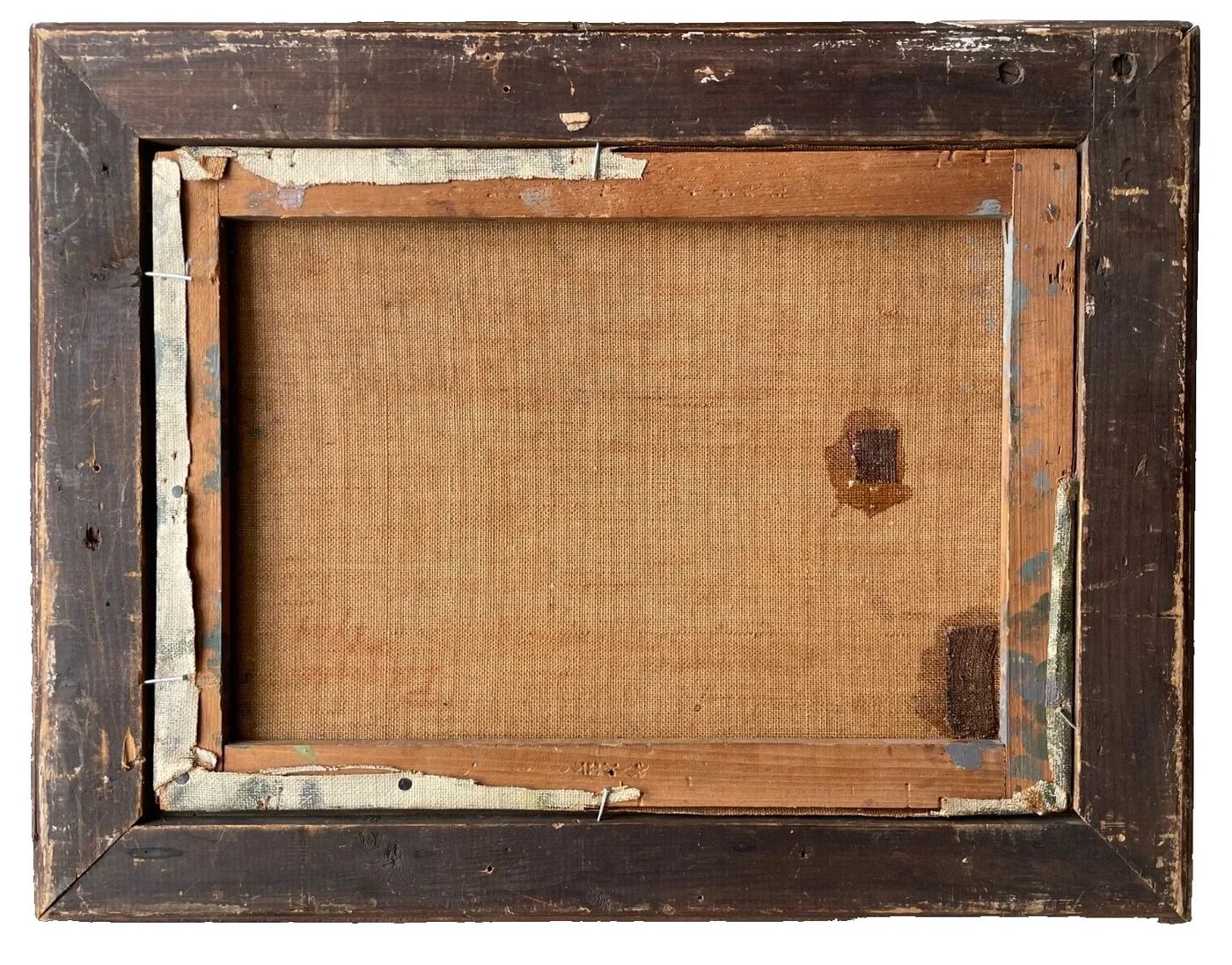
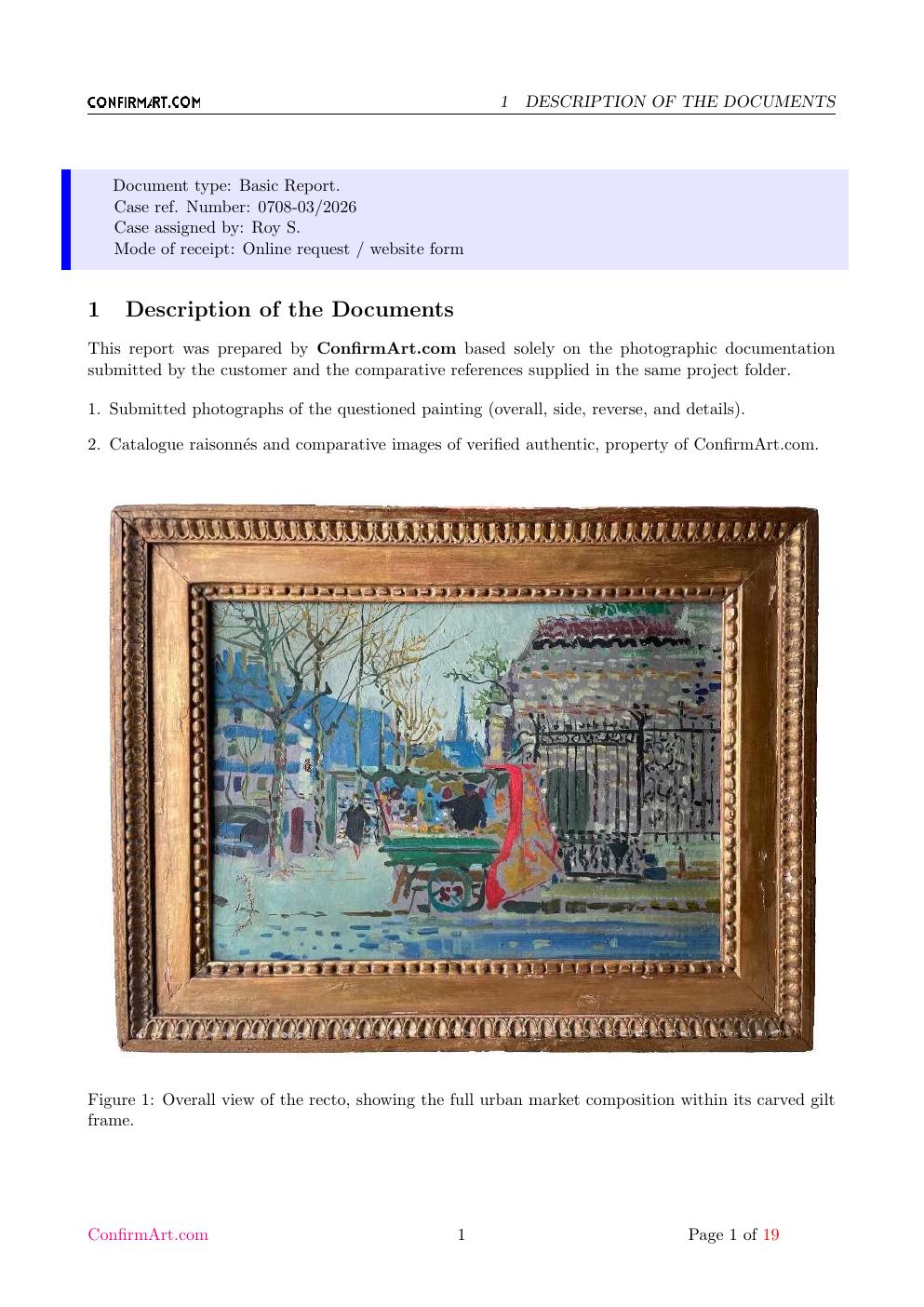
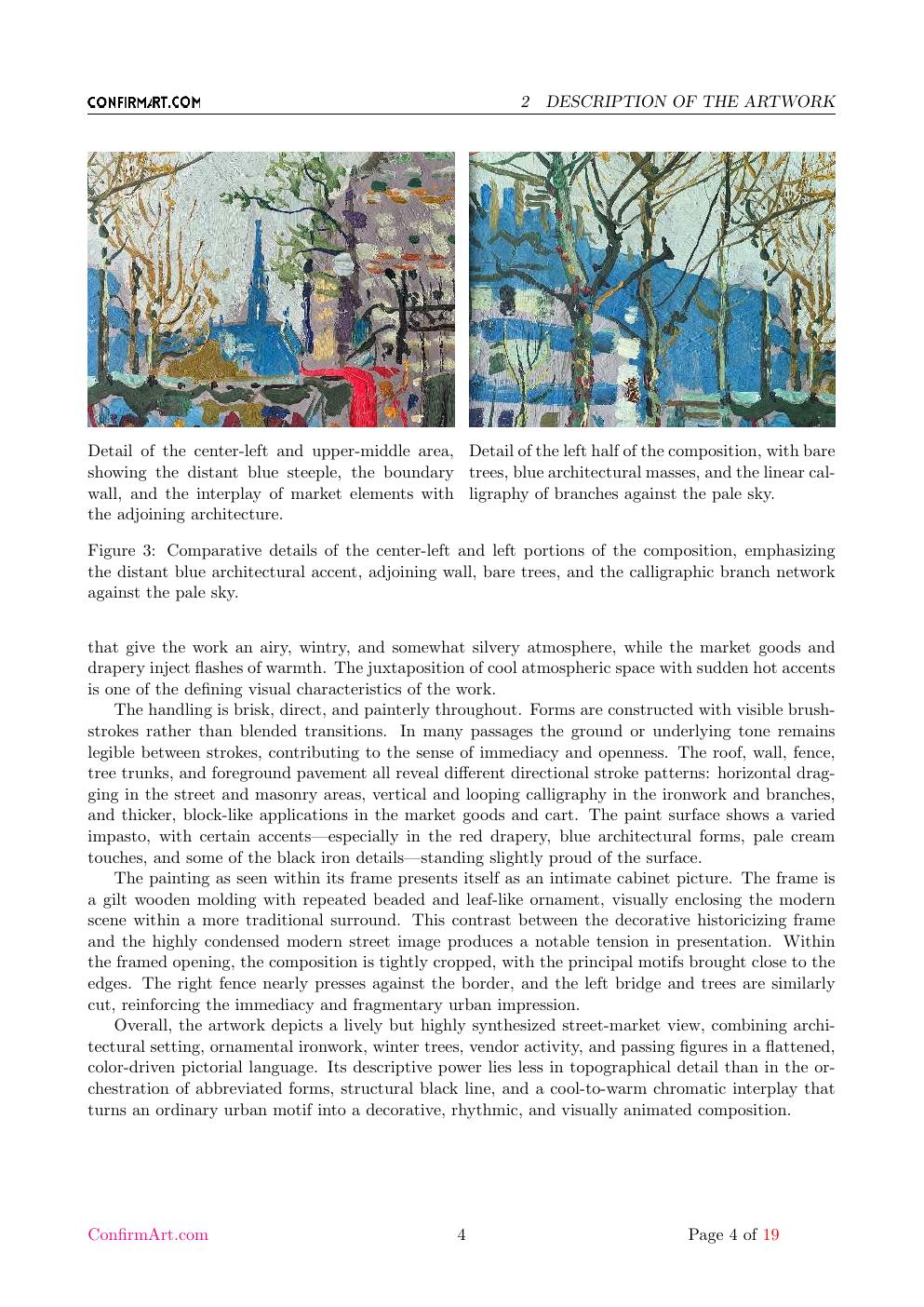
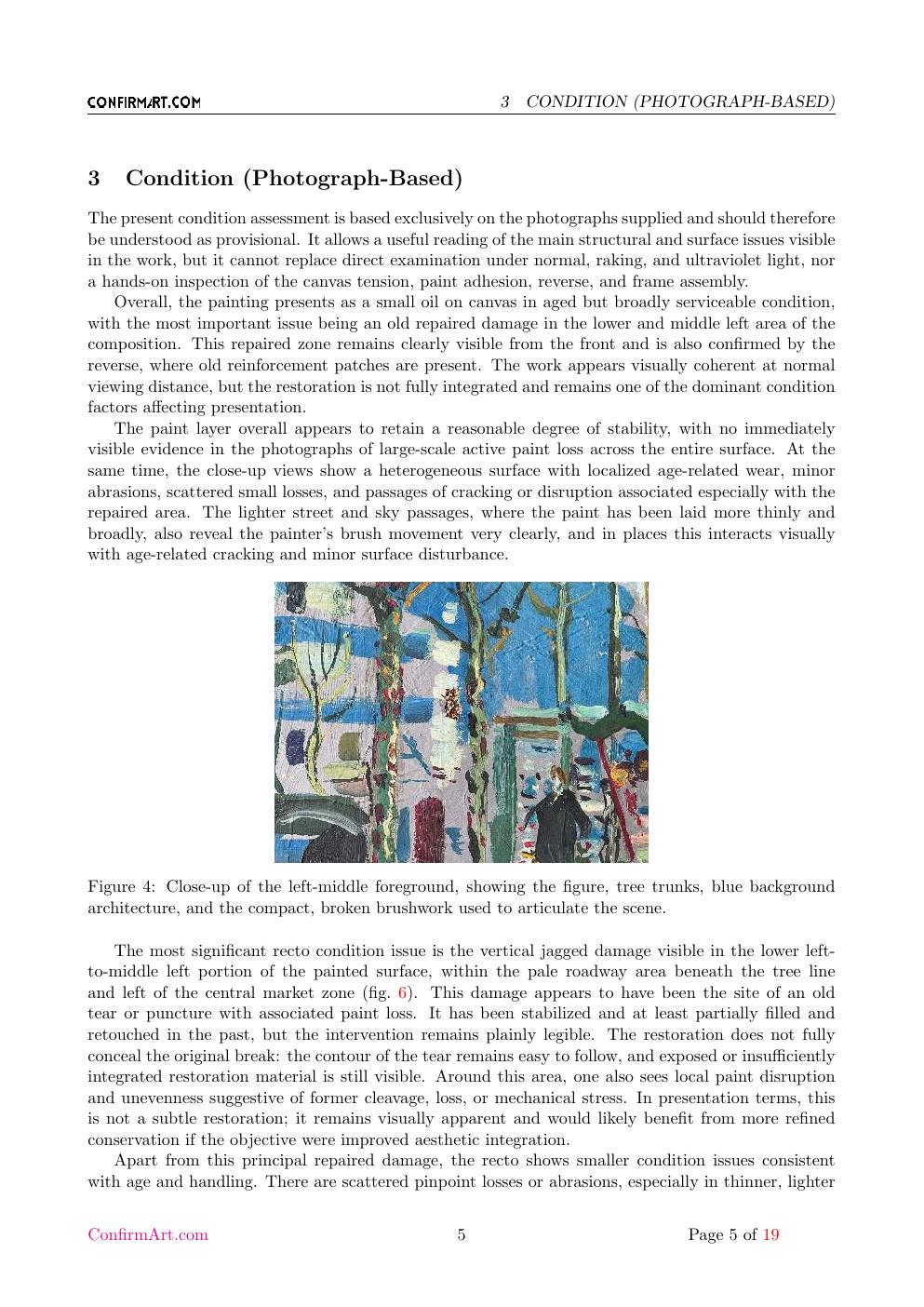
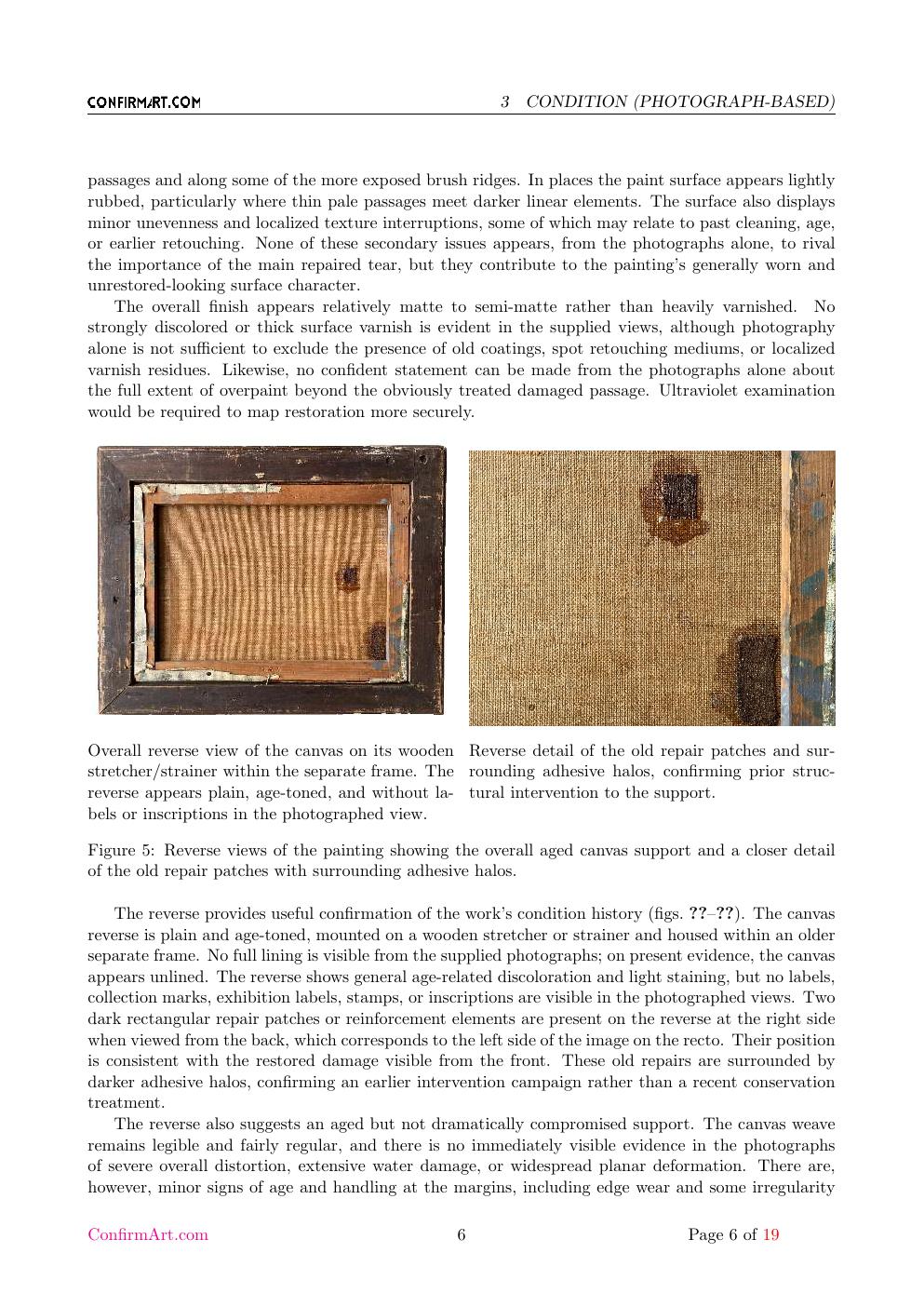
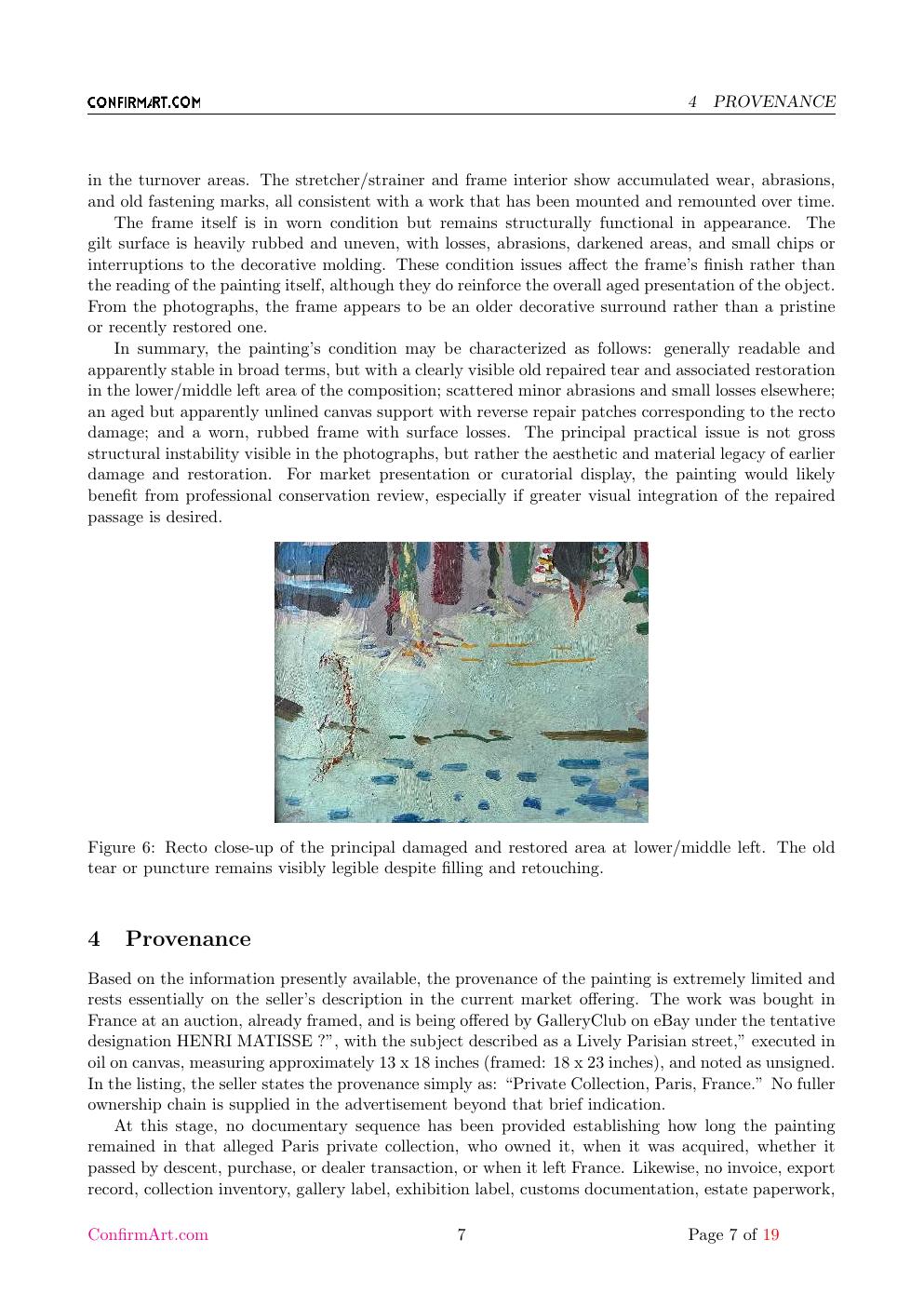
This report was prepared by ConfirmArt.com based solely on the photographic documentation submitted by the customer and the comparative references supplied in the same project folder. Submitted photographs of the questioned painting (overall, side, reverse, and details). Catalogue raisonnés and comparative images of verified authentic, property of ConfirmArt.com
Henri Matisse authentication evidence image 1: Fruit SellerHenri Matisse authentication evidence image 2: Fruit SellerHenri Matisse authentication evidence image 3: Fruit SellerHenri Matisse authentication evidence image 4: Fruit SellerHenri Matisse authentication evidence image 5: Fruit SellerHenri Matisse authentication evidence image 6: Fruit SellerHenri Matisse authentication evidence image 7: Fruit SellerHenri Matisse authentication evidence image 8: Fruit Seller
Report structure
Section summaries
01
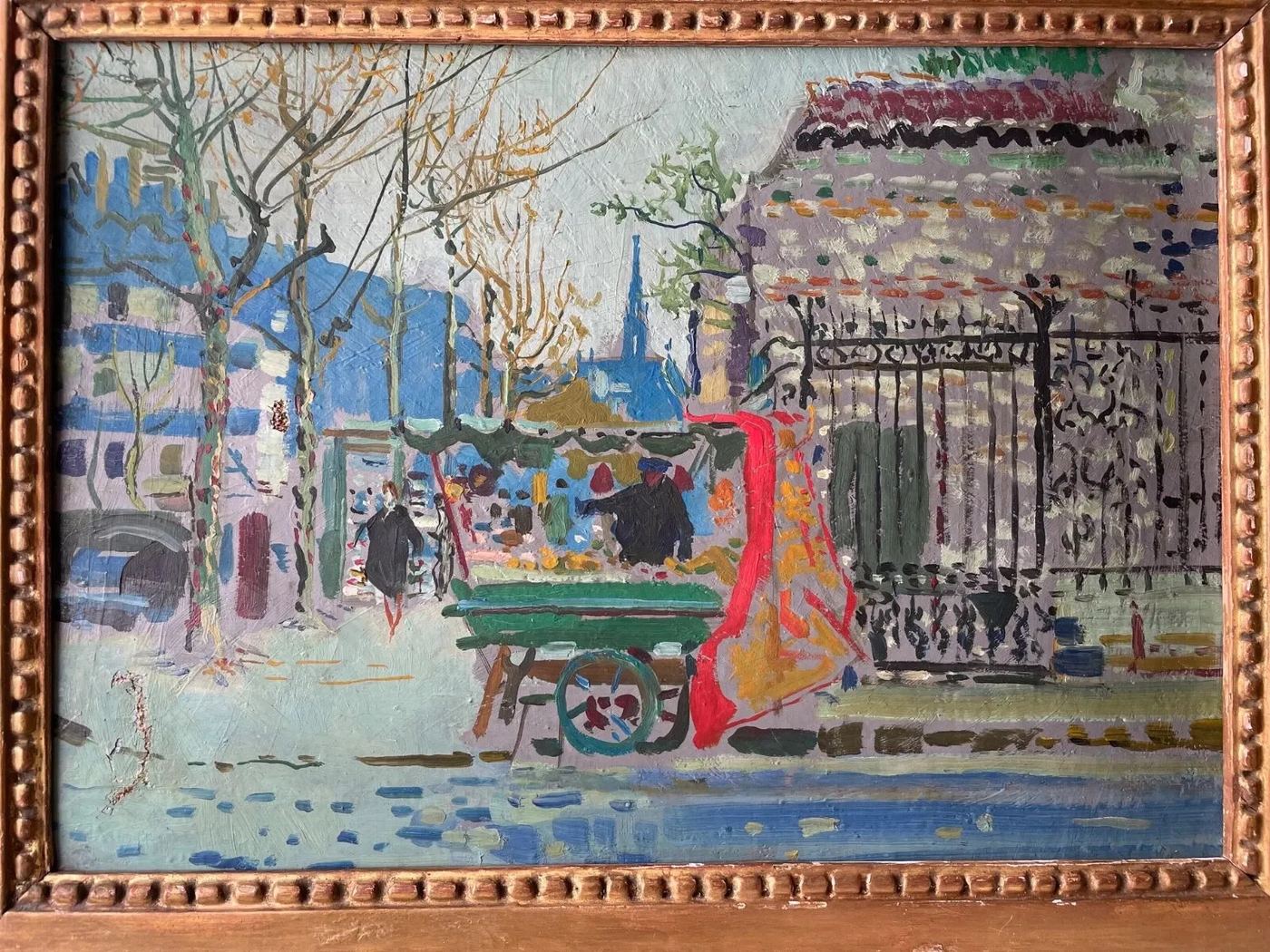
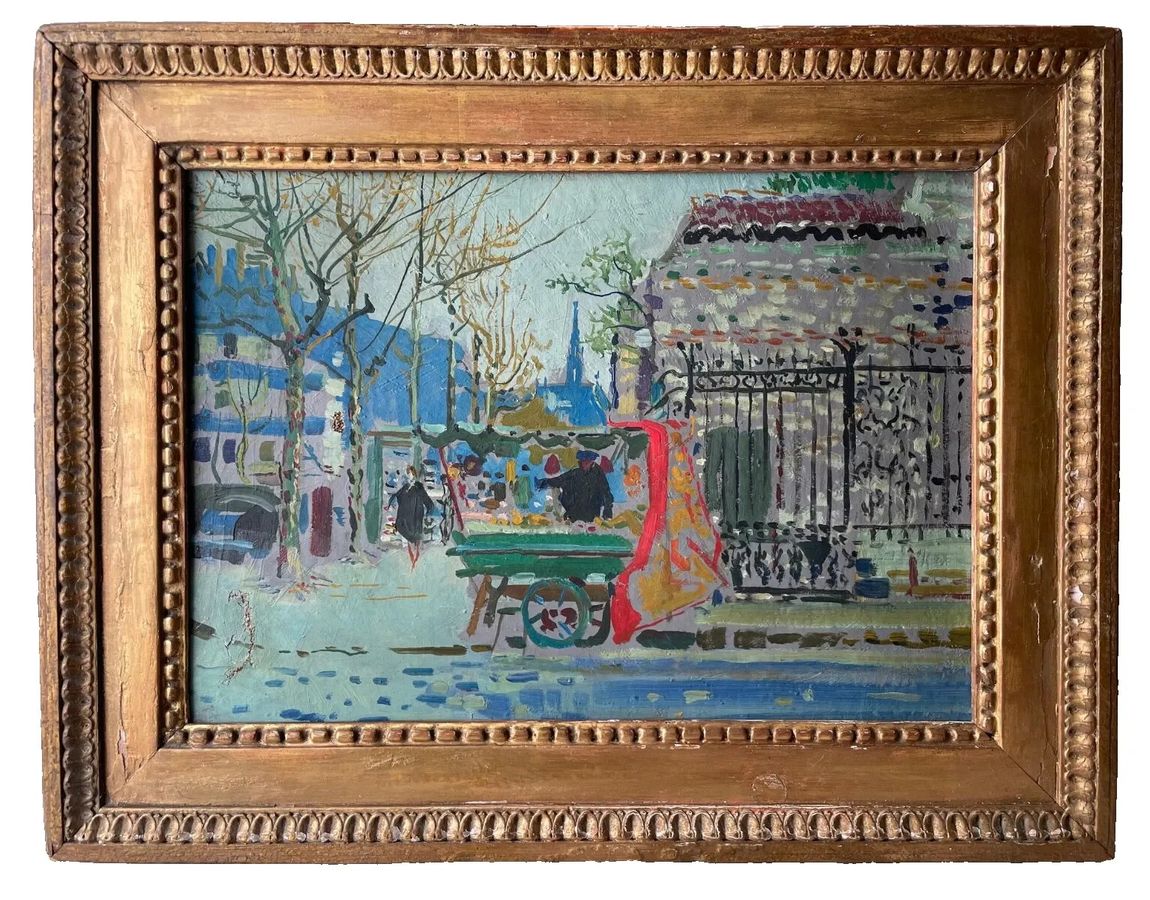
Description of the Artwork
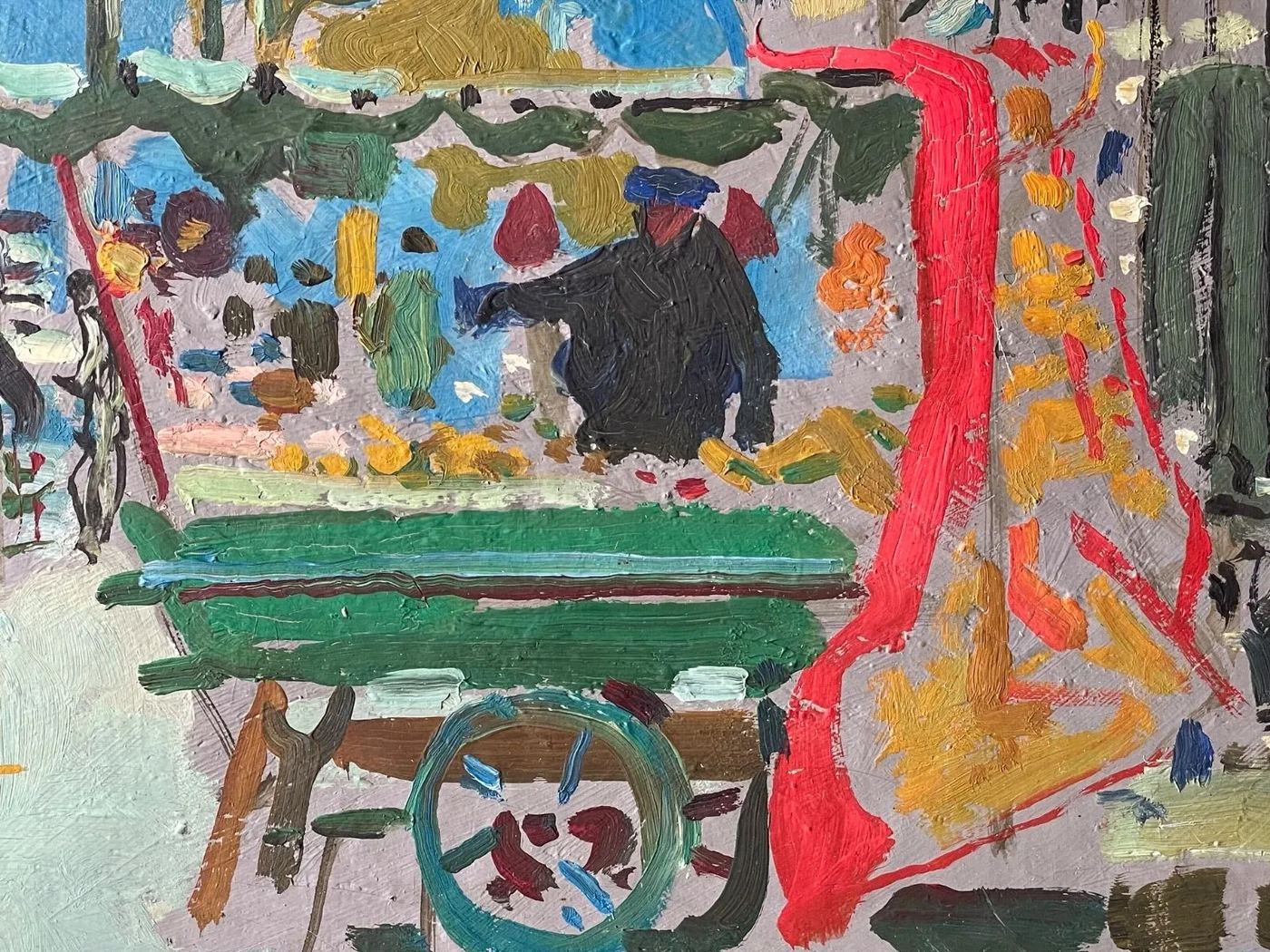
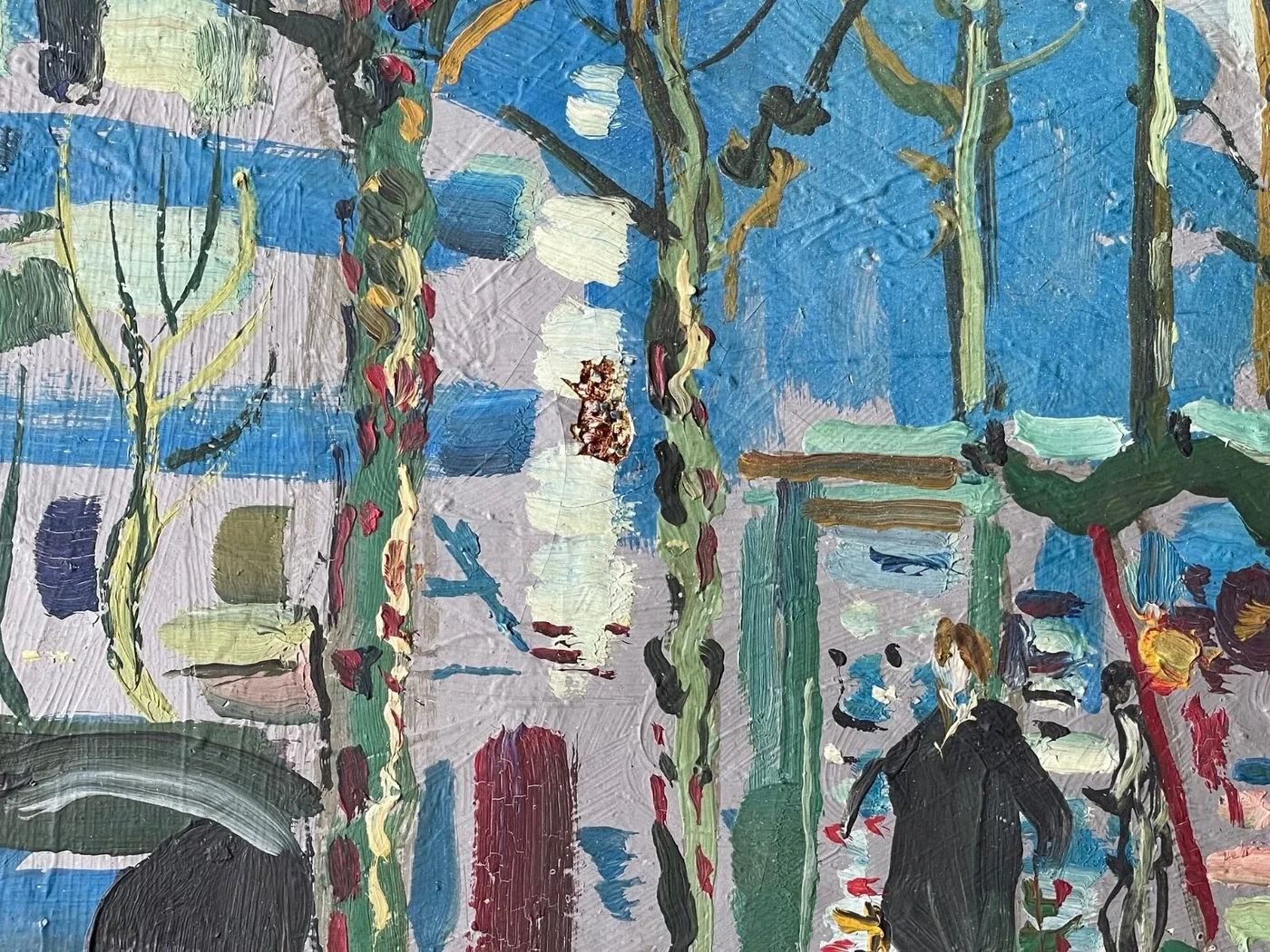
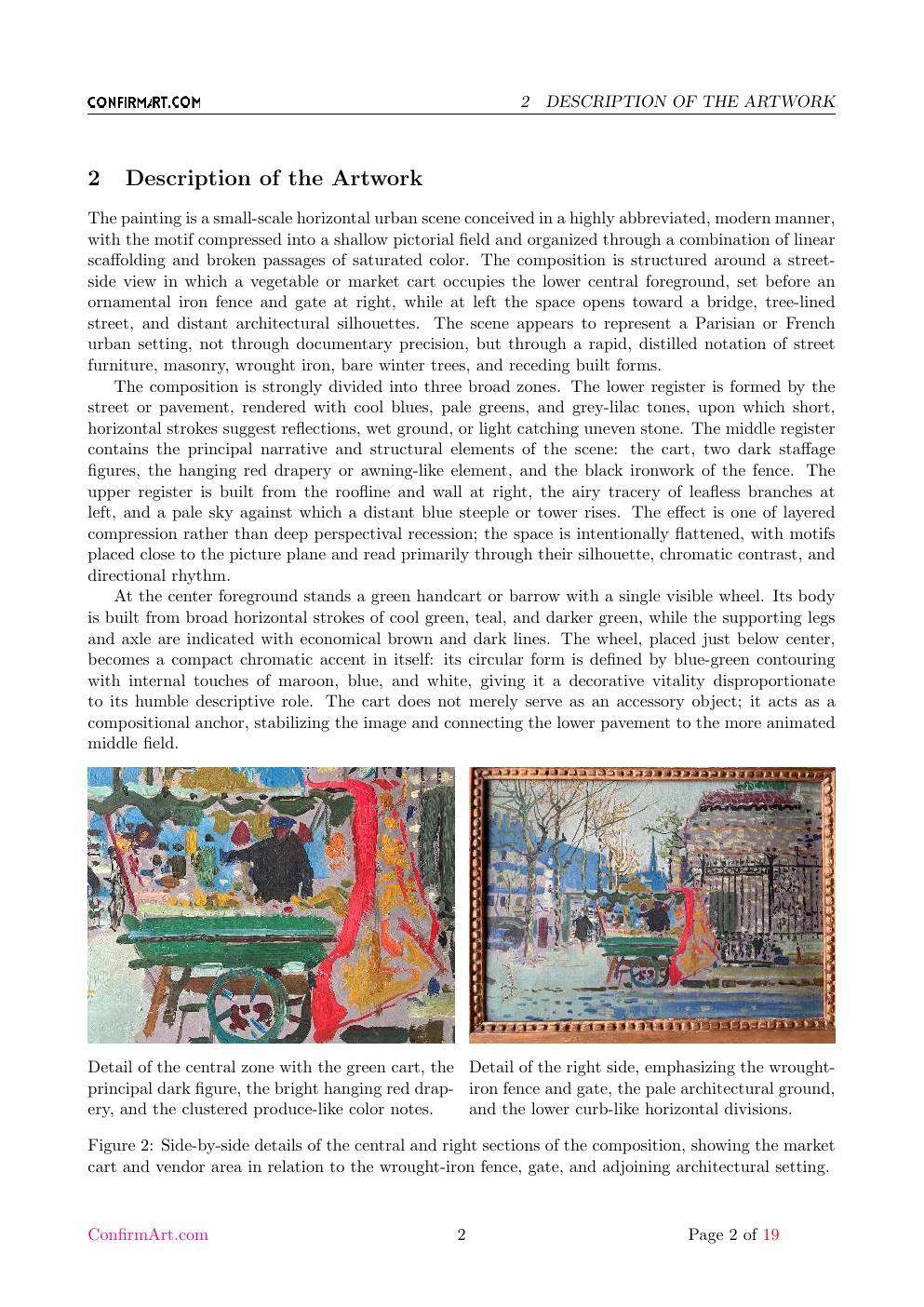
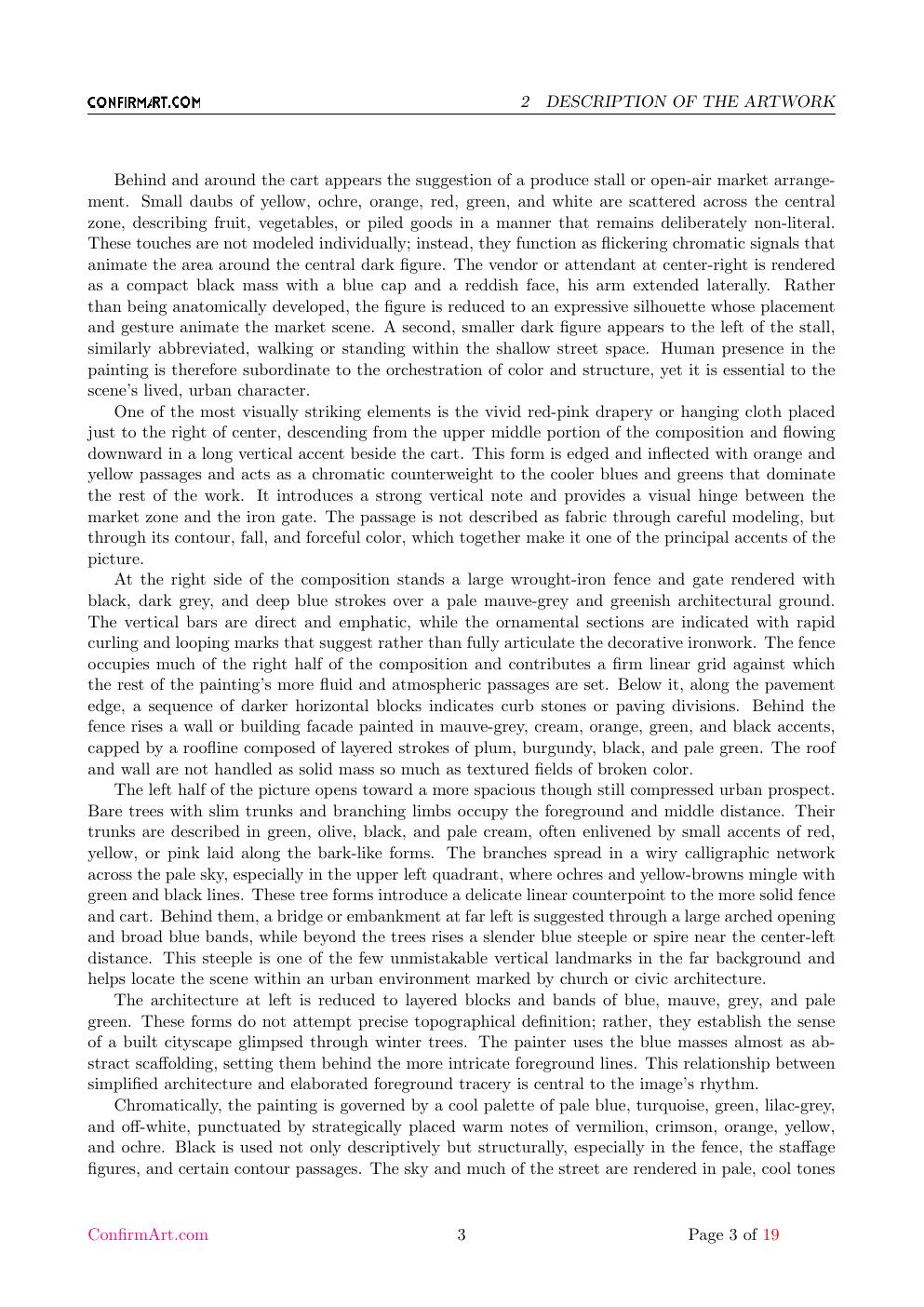
The painting is a small-scale horizontal urban scene conceived in a highly abbreviated, modern manner, with the motif compressed into a shallow pictorial field and organized through a combination of linear scaffolding and broken passages of saturated color. The composition is structured around a street-side view in which a vegetable or market cart occupies the lower central foreground, set before an ornamental iron fence and gate at right, while at left the space opens toward a bridge, tree-lined street, and distan
02
Condition (Photograph-Based)
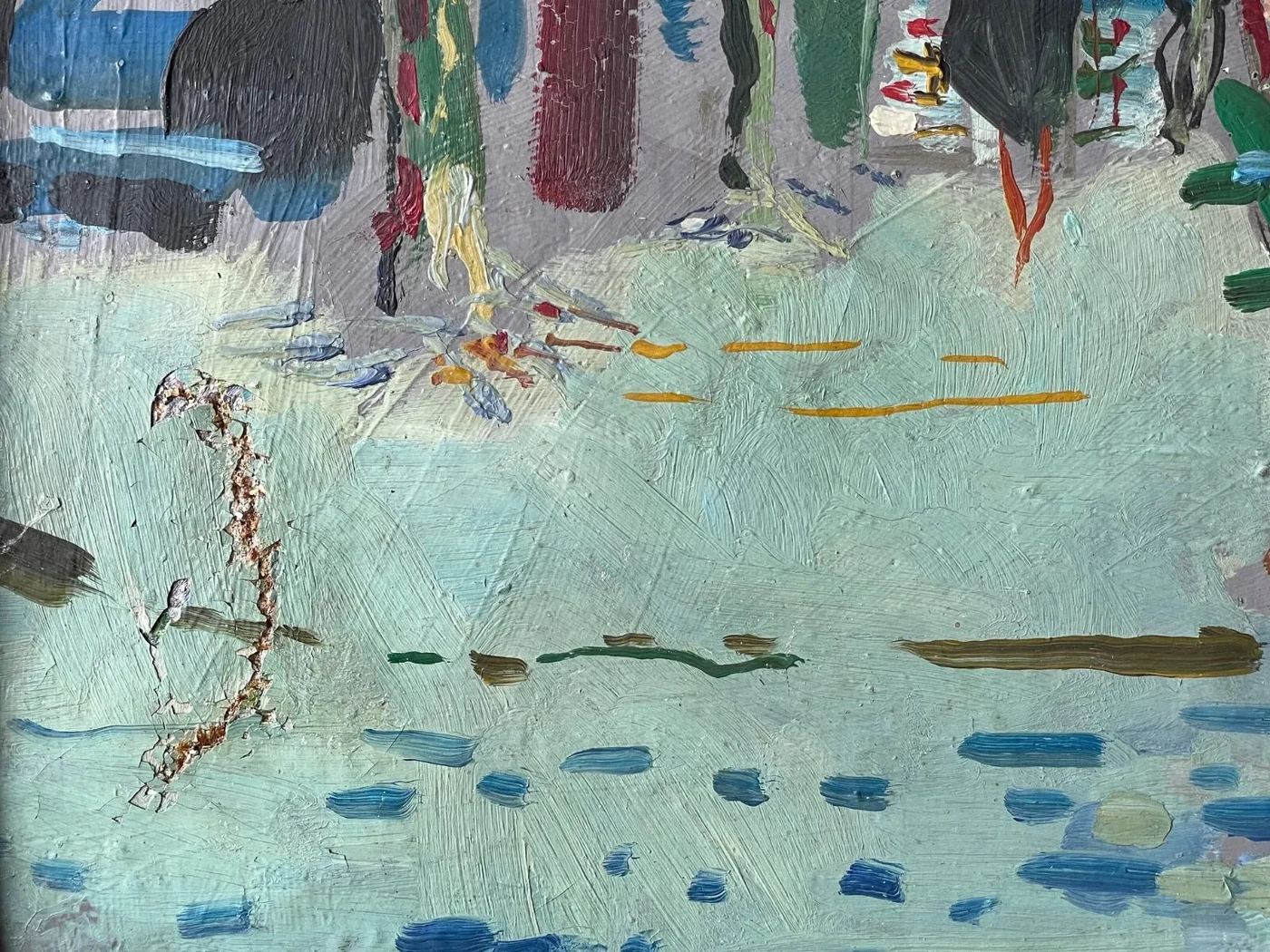
The present condition assessment is based exclusively on the photographs supplied and should therefore be understood as provisional. It allows a useful reading of the main structural and surface issues visible in the work, but it cannot replace direct examination under normal, raking, and ultraviolet light, nor a hands-on inspection of the canvas tension, paint adhesion, reverse, and frame assembly. Overall, the painting presents as a small oil on canvas in aged but broadly serviceable condition, with the most impo
03
Catalogue Notes
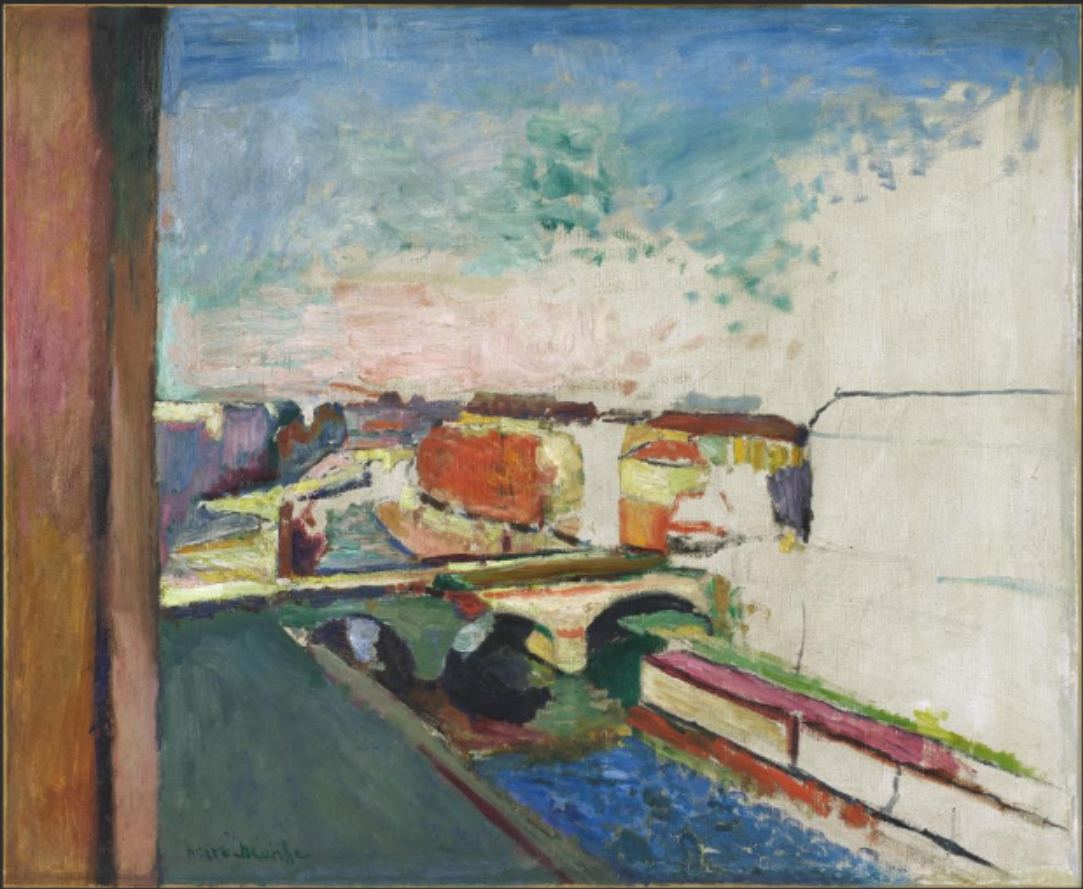
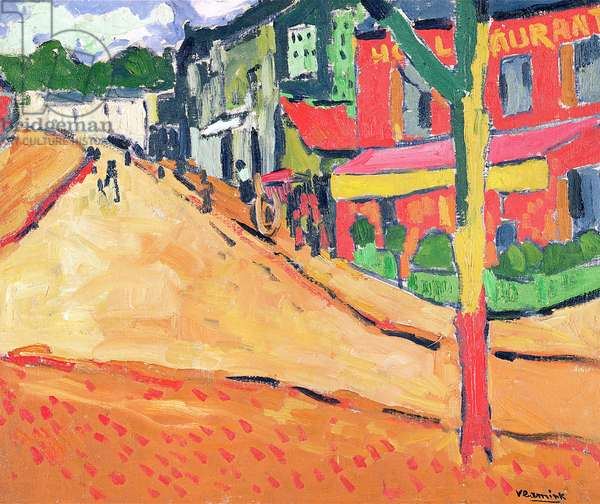
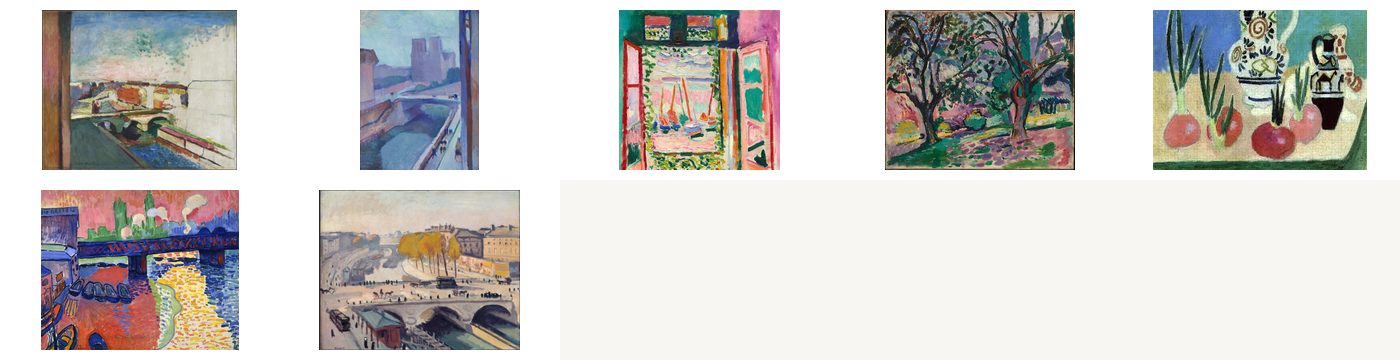
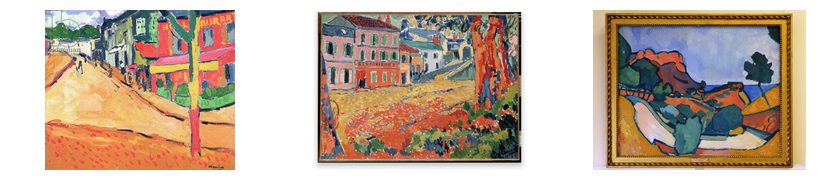
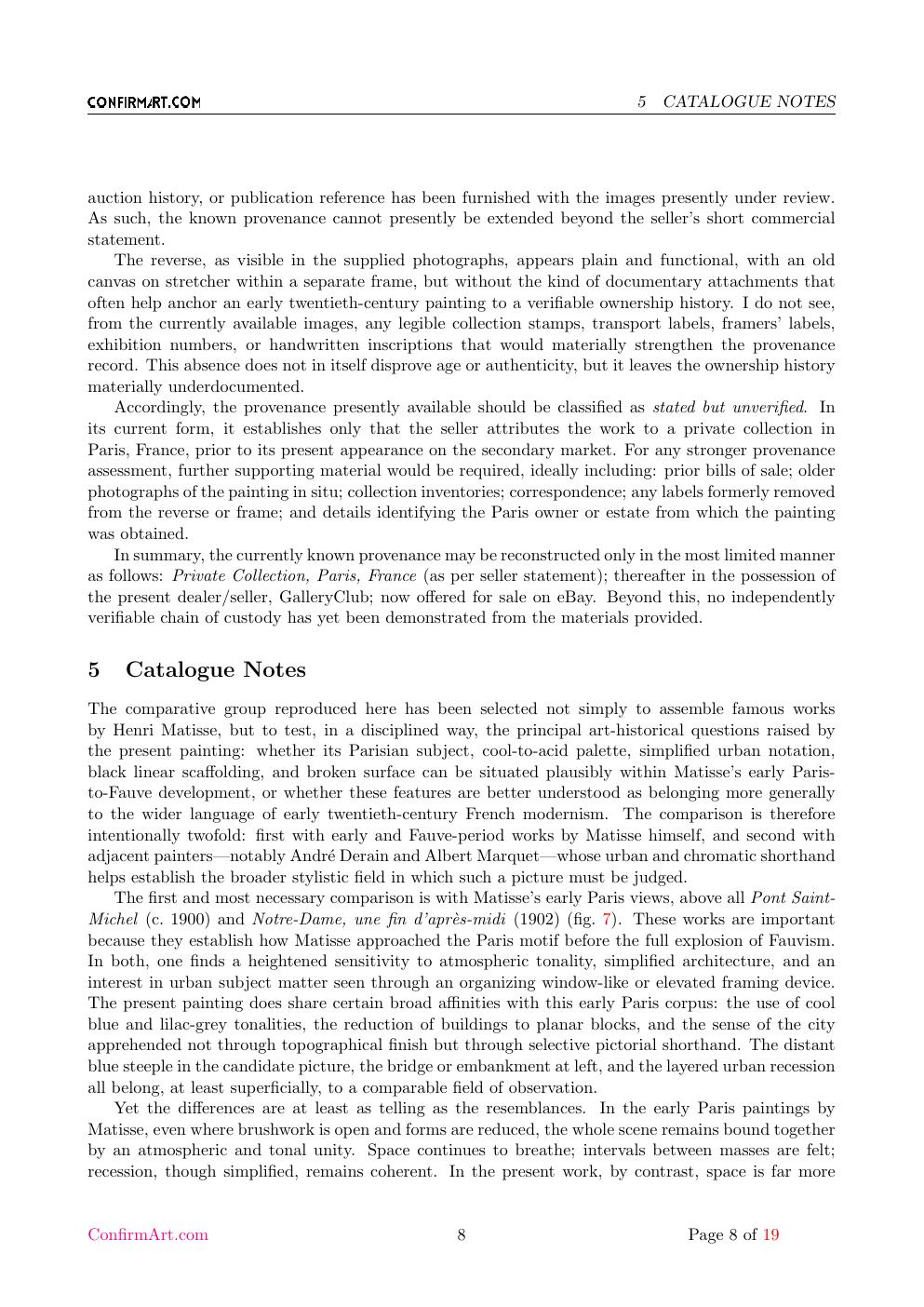
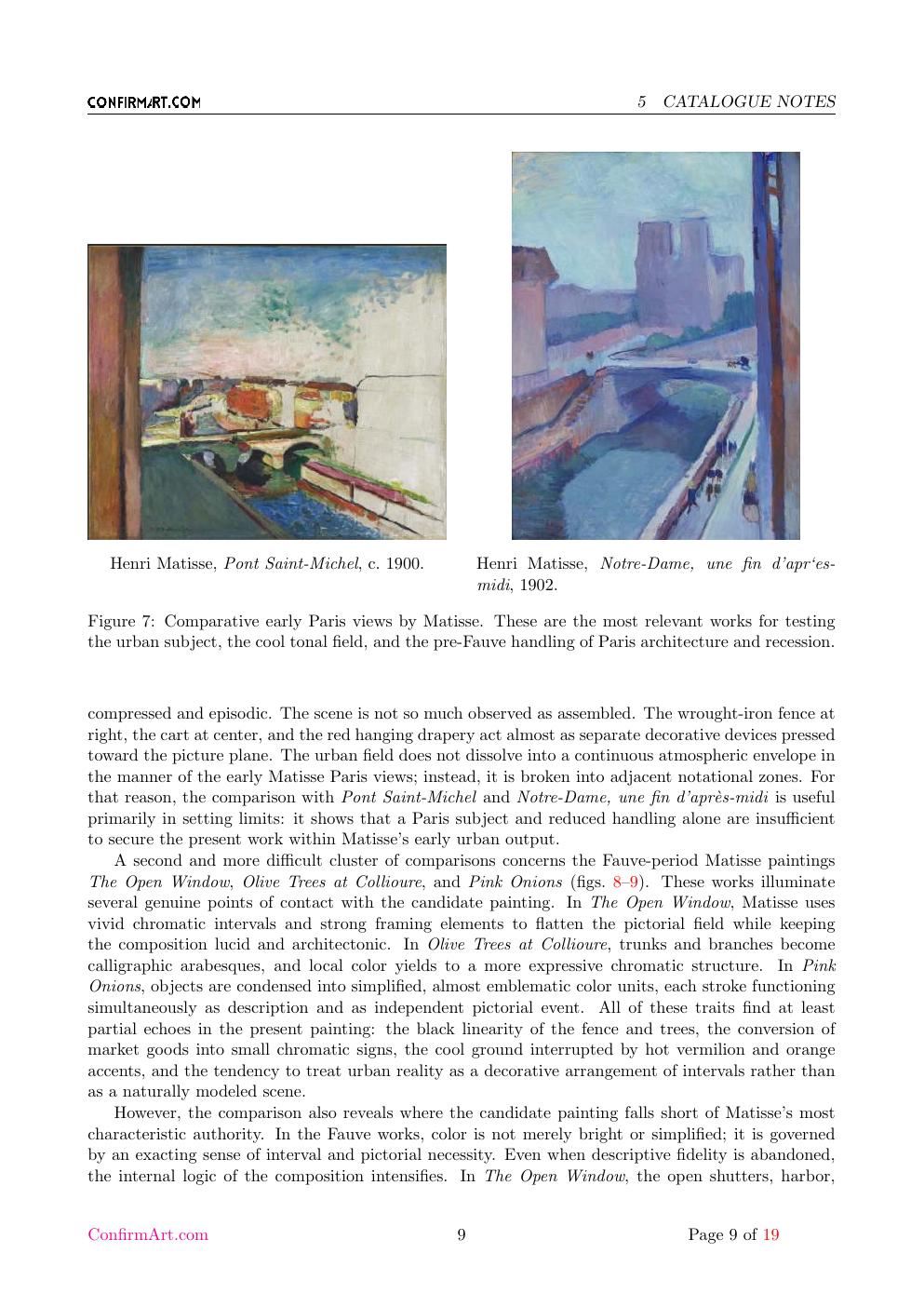
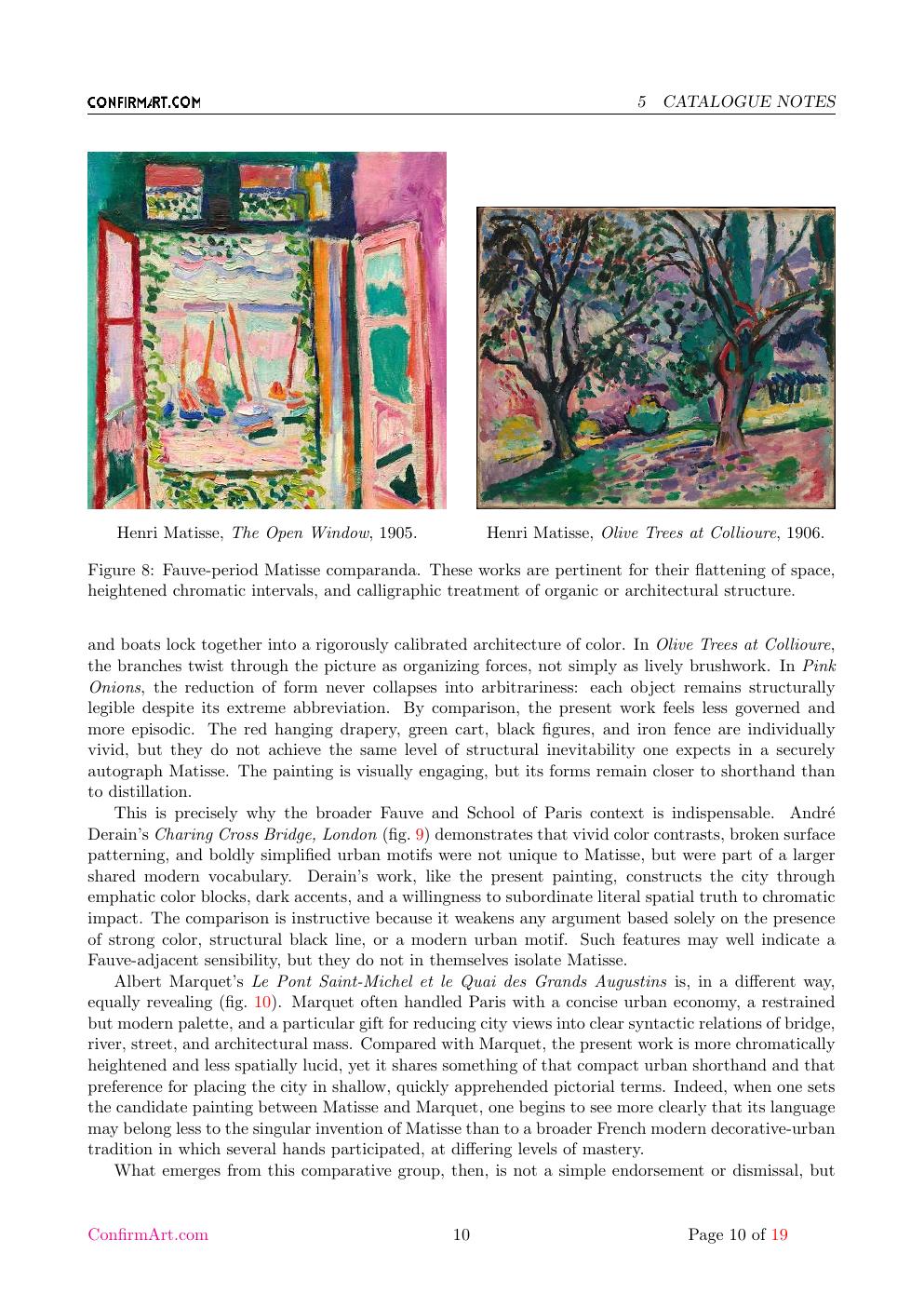
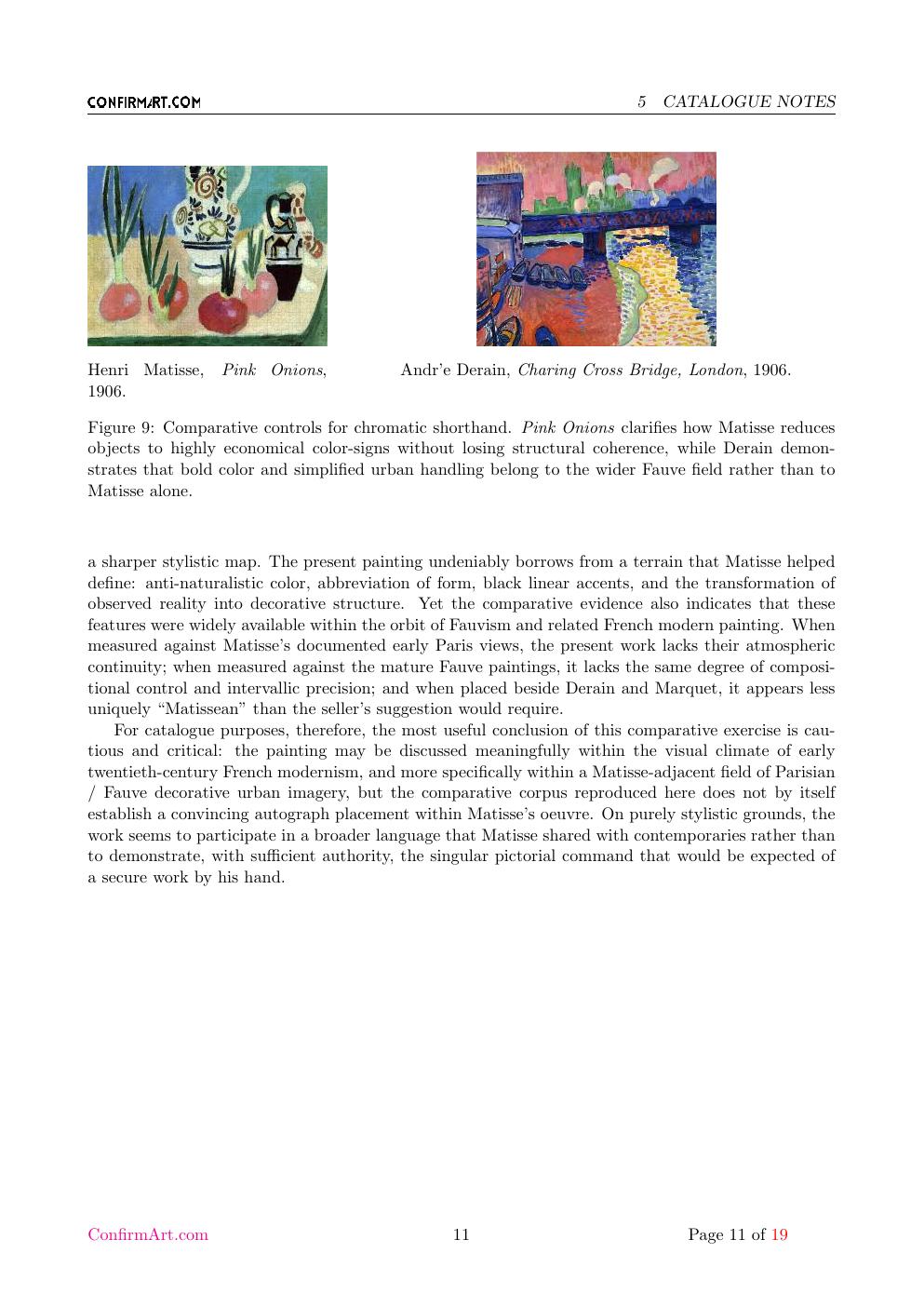
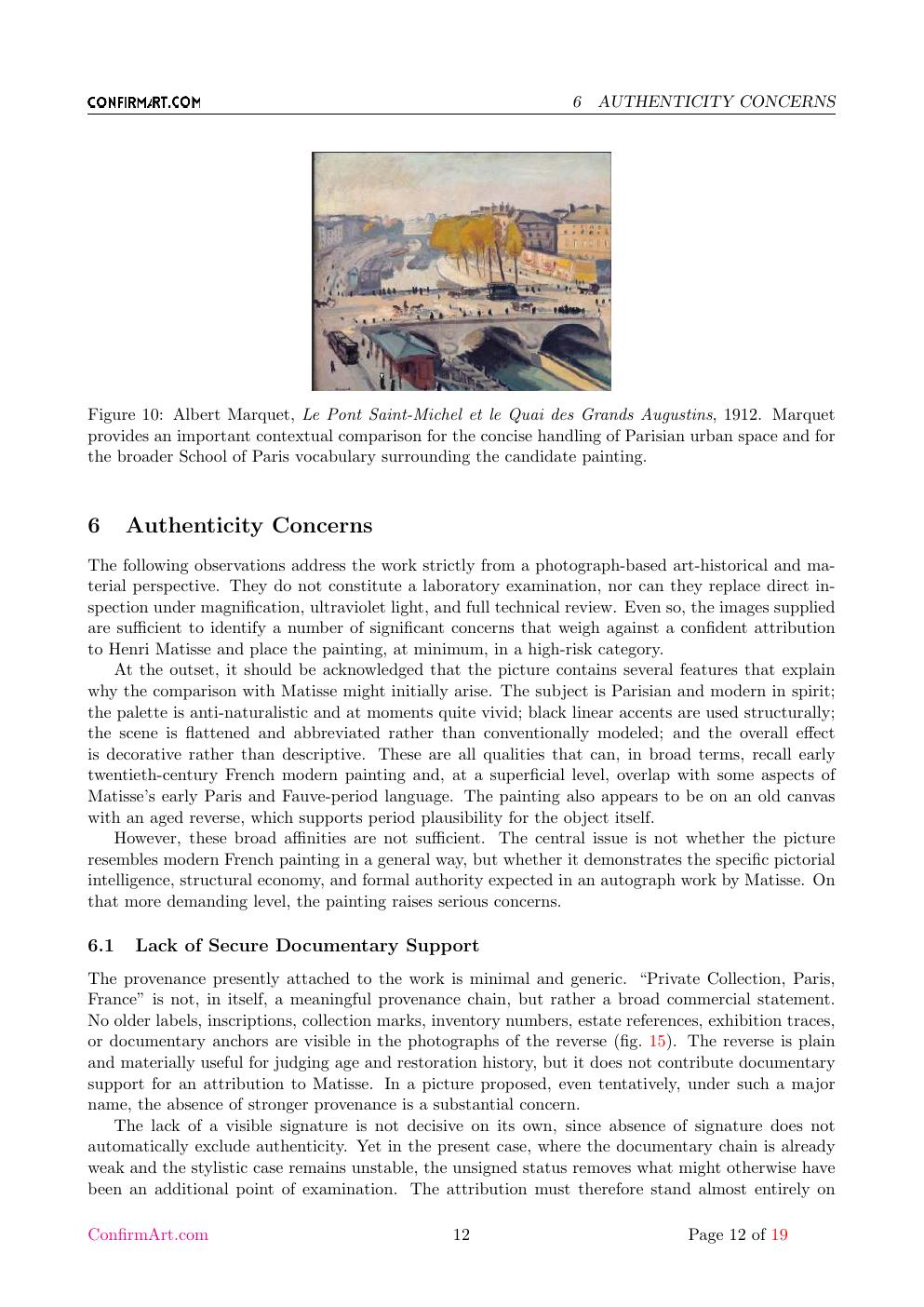
The comparative group reproduced here has been selected not simply to assemble famous works by Henri Matisse, but to test, in a disciplined way, the principal art-historical questions raised by the present painting: whether its Parisian subject, cool-to-acid palette, simplified urban notation, black linear scaffolding, and broken surface can be situated plausibly within Matisse's early Paris-to-Fauve development, or whether these features are better understood as belonging more generally to the wider language of ea
04
Lack of Secure Documentary Support
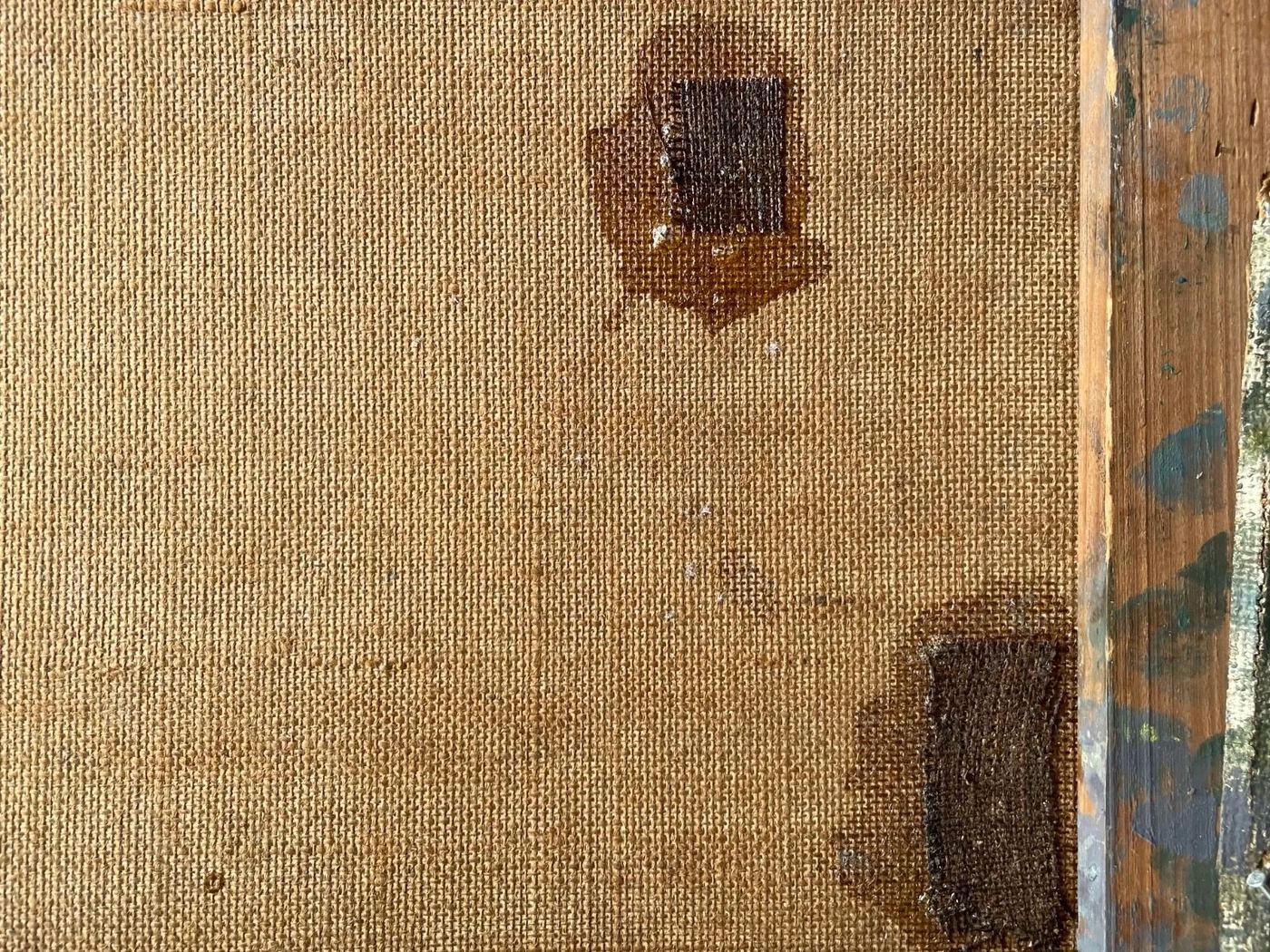
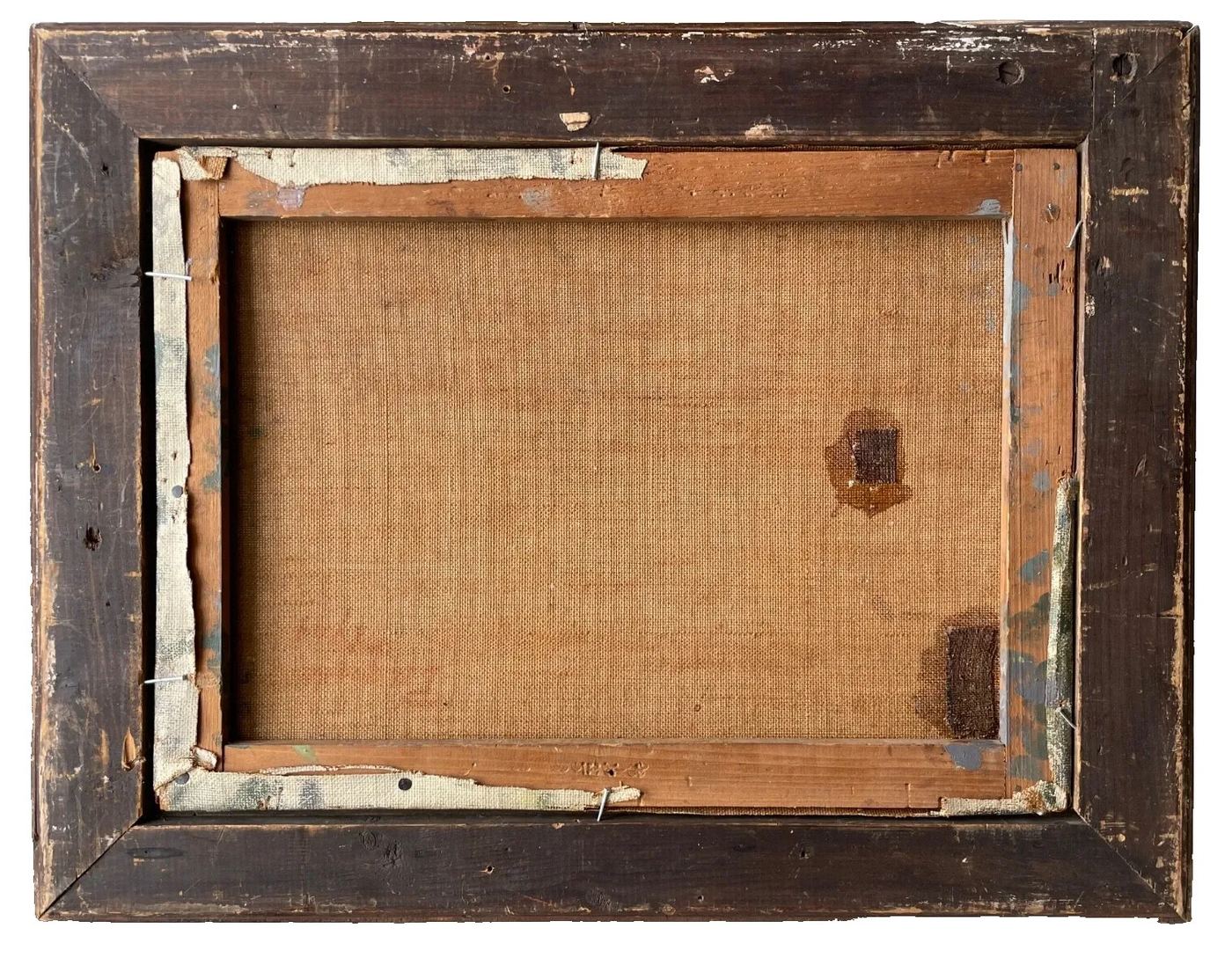
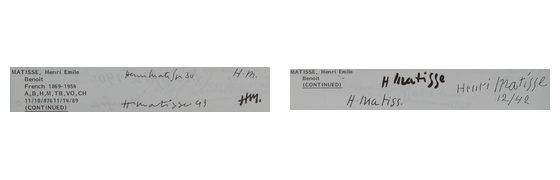
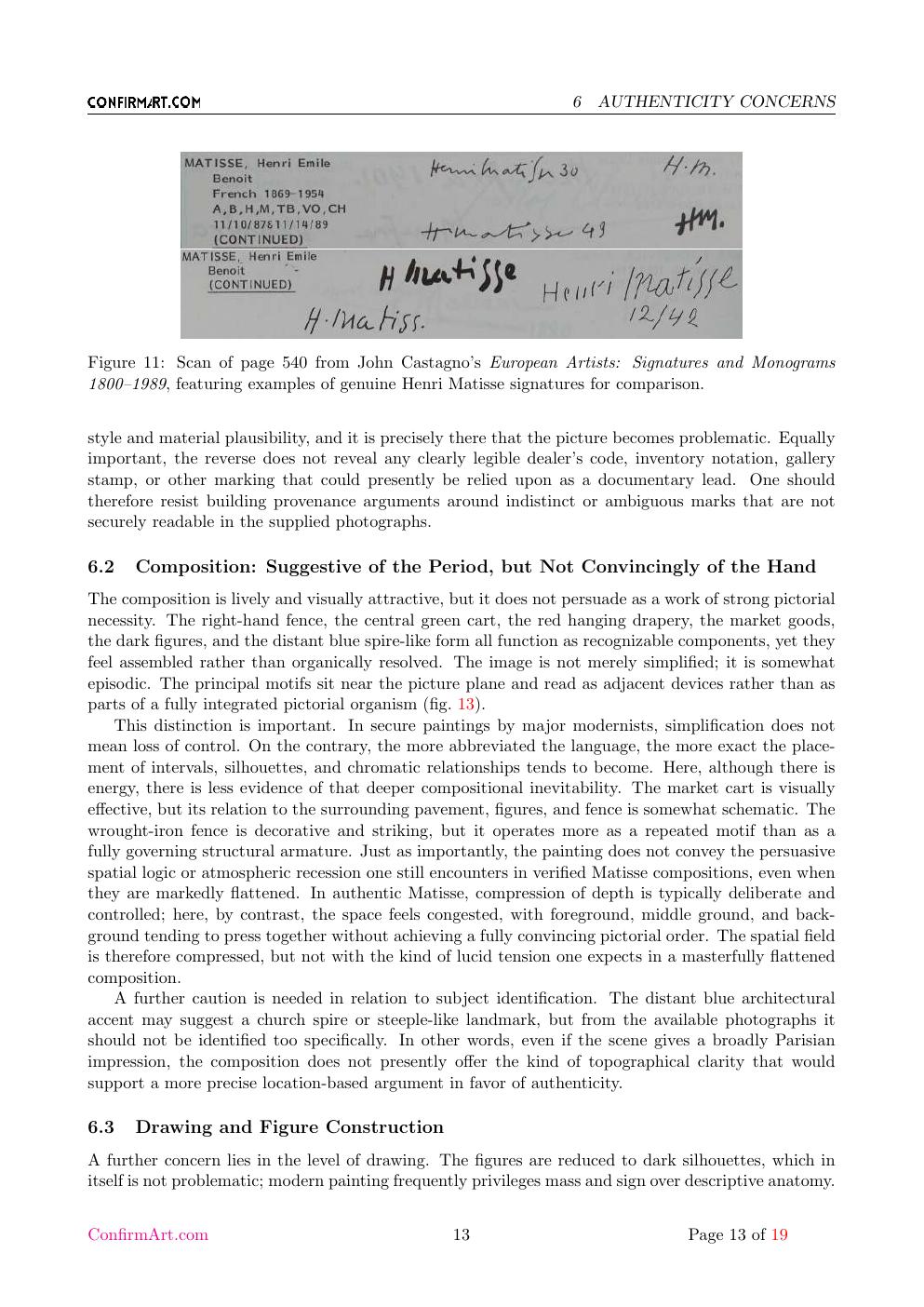
The provenance presently attached to the work is minimal and generic. "Private Collection, Paris, France" is not, in itself, a meaningful provenance chain, but rather a broad commercial statement. No older labels, inscriptions, collection marks, inventory numbers, estate references, exhibition traces, or documentary anchors are visible in the photographs of the reverse (fig.
05
Drawing and Figure Construction
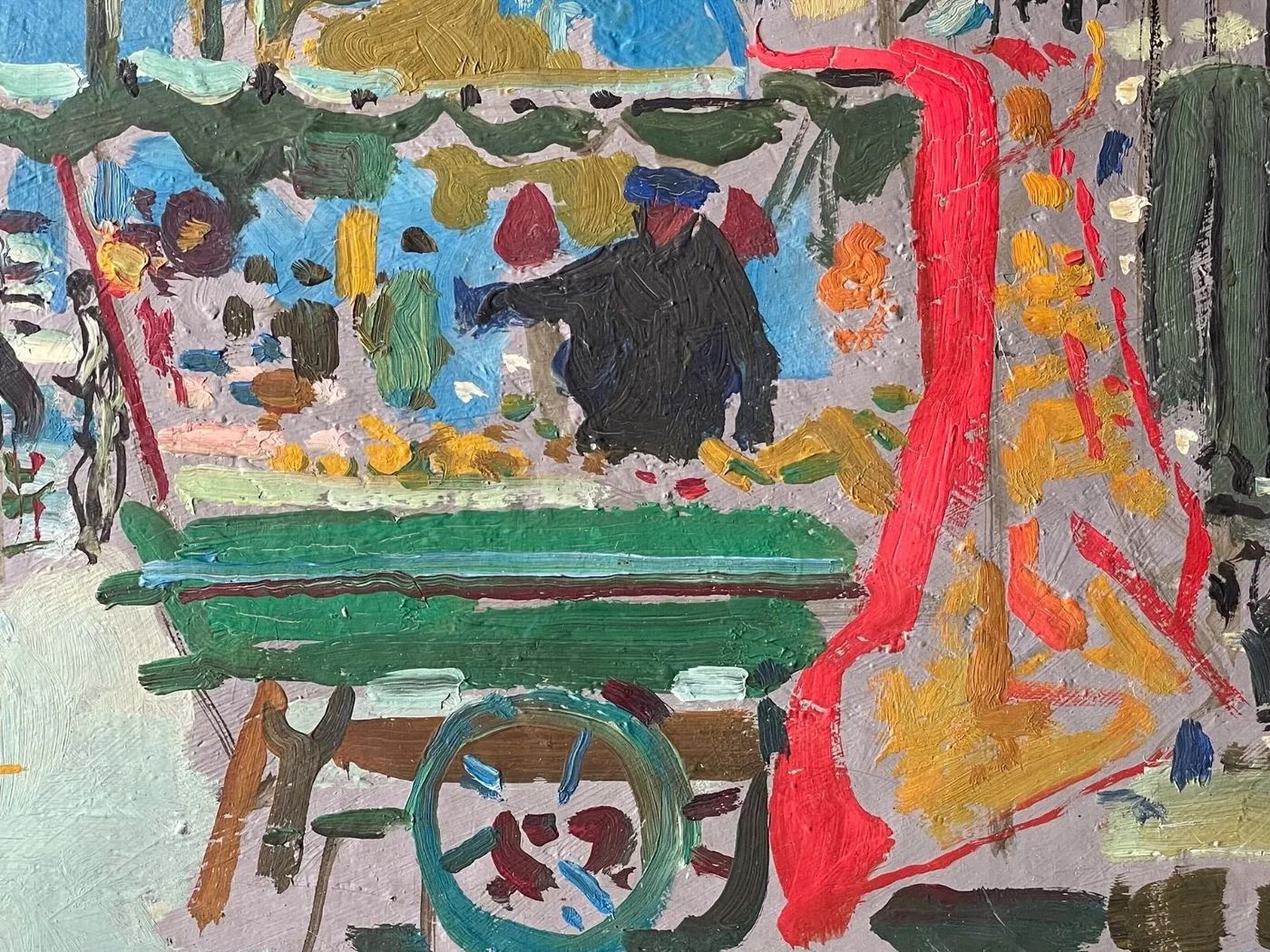
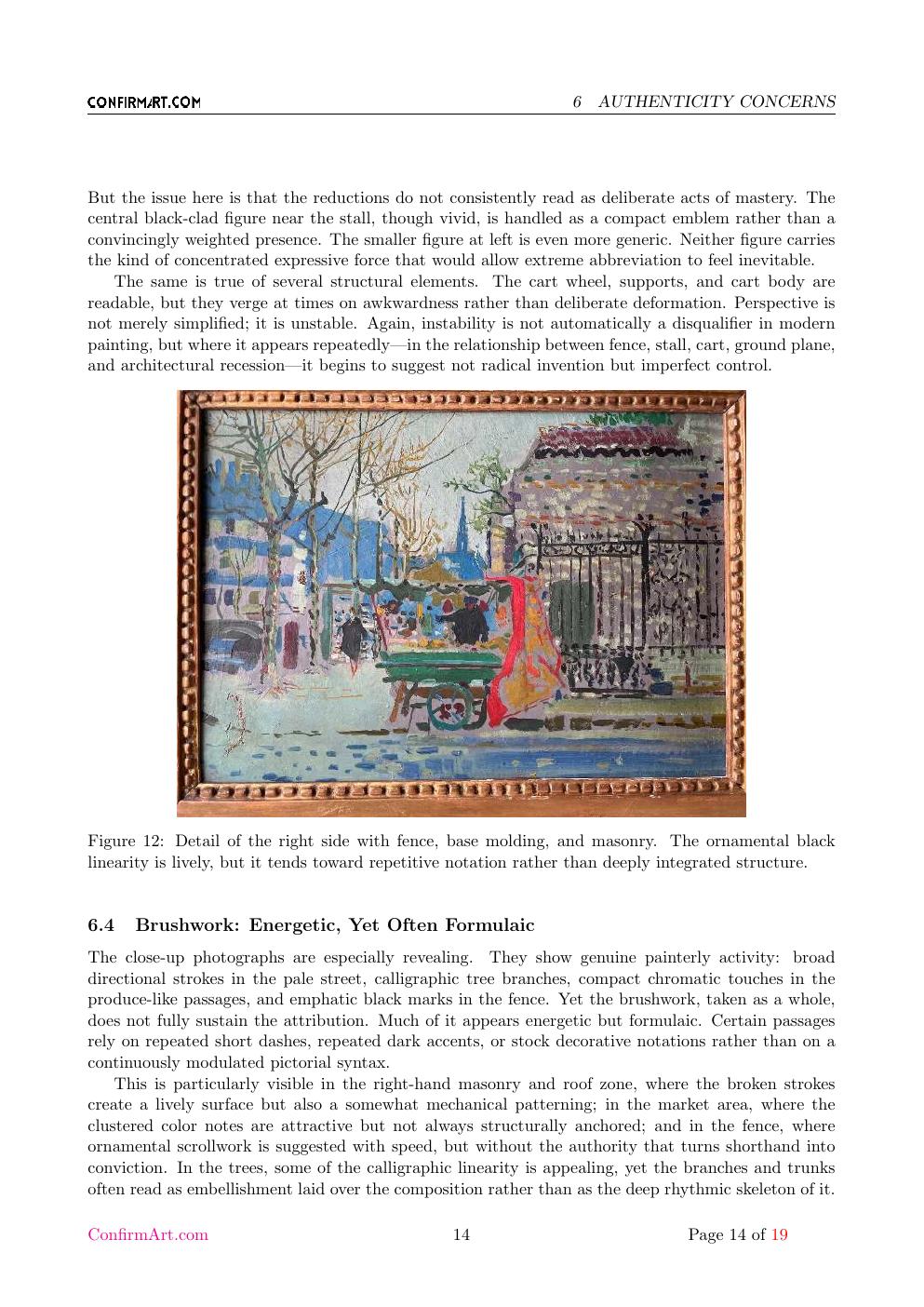
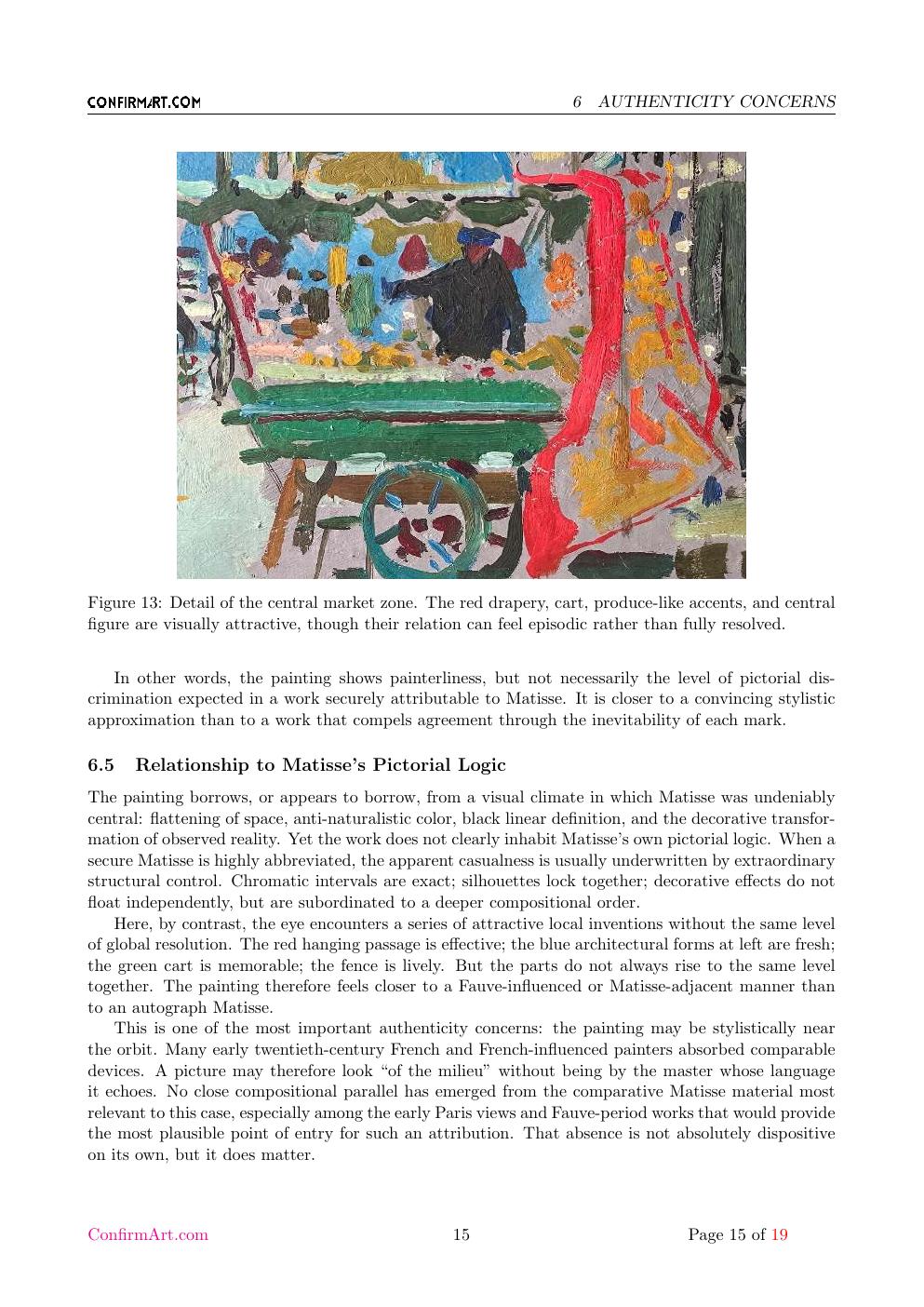
A further concern lies in the level of drawing. The figures are reduced to dark silhouettes, which in itself is not problematic; modern painting frequently privileges mass and sign over descriptive anatomy. But the issue here is that the reductions do not consistently read as deliberate acts of mastery.
06
Broader Fauve Context: Resemblance Is Not Attribution
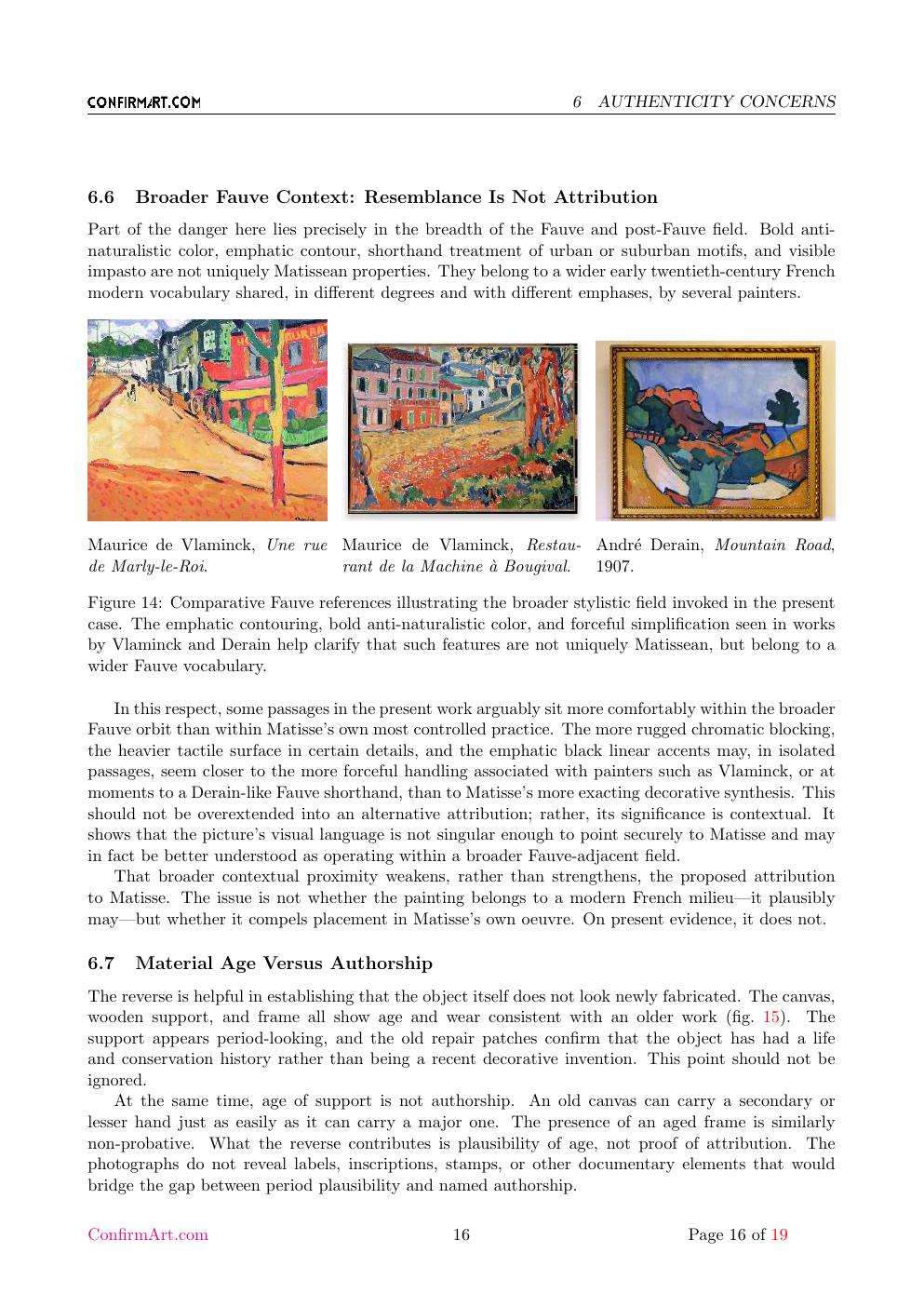
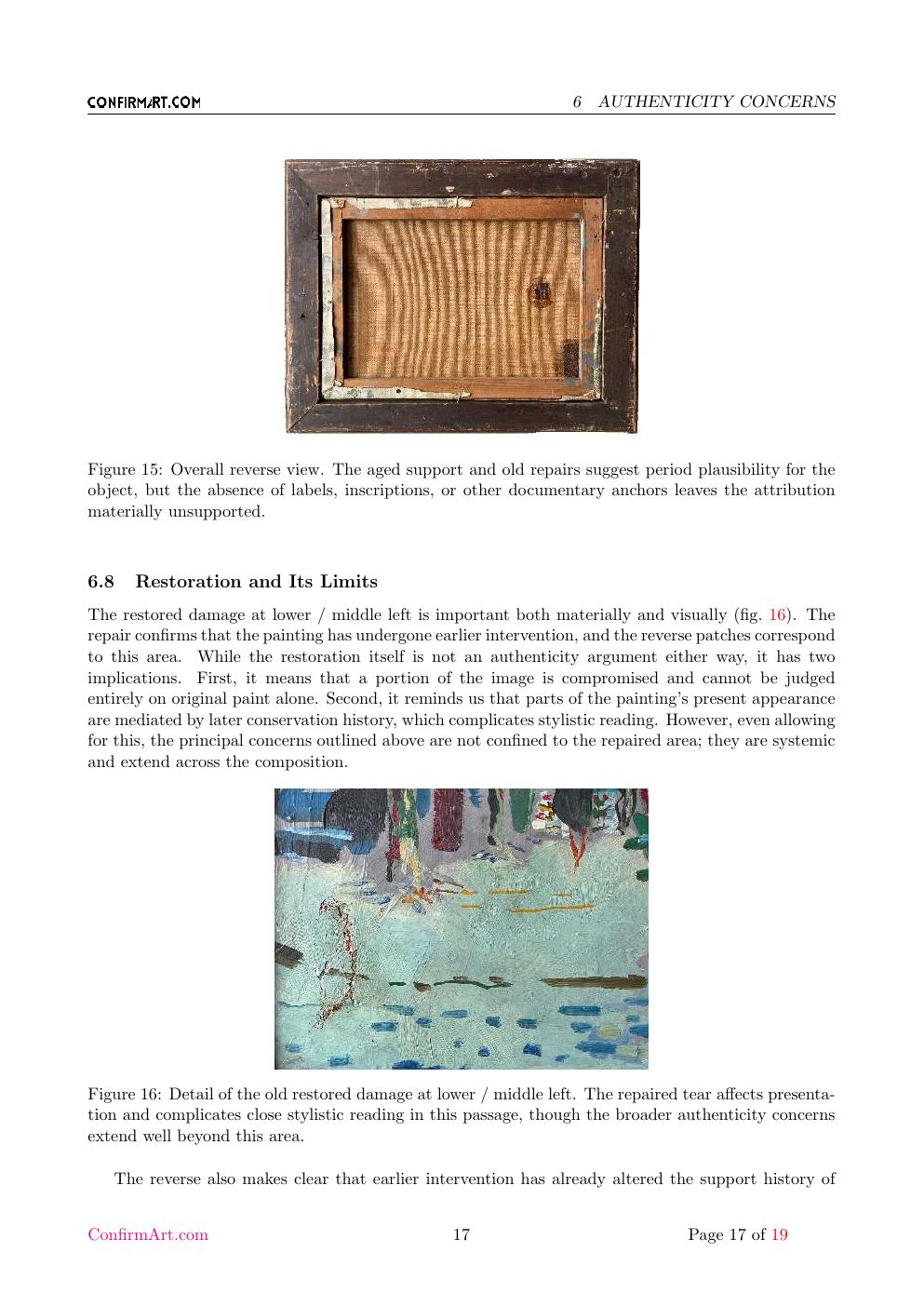
Part of the danger here lies precisely in the breadth of the Fauve and post-Fauve field. Bold anti-naturalistic color, emphatic contour, shorthand treatment of urban or suburban motifs, and visible impasto are not uniquely Matissean properties. They belong to a wider early twentieth-century French modern vocabulary shared, in different degrees and with different emphases, by several painters.
07
Material Age Versus Authorship
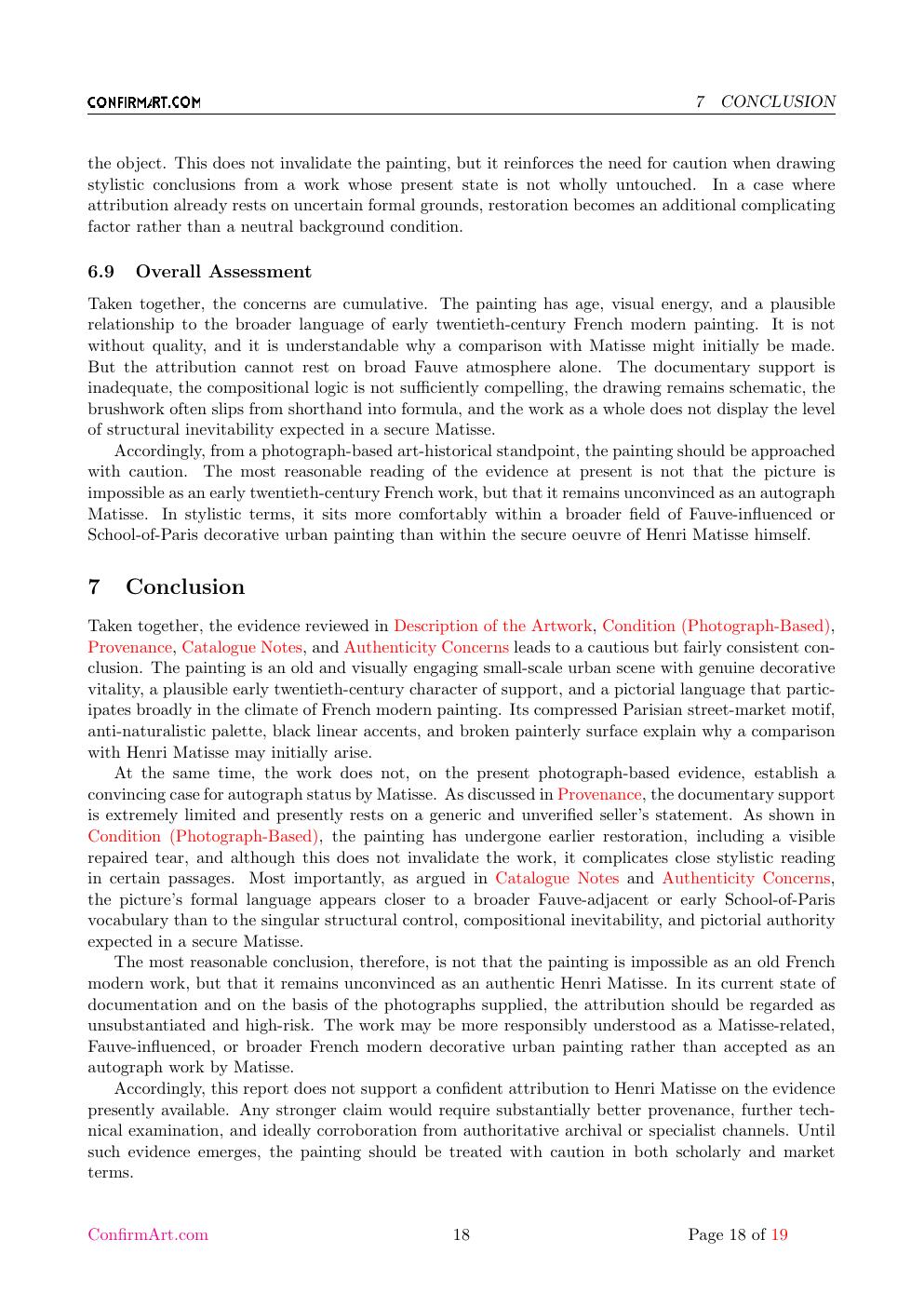
The reverse is helpful in establishing that the object itself does not look newly fabricated. The canvas, wooden support, and frame all show age and wear consistent with an older work (fig. The support appears period-looking, and the old repair patches confirm that the object has had a life and conservation history rather than being a recent decorative invention.
08
Restoration and Its Limits
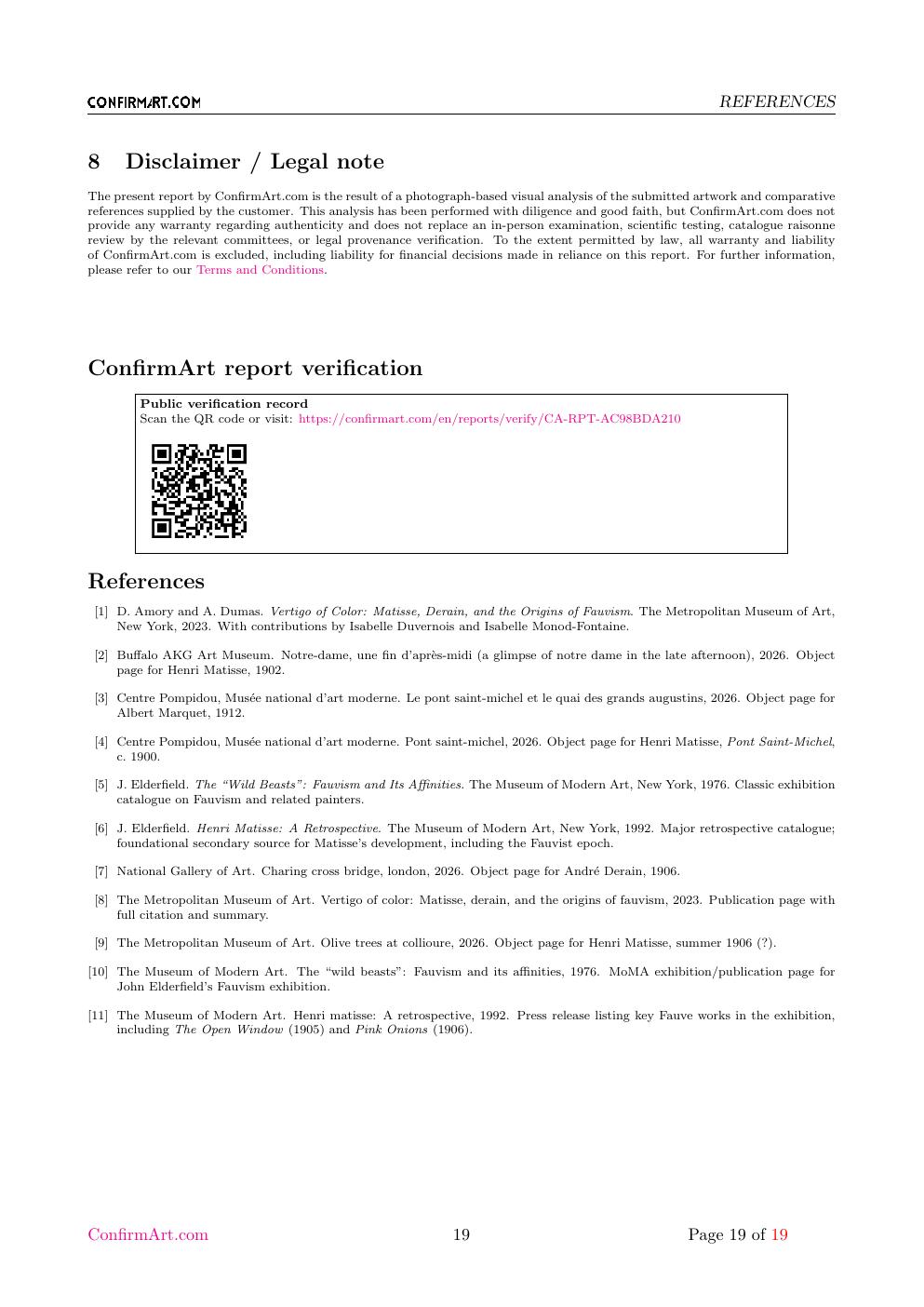
The restored damage at lower / middle left is important both materially and visually (fig. The repair confirms that the painting has undergone earlier intervention, and the reverse patches correspond to this area. While the restoration itself is not an authenticity argument either way, it has two implications.
Authentication evidence
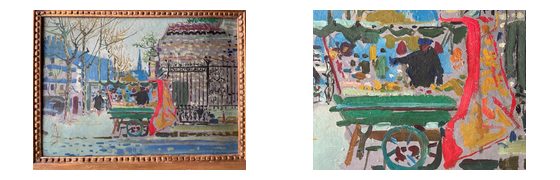
Selected close details from the human review
Description of the DocumentsThis report was prepared by ConfirmArt.com based solely on the photographic documentation submitted by the customer and the comparative references supplied in the same project folder. Submitted photographs of the questioned painting (overall, side, reverse, and details).Condition (Photograph-Based)The present condition assessment is based exclusively on the photographs supplied and should therefore be understood as provisional. It allows a useful reading of the main structural and surface issues visible in the work, but it cannot replace direct examination under normal, raking, and ultraviolet light, nor a hands-on inspection of the canvas tension, paint adhesion, reversCatalogue NotesThe comparative group reproduced here has been selected not simply to assemble famous works by Henri Matisse, but to test, in a disciplined way, the principal art-historical questions raised by the present painting: whether its Parisian subject, cool-to-acid palette, simplified urban notation, black linear scaffolding, and broken surface can be situated plausibly within MatisseLack of Secure Documentary SupportThe provenance presently attached to the work is minimal and generic. "Private Collection, Paris, France" is not, in itself, a meaningful provenance chain, but rather a broad commercial statement.Drawing and Figure ConstructionA further concern lies in the level of drawing. The figures are reduced to dark silhouettes, which in itself is not problematic; modern painting frequently privileges mass and sign over descriptive anatomy.Broader Fauve Context: Resemblance Is Not AttributionPart of the danger here lies precisely in the breadth of the Fauve and post-Fauve field. Bold anti-naturalistic color, emphatic contour, shorthand treatment of urban or suburban motifs, and visible impasto are not uniquely Matissean properties.
Private authentication
Submit your artwork for a ConfirmArt review
Use this real case as a reference for the kind of evidence that can be organized in a private authentication report.
The public browser receives rendered pages, not a native PDF viewer or direct PDF URL. Public pixels can still be screen-captured; private commissioned reports remain controlled client deliverables.
QR verification
Traceable real case
This real case has a stable verification URL and source fingerprints. The QR code resolves to the public verification record for this case.
Only your email and service selection are needed to submit the request. Optional images, dimensions and notes can be added now or later.
Payment is requested only for the Authentication report. Catalogue search, advisory, restoration and local inspection requests are reviewed first so the scope can be confirmed.
Authentication is a human expert review. ConfirmArt may use AI for bounded research support such as database, image, book or provenance searches, but not as a classifier verdict.
Complete front image
Reverse, support, frame and condition details
Signature, inscriptions, labels or seals
Invoices, certificates, provenance or catalogues
Comparative images, references or previous opinions, if available